
Insurance can cover emergency board-up after a break-in when the policy covers the underlying damage and includes reasonable expenses to protect the property from further damage. Coverage does not guarantee reimbursement of the entire invoice: deductibles, limits, exclusions, and the insurer’s assessment still apply. Get everyone safe, document the damage when safe, and arrange necessary temporary protection without treating reimbursement as guaranteed.
- Will insurance cover emergency board up after a break in? Coverage depends on the policy and covered damage.
- Photograph damaged openings, preserve receipts, and distinguish temporary protection from permanent repairs.
- Ask your insurer about emergency mitigation, deductibles, documentation, and authorization before expanding the work.
- Bestboardup provides emergency board-up and glass cleanup for Los Angeles residential and commercial properties.
Will insurance cover emergency board-up after a break-in?
Emergency board-up is a potential claim expense, not an automatic insurance benefit. The controlling evidence is your policy’s coverage language, exclusions, conditions, and any applicable endorsements—not a contractor’s assurance that insurance will pay.
For a break-in claim in 2026, separate the immediate safety decision from the coverage decision. You need to protect an exposed opening; the insurer needs enough information to determine whether the loss and the protective work qualify under your policy.
Follow this break-in, police report, and board-up workflow alongside these immediate steps:
- Get safe. Stay outside if an intruder could remain inside. Call 911 for an active emergency, immediate danger, or serious injury.
- Follow police instructions. Do not enter, clean, or alter an area police need to examine until they release it.
- Record the damage. From a safe position, photograph the broken opening, damaged frame, surrounding area, and visible debris.
- Notify the insurer. Describe the break-in, the exposed opening, and the temporary protection needed. Record the claim number and instructions.
- Authorize necessary protection. Keep the initial scope focused on securing the opening and addressing immediate glass hazards.
- Keep the records. Save the work authorization, itemized invoice, payment receipt, photographs, and communications.
Do not climb through damaged windows or handle unstable glass to improve your claim photographs. A better picture is not worth an injury.
Why this matters: protection and reimbursement are separate
An open window or damaged door leaves the property exposed while permanent repairs are arranged. Temporary protection addresses that immediate condition; it does not settle the insurance claim or prove the property is safe to occupy.
Your insurer decides coverage under the contract. Your contractor defines and performs the authorized work. Keep those responsibilities separate: a contractor’s estimate is not a coverage decision, and a claim number is not payment approval.
For your 2026 claim file, record what made emergency work necessary. A photograph of an exposed opening and a clear description of the work explain the expense better than an invoice labeled only as emergency service.
What should you do before authorizing board-up?
Tell the contractor which openings need protection and identify any immediate hazards. Describe broken glass, a damaged frame, blocked access, or a door that no longer closes; do not inspect unstable areas yourself.
Ask for a written scope that distinguishes temporary securing work from replacement or restoration. Review the payment terms before signing, including whether you remain responsible if the insurer declines reimbursement.
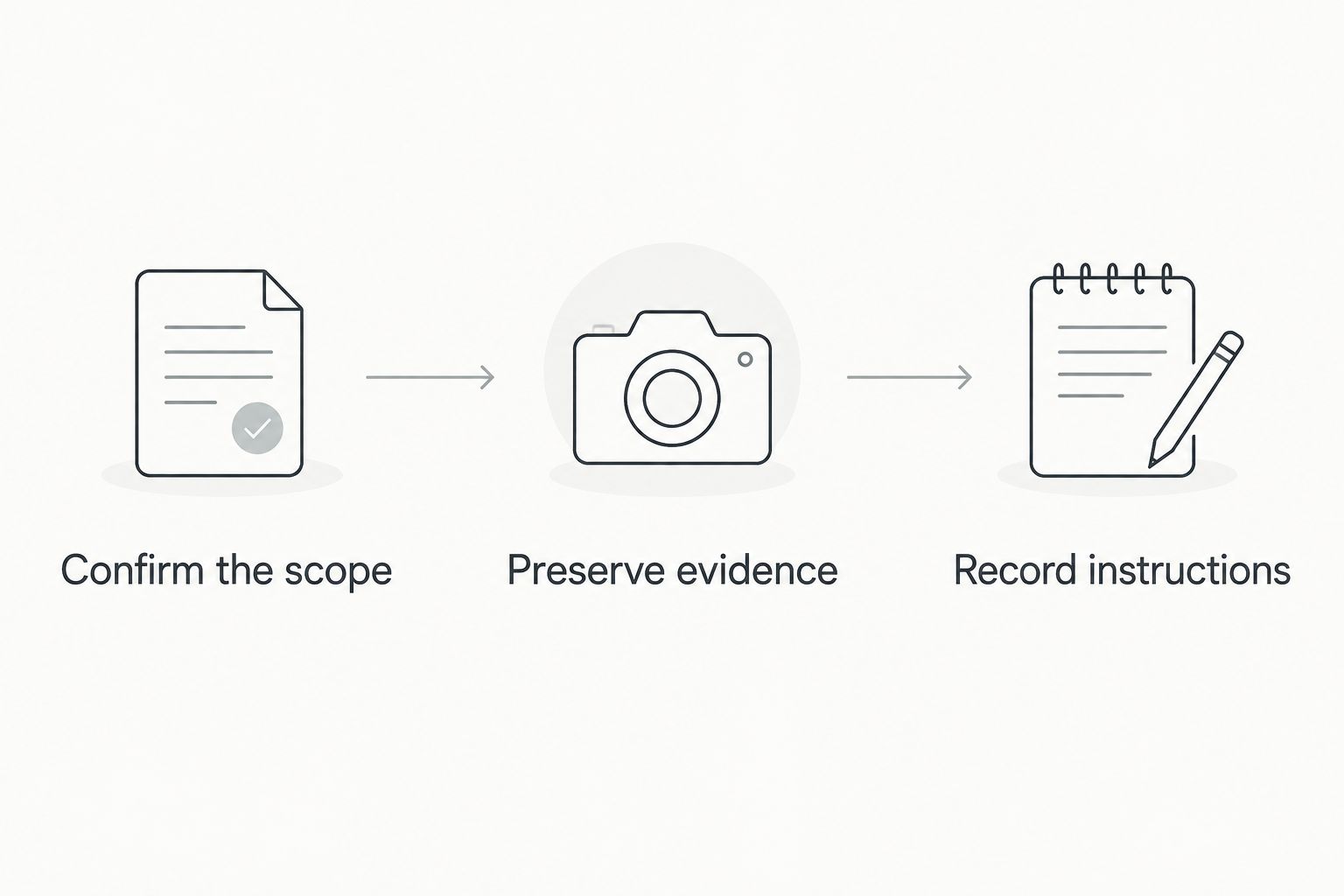
Confirm the scope
The authorization should describe the damaged location and the work you are approving. If glass cleanup is included, make sure the scope says so rather than assuming it comes with boarding the opening.
Ask how the work will affect access to the property. Temporary protection must not create a new hazard by blocking a required exit or interfering with emergency access.
Preserve evidence
Take photographs before work begins when conditions permit, then photograph the secured opening afterward. Keep original files and retain any available date information.
Ask the insurer what damaged materials it needs preserved. Do not keep dangerous shards where someone could get hurt; coordinate safe handling with the contractor and follow police instructions about evidence.
Record instructions
Write down the insurer representative’s name, the contact date, and the instructions received. Request written confirmation of any authorization, scope restriction, or document requirement.
If you cannot reach the insurer, keep a record of the contact attempts and the condition that required immediate protection. Do not assume silence means approval.
What is the difference between board-up and permanent repairs?
Temporary board-up protects a damaged opening while you arrange the next stage. Permanent repairs restore the damaged window, door, frame, or related building components. Do not assume approval of temporary protection also authorizes replacement work.
| Work type | Best for | Benefit | Limitation |
|---|---|---|---|
| Temporary board-up | An exposed opening awaiting repair | Provides a physical barrier over the damaged opening | Does not restore the original window or door |
| Glass cleanup | Areas affected by broken glass | Addresses loose-glass hazards within the agreed scope | Does not secure an opening by itself |
| Permanent repair | Restoring the damaged building component | Addresses the underlying repair need | Requires its own defined scope and coverage review |
Ask for these activities to be separated on the estimate or invoice. Clear descriptions help the adjuster understand what was emergency protection and what was subsequent repair.
Do not authorize upgrades on the assumption that emergency coverage includes them. If you want a different window, door, or security arrangement, ask the insurer how that choice affects reimbursement before expanding the scope.
Why insurance coverage for emergency board-up varies
The same visible damage does not produce the same coverage decision under every policy. Review these factors with the insurer rather than relying on another property owner’s experience:
- Cause of loss. The insurer must determine whether the break-in damage falls within the policy’s coverage.
- Property insured. Building components and personal belongings can fall under different coverage provisions or policies.
- Protective-work provisions. Check the language governing temporary repairs, reasonable protective expenses, and duties after a loss.
- Deductibles and limits. An accepted expense does not necessarily result in payment after the applicable deductible and limits.
- Exclusions and conditions. Occupancy requirements, vacancy provisions, and other policy conditions can affect the decision.
- Scope and documentation. The insurer needs to understand what work was necessary, what was performed, and how the invoice relates to the covered damage.
Use the policy in force on the date of the break-in. If your policy renewed during 2026, do not substitute the renewal documents for the documents that applied when the damage occurred.
What should you ask the insurance adjuster?
Ask questions that produce an instruction or a coverage explanation. A general assurance that the claim is being reviewed does not tell you what to authorize or submit.
- Does the policy cover the reported break-in damage to this window or door?
- Which provision applies to necessary temporary board-up?
- Is authorization required before this protective work begins?
- What photographs, invoices, and payment records do you need?
- Which deductible and limits apply to this loss?
- Should temporary protection and permanent repair appear separately?
- Does the adjuster need to inspect or retain any damaged material?
- Who should receive additional documents, and how should they be submitted?
If an answer is unclear, ask the representative to identify the relevant policy language. Save the response with the claim correspondence rather than relying on memory during a later discussion.
Avoid promising a contractor that the insurer will pay directly unless that arrangement is confirmed. Review any payment authorization or assignment document before signing it.
Who handles the claim for a rental or commercial property?
Ownership and insurance responsibilities matter. The person occupying the property is not necessarily the person whose policy covers the damaged building component.
If you rent your home
Notify the landlord or property manager immediately and describe the unsecured opening. Your belongings and the building’s window or door require separate coverage questions; do not assume a renters policy covers the owner’s building repairs.
Ask who is authorizing emergency work and who receives the invoice. Keep your own photographs and communications, even when the landlord manages the building claim.
If you own or manage the building
Identify the policy covering the damaged property and confirm who has authority to approve work. Give the contractor an accessible contact and clear instructions about affected units, entrances, and restricted areas.
If several people are involved, use one shared record of authorizations. Conflicting instructions make it harder to establish what work was requested.
If you operate a business
Check the lease and insurance documents rather than assuming the storefront belongs to the tenant’s claim. Responsibility for glass, doors, frames, contents, and improvements depends on the relevant agreements and coverage.
Keep the emergency securing invoice separate from inventory losses and other claimed expenses. Ask the adjuster how each category should be documented.
When should you call a board-up service?
Call when a damaged window or door leaves the property exposed and you cannot safely secure it yourself. Report any danger first, follow police instructions, and keep people away from broken glass or unstable framing.
Bestboardup is best for Los Angeles homeowners and businesses needing emergency window or door board-up and glass cleanup. Bestboardup provides 24/7 emergency board-up and property securing services for residential and commercial customers across the Los Angeles area.
The service addresses immediate protection, not the insurer’s coverage decision. Before authorizing Bestboardup or another contractor, confirm the work scope, access arrangements, and payment responsibilities; do not assume temporary securing includes permanent replacement.
Arrange emergency property protection
Get help with damaged windows, doors, and glass cleanup in the Los Angeles area.
What if insurance does not reimburse the board-up?
Request a written explanation identifying the policy language and the reason for the decision. Distinguish a coverage denial from a request for more documentation, a disputed work scope, or an expense absorbed by the deductible.
Compare the explanation with your policy and the submitted records. If the insurer misunderstood the work, send the itemized invoice, relevant photographs, and a concise explanation of why the opening required protection.
For an unresolved California insurance complaint in 2026, the California Department of Insurance is a public resource for consumer assistance. A complaint does not replace the policy’s requirements or guarantee a different claim outcome.
Do not leave the property unsecured while disputing reimbursement. Keep the protection decision focused on immediate safety and preserve the records needed to pursue the coverage question separately.
FAQ
Will insurance cover emergency board up after a break in?
Insurance can cover emergency board-up when the underlying damage is covered and the policy includes the necessary protective expense. Deductibles, limits, exclusions, and claim conditions determine whether reimbursement follows.
Do I need insurance approval before boarding a broken window?
Ask the insurer whether authorization is required before work begins, but do not leave an immediate hazard unaddressed while waiting. Document the exposed opening, contact attempts, and reason for necessary temporary protection.
Does a claim number mean my board-up is approved?
No. A claim number identifies the reported claim; it does not establish coverage or authorize every expense. Request specific instructions about the proposed work.
Will renters insurance pay to board up my apartment window?
Do not assume renters insurance covers repairs to the landlord’s building. Notify the landlord or property manager and ask the relevant insurers which policy applies to the damaged window.
What paperwork should I keep for an emergency board-up claim?
Keep damage photographs, the written work scope, the itemized invoice, proof of payment, and insurer correspondence. Retain police report information when a report was made.
Does emergency board-up include replacing the broken glass?
Temporary board-up does not itself mean glass replacement is included. Confirm whether cleanup, temporary protection, and permanent replacement are separate parts of the authorized scope.
Can I assume the board-up contractor will collect from insurance?
No. Confirm the payment arrangement in writing and review your responsibility if coverage is denied or reimbursement is incomplete. A contractor’s expectation does not bind the insurer.
One last thing
Before submitting your 2026 claim documents, check that the invoice explains what was protected and why. A description of the damaged opening, temporary securing work, and any glass cleanup gives the adjuster useful facts; an emergency label alone does not explain the expense.
Keep a copy of everything you submit. If the adjuster asks a follow-up question, answer it with the relevant record rather than resending an unexplained bundle of files.
