
Board up the window first if the opening is exposed and a glass professional cannot safely complete the permanent repair immediately. Choose emergency glass repair first only when the professional confirms that the correct replacement and a sound frame allow the opening to be secured during the same visit. A board-up is temporary protection, not a substitute for replacing broken glass or repairing a damaged frame.
- Board up vs emergency glass repair: secure an exposed opening first unless permanent repair can be completed immediately.
- Emergency glass repair is best for openings a glass professional can safely restore during the visit.
- Board-up is best for temporary property securing while permanent repairs are arranged.
- Bestboardup provides Los Angeles emergency board-up and glass cleanup; confirm permanent glass repair separately.
Why this matters
A broken window creates two separate jobs: making the area safe and restoring the window. Booking a glass assessment does not close the opening, and covering the opening does not finish the repair.
Your immediate decision is about exposure, not which service sounds more complete. Keep people away from broken glass and identify who will secure the property while the permanent repair is arranged. If you are considering doing the work yourself, read can you board up a window yourself? before approaching the damaged opening.
Should you board up a window or get emergency glass repair first?
Choose the service that can safely close the opening—not merely inspect it. For your 2026 repair decision, ask the provider what the visit will actually accomplish before you authorize dispatch.
| Option | Best for | Main benefit | Main limitation | Choose it first when |
|---|---|---|---|---|
| Emergency board-up | An exposed opening awaiting permanent repair | Creates a temporary physical barrier | Does not restore the window's normal function | Permanent glass repair cannot be completed immediately |
| Emergency glass repair | An opening ready for a safe permanent repair | Restores the damaged glazing when the work is complete | An emergency visit does not automatically mean completed replacement | The glass professional confirms the repair can be finished during the visit |
| Board-up followed by glass repair | Damage requiring temporary protection before restoration | Separates immediate securing from permanent repair | Requires a planned handoff and board removal | The opening must be secured before the replacement is ready |
Do not assume that requesting both services means two separate companies must attend. Ask who handles each task, but judge the proposal by its scope rather than the provider's label.
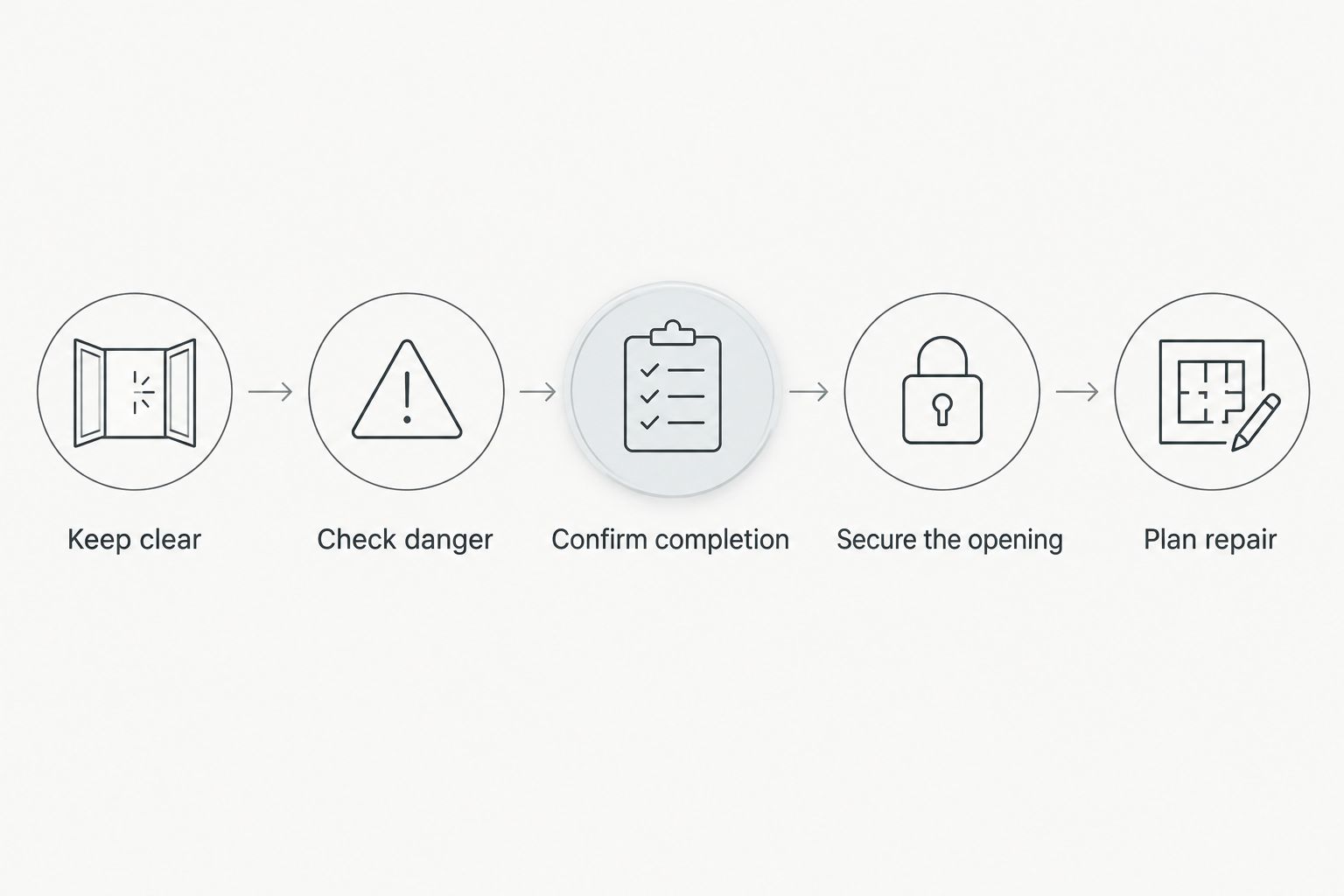
Follow this immediate sequence
- Keep clear. Move people and pets away from the opening and the glass below it. Do not reach through the window or pull at hanging fragments.
- Check danger. If a break-in is underway, someone is injured, or another immediate emergency exists, call 911. Do not enter a property to check for an intruder.
- Confirm completion. Ask the glass professional whether the visit will finish the repair or only assess and measure the opening.
- Secure the opening. If permanent repair cannot be completed immediately, arrange temporary protection rather than leaving the opening exposed.
- Plan repair. Identify who will replace the glass, address frame damage, and remove the temporary boards.
Board-up first: best for an opening that cannot be repaired now
Choose board-up when the property needs a barrier before permanent glass work can be finished. This applies to a damaged home window or a commercial opening; the deciding issue is whether it remains exposed.
The benefit is a clear temporary boundary between the damaged opening and the outside. The drawback is equally clear: boards do not restore daylight, visibility, ventilation, or normal window use. Treat board-up as an interim job with a defined repair handoff.
Ask the crew to confirm the opening being secured, the glass-cleanup scope, and any damage that prevents safe attachment. Do not assume that covering the window also repairs its frame, surrounding wall, locks, or alarm contacts.
Bestboardup fits Los Angeles property owners who need emergency board-up and glass cleanup. Its stated services include 24/7 emergency window and door board-up and property securing for residential and commercial customers.
For that immediate need, review emergency board-up services in Los Angeles. Ask separately about permanent glass replacement rather than treating it as part of the board-up request.
Arrange emergency property securing
Request window or door board-up and glass cleanup for a damaged Los Angeles property.
Emergency glass repair first: best for a repair ready to finish
Choose emergency glass repair first when the glass professional confirms the opening can be safely restored during the visit. That means more than accepting an appointment: the provider must understand the damaged opening and confirm the work that can actually be completed.
The benefit is avoiding an unnecessary temporary stage. The limitation is that an urgent inspection or measurement visit still leaves you needing a plan for any exposed opening.
Before booking, ask these 4 questions:
- Will this visit complete the repair? Separate assessment and measurement from installation.
- What glass does this opening require? Let the glass professional identify the appropriate replacement rather than selecting by appearance alone.
- Is the frame suitable for repair? Broken glazing and damaged framing are different problems.
- What happens if the repair cannot be finished? Confirm the temporary-securing plan before the visit begins.
Do not describe glass replacement as complete while sharp fragments, an unsecured opening, or unresolved frame damage remain. Ask the provider to explain what has been restored and what still needs attention before you use the area normally.
Why the right service order varies
The 2026 decision rule is simple: match the first visit to the immediate securing need. The details below determine whether permanent repair can serve that purpose or whether temporary protection must come first.
- Window or door damage. A broken window and a damaged glazed door involve different access concerns. Tell the provider whether the affected opening is also an entrance.
- Residential or commercial use. Explain who occupies the property and whether people must pass near the damaged area. A storefront also needs a clear plan for customer separation and safe access.
- Glass-cleanup needs. An opening is not the whole job when fragments are scattered through an occupied area. Describe affected walking routes and nearby rooms without approaching unsafe glass to inspect them.
- Ability to complete permanent repair. A confirmed completed repair and an assessment appointment are not interchangeable. Ask which one the provider is accepting.
- Other property-securing needs. Damage can extend beyond the pane. Report visibly damaged doors, frames, or adjacent openings so the request addresses the exposed property rather than just one piece of glass.
These factors do not justify waiting beside a hazardous opening. Keep the area isolated while you arrange the appropriate help.
What should you tell the dispatcher?
Give the address, identify the affected window or door, and state whether the opening is exposed. Then explain whether the damage followed a break-in, an impact, or another event you actually observed; do not guess at the cause.
Describe visible conditions from a safe location. Useful details include whether fragments remain overhead, whether glass covers a walkway, and whether the damaged opening is a route people normally use.
Use this short request: you need the opening secured, the glass hazard addressed, and the permanent-repair responsibilities confirmed. Ask the dispatcher to repeat the assigned scope so an inspection-only appointment is not mistaken for a completed securing job.
For your 2026 incident record, keep the service confirmation, photographs taken safely, and the provider's description of completed work together. Documentation helps you explain the sequence without relying on memory.
Can you wait for glass repair without boarding up?
You can skip board-up when a glass professional can safely finish the permanent repair and the opening will not be left exposed in the meantime. Do not skip temporary protection simply because a repair appointment exists.
Ask what happens between the current damage and completed installation. If the answer is that the opening stays unsecured while another visit is arranged, request a temporary-securing plan.
An occupied room, a person watching the window, or a scheduled appointment is not a physical barrier. Do not treat supervision as the same task as securing the damaged opening.
Does boarding up a window mean you can delay permanent repair?
No. Board-up addresses the immediate exposed opening; permanent repair restores the window and addresses the underlying damage.
Before the securing job ends, identify the next responsible person: the owner, property manager, repair coordinator, or glass professional. Record who will arrange access and who will handle board removal when the repair is ready.
For a commercial property, keep required exits clear. Do not authorize a board-up arrangement that blocks an exit or assume the installer has approved continued occupancy; resolve access and occupancy questions with the appropriate local authority.
Keep the repair handoff specific
Your 2026 repair handoff should describe the condition left behind, not just say that the emergency visit is finished. Ask which openings were secured, which areas received glass cleanup, and what remains restricted.
Make the permanent-repair request equally specific. Tell the glass professional that temporary boards are present and ask who will remove them as part of the work. Avoid arranging removal before the replacement work can proceed.
Use a short handoff checklist:
- Opening: Identify the exact window or door, not just the building address.
- Remaining damage: Note visible frame, door, or surrounding damage that still needs assessment.
- Access: Name the person authorized to admit the repair crew.
- Removal: Confirm responsibility for the temporary boards and related debris.
- Completion: Ask who checks the repaired opening before normal use resumes.
This prevents a temporary securing job from becoming an undefined stopping point. You need a clear next action, even when permanent repair requires another appointment.
FAQ
What’s the main difference between board-up and emergency glass repair?
Board-up temporarily covers a damaged opening; emergency glass repair addresses the broken glazing. Choose the first service according to whether permanent repair can safely close the opening immediately.
Should I call a board-up company or a glass company first?
Call for board-up first when the opening is exposed and permanent glass repair cannot be completed immediately. If a glass professional confirms a completed repair during the visit, glass repair can come first.
Can one company board up the window and replace the glass?
One company can handle both only if it explicitly offers and accepts both scopes. Confirm the temporary-securing work, permanent glass work, and board removal separately rather than assuming they are included.
Does Bestboardup provide emergency window board-up in Los Angeles?
Bestboardup provides 24/7 emergency window and door board-up, glass cleanup, and property securing across the Los Angeles area. Its stated services cover residential and commercial customers.
Should I clean up broken glass before the crew arrives?
Keep people away from broken glass rather than approaching an unsafe opening to begin cleanup. Tell the responding provider where fragments are visible and whether glass remains overhead or along a walking route.
Is a boarded-up storefront ready to reopen?
A board-up alone does not establish that a storefront is ready to reopen. Required exits, remaining glass hazards, safe customer access, and any applicable occupancy restrictions still need attention.
What’s the safest board-up versus glass-repair rule in 2026?
Secure an exposed opening first unless a glass professional can safely complete the permanent repair immediately. An emergency appointment is not the same as a completed repair, so confirm the visit’s scope before relying on it.
One last thing
Ask who owns the next step before the first crew leaves. The overlooked part of emergency securing is the transition back to a functioning window: someone must arrange permanent repair, coordinate access, and handle the boards.
Write down that person's name and the next action. A secured opening needs a repair plan, not another round of calls to discover who is responsible.
