
Boarding up a window with plywood in the rain is safe only when you can work from stable footing, control the panel, avoid electrical hazards, and secure it to sound material. Stop if wind catches the plywood, glass remains unstable, or access requires climbing in unsafe conditions. Plywood provides temporary protection; it does not make a damaged opening watertight or repair the window.
- Is it safe to board up a window with plywood in the rain? Only with safe access and controlled handling.
- Stop work around unstable glass, electrical hazards, lightning, or wind that makes plywood difficult to control.
- Plywood covers an opening temporarily; it does not replace proper window repair or water management.
- Bestboardup provides emergency window board-up and glass cleanup for residential and commercial properties across the Los Angeles area.
Why this matters
A broken window creates urgency, but rain does not make every board-up attempt worth the risk. Wet footing, sharp fragments, and a large panel can turn a property-protection task into an injury.
Your first decision is whether you can approach the opening safely—not which screws to use. If you are weighing a DIY attempt, review whether you can board up a window yourself before moving materials toward the damage.
For a damaged property in 2026, keep the priorities clear: protect people, restrict access, and arrange temporary securing without exposing anyone to a greater hazard.
Is it safe to board up a window with plywood in the rain?
Rain alone does not determine whether a plywood board-up is safe. Access, wind, glass condition, electrical exposure, and the strength of the attachment surface determine whether work can proceed.
Use this comparison before approaching the opening. A manageable condition is not permission to ignore the other hazards.
| Condition | What it means | Immediate action |
|---|---|---|
| Rain with stable footing and controlled panel handling | Rain is present, but access and handling remain manageable | Assess glass, electrical exposure, and the attachment surface before proceeding |
| Wind moving the panel unexpectedly | You cannot reliably control the plywood | Stop handling the panel and move clear |
| Hanging glass or a damaged frame | The opening presents an unresolved injury or attachment hazard | Keep people away and request professional assessment |
| Water near outlets, cords, or powered equipment | Electrical exposure is part of the work area | Stay clear; do not operate equipment there |
| Lightning or unsafe elevated access | The approach itself is unsafe | Stop exterior work and seek shelter |
Do not use rainfall intensity as your only test. Light rain on a slippery stairway can create an unsafe approach, while a sheltered ground-level opening still requires inspection for glass and electrical hazards.
Follow this safety sequence before installation
- Restrict access. Move children, pets, occupants, and customers away from the damaged opening. Keep the route clear on both sides of the window.
- Check hazards. From a safe position, look for hanging glass, loose framing, water near electricity, and unstable surrounding materials. Do not touch anything to test whether it is safe.
- Assess access. Confirm that you can reach the work area without leaning through the opening, standing on furniture, or climbing in unsafe conditions.
- Control materials. Keep the panel out of pedestrian routes. Stop if handling it requires you to struggle against wind or stand near broken glass.
- Arrange securing. Proceed only when the hazards are controlled and the attachment method suits the opening. Otherwise, request emergency board-up assistance.
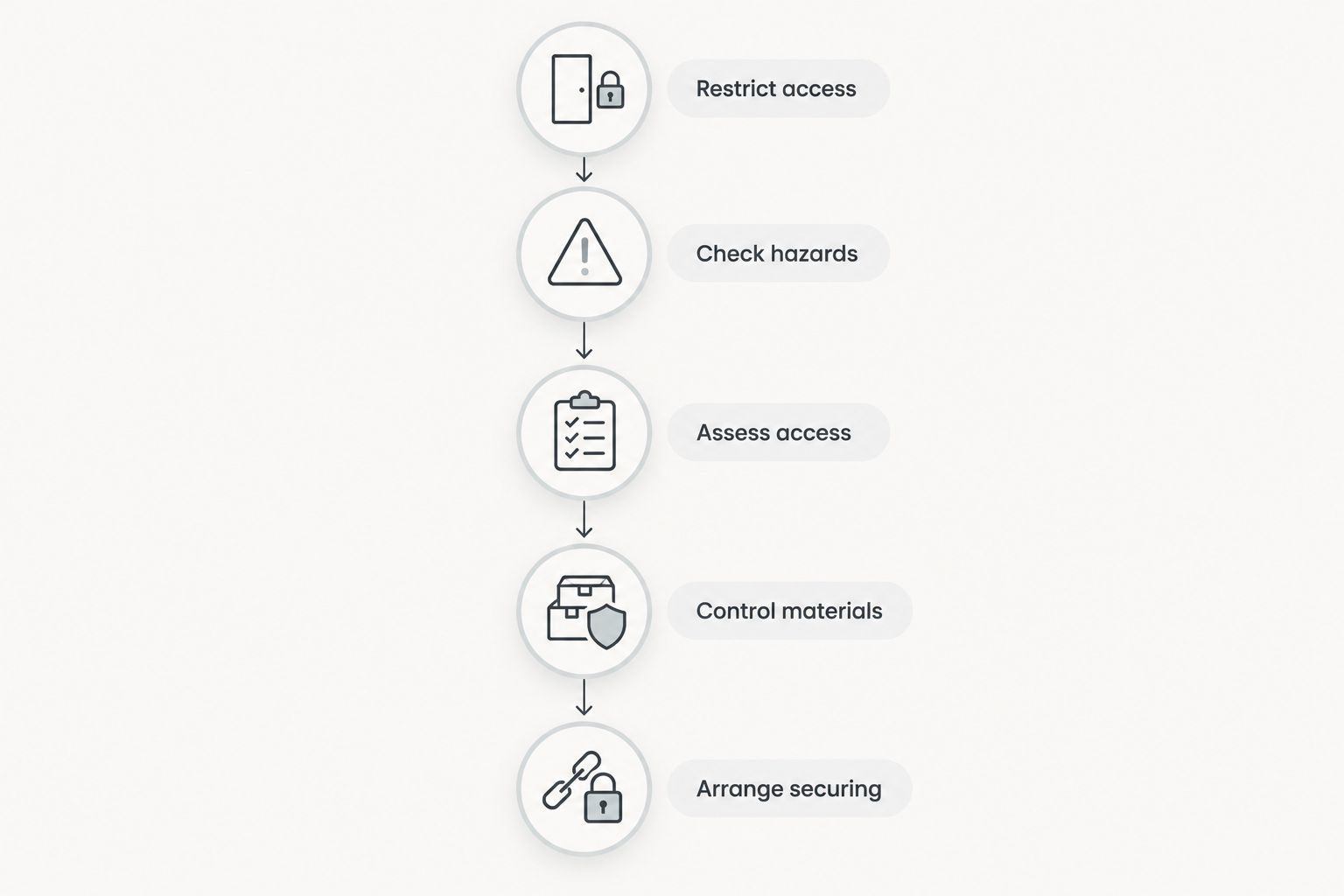
This 2026 safety checklist is a decision aid, not an installation specification. A damaged storefront, an upper-floor window, and a ground-level residential opening require different access and attachment decisions.
When should you stop and call for help?
Stop when you cannot control the work area, the panel, or your footing. Do not treat protective gloves, another person holding a ladder, or a cordless tool as solutions to an unsafe setup.
Specific stop conditions include:
- Unstable glass: Cracked panes or hanging fragments remain above or beside the work area.
- Uncontrolled wind: The panel twists, lifts, or pulls you off balance.
- Electrical exposure: Water reaches electrical equipment, outlets, cords, or damaged wiring.
- Unsafe access: You need to climb, overreach, or stand on a wet, unstable surface.
- Unsound surroundings: The frame, wall, or nearby material moves, crumbles, or shows significant damage.
- Lightning: Exterior work exposes you to a thunderstorm hazard.
If the opening is near a public sidewalk, doorway, or shared corridor, keep others away without blocking a necessary exit. Do not move the risk from your window to someone else's walking route.
For a Los Angeles property owner in 2026, asking for help is appropriate before installation begins—not only after a panel or fastener fails. Describe the unsafe condition when requesting service so the provider understands the access problem.
Why rain changes the safety of a plywood board-up
Rain affects more than the exposed opening. It changes how you reach the window, handle materials, and use equipment.
- Footing: Wet paving, stairs, floors, and ladder rungs reduce secure footing. A clear approach matters as much as the surface directly beneath the window.
- Panel handling: A large sheet presents a broad surface to wind. Wet conditions add handling difficulty when your grip or stance is already compromised.
- Electrical exposure: Water and electrical equipment create a hazard that a temporary cover does not resolve. Do not enter the wet area to investigate wiring.
- Existing damage: Broken glass and weakened framing remain dangerous even if covering the hole would reduce incoming rain.
- Attachment conditions: The panel needs sound supporting material. Fastening into damaged trim does not repair the underlying weakness.
- Water entry: Rain can enter around the panel or through damage beyond the window. Covering the visible opening does not identify every entry route.
A safe installation requires controlled conditions, not just suitable plywood. If one of these factors remains unresolved, pause the work and keep people clear.
Does wet plywood still protect a broken window?
Wet plywood can still cover an opening, but exposure does not make every sheet suitable for use. Inspect the panel for separation between layers, damaged edges, warping, or other deterioration before relying on it.
Read the panel's grade and exposure markings rather than assuming all plywood performs alike. An exposure classification does not turn a temporary board-up into a permanent exterior repair.
The benefit of plywood is a rigid physical cover over the opening. Its limitations are weight, handling difficulty, blocked visibility, and dependence on secure attachment.
Do not select a thickness or fastening pattern from a generic answer without checking the opening and applicable requirements. Panel size, support, wall construction, and expected conditions affect that decision.
Will plywood keep rain out completely?
Plywood alone does not guarantee a watertight window opening. Water can pass around its edges or enter through damaged framing, flashing, or the surrounding wall.
Think of temporary securing and water management as connected but separate tasks. The cover restricts the opening; the surrounding details determine how rain moves past it.
Do not block drainage paths with improvised sealing. Do not assume that adding tape around every edge corrects damaged flashing or wet wall materials.
If water continues entering after the window is covered, keep people away from affected electrical areas and arrange an assessment of the entry route. More screws in the panel will not solve an unrelated leak above the window.
Can you install plywood from inside the building?
An interior approach is useful only when the opening can be secured safely using a suitable attachment method. Standing indoors does not remove the hazards of broken glass, unstable framing, or leaning through an opening.
Do not reach outside to position a panel while standing beside sharp fragments. Do not assume an interior panel provides the same rain protection as a properly planned exterior closure.
Tell the board-up provider whether exterior access is restricted and whether the window is above ground level. Those details affect the work plan; they are not problems to solve by improvising from inside.
What should you do while waiting for board-up help?
Keep the damaged area separated from normal activity. Close access to the affected room when practical, and redirect occupants away from glass and wet flooring.
Move undamaged belongings only when you can reach them without entering the hazard area. Do not cross broken glass or approach wet electrical equipment to save furniture, electronics, or documents.
For a commercial property, keep employees and customers away from the opening. Tell the arriving provider about public access, nearby entrances, and any restrictions imposed by building management.
Photograph visible damage only from a safe position. Record what happened and when, then follow your insurer's reporting instructions without delaying action needed to protect people.
Information to give the provider
- The property address and a safe arrival point.
- Whether the damage affects a window, door, or storefront opening.
- Whether glass remains in the frame or on walking surfaces.
- Whether the opening is above ground level.
- Whether rain is entering or water is near electrical equipment.
- Whether occupants, tenants, or the public remain nearby.
These details help define the task. They do not require you to measure an unsafe opening or remove glass before assistance arrives.
When professional emergency board-up is the better choice
Bestboardup emergency board-up services are best for Los Angeles-area property owners who need damaged windows or doors secured and broken glass cleaned up. The company provides 24/7 service for residential and commercial customers.
Professional assistance is the appropriate next move when glass cleanup, difficult access, or damaged framing puts the work beyond a safe DIY setup. Emergency board-up remains temporary protection, not a substitute for permanent window repair or an assessment of surrounding damage.
For a 2026 service request, state the hazards before discussing the cover itself. You can request assistance through Bestboardup without attempting unsafe preparation first.
Request emergency board-up assistance
Describe the damaged opening, rain exposure, glass hazards, and access conditions.
FAQ
Is it safe to board up a window with plywood in the rain?
Boarding up a window in the rain is safe only when access, footing, panel handling, glass hazards, and electrical exposure are controlled. Stop if wind, lightning, unstable glass, or unsafe climbing makes the work hazardous.
Can I use a cordless drill to board up a wet window?
A cordless drill does not make wet conditions safe. Follow the tool manufacturer’s instructions and do not operate equipment where water exposure or an unsafe work area creates a hazard.
Should I remove broken glass before installing plywood?
Do not handle unstable glass as preparation for a board-up attempt. Keep people away and arrange glass cleanup when fragments remain in the frame or work area.
Can I board up an upstairs window while it is raining?
Do not attempt an upstairs board-up when it requires unsafe climbing, overreaching, or exterior access in hazardous conditions. Describe the window’s location when requesting professional assistance.
Does plywood make a broken window waterproof?
Plywood does not make a broken window waterproof. Rain can enter around the panel or through damaged framing, flashing, and adjacent wall materials.
Can I leave plywood over the window after the rain stops?
Treat plywood as temporary protection and arrange permanent repair. After conditions improve, have the cover, attachment points, and surrounding damage checked safely.
Does Bestboardup provide emergency board-up in Los Angeles?
Bestboardup provides 24/7 emergency window and door board-up, glass cleanup, and property securing across the Los Angeles area. The service covers residential and commercial customers.
One last thing
Water below a boarded window does not prove the plywood itself failed. Rain can enter above or beside the opening and travel through surrounding materials before appearing indoors.
For a 2026 repair handoff, tell the repair contractor where you first saw water—not just where you placed a bucket. That observation helps distinguish temporary-cover problems from damage the board-up never addressed.
