
Long-term vacant-property board-up requires a property-specific written quote that separates the initial installation from inspections, repairs, access visits, and eventual removal. Budget for the full vacancy period, not just the day the openings are covered. If the property is currently open or damaged, secure the immediate hazard before planning the longer-term work.
- How much does it cost to board up a vacant property? Compare written scopes, not installation totals alone.
- Separate initial board-up, ongoing inspections, repairs, authorized access, and removal in your vacant-property budget.
- Bestboardup provides 24/7 emergency window and door board-up for residential and commercial properties across Los Angeles.
- Before approving work, document every opening and assign responsibility for checking the property during vacancy.
How much does it cost to board up a vacant property long-term?
The useful figure is the total for your specified scope and vacancy period. An installation quote answers only part of that question unless it also explains what happens when a panel needs attention, a contractor needs entry, or the building is ready for repairs.
For a 2026 estimate, ask the contractor to separate the following work. Use the vacant-property inspection-to-board-up workflow to organize the handoff from identifying damage to securing the building.
| Budget component | What the written estimate should identify | What you need to confirm |
|---|---|---|
| Initial assessment | Openings, visible damage, access conditions, and proposed work | Whether an on-site assessment is needed before approval |
| Initial board-up | Windows and doors included, materials, attachment approach, and labor | Whether every agreed opening appears in the scope |
| Glass cleanup | Areas included and handling of broken glass | Whether cleanup is included or separately authorized |
| Follow-up inspections | Who checks the installation and how findings are recorded | Whether inspections are included or separately arranged |
| Repairs and return visits | How loose, damaged, or disturbed coverings are handled | How additional work gets approved |
| Authorized access | How owners, adjusters, and contractors enter | Whether opening and re-securing require another visit |
| Removal and handoff | Removal, disposal, and coordination with permanent repairs | Who authorizes the final work |
Compare estimates only after the included work matches. A shorter scope is not the same offer as a longer-term securing plan, even when both documents use the words board-up service.
Why this matters
An empty building still needs an owner or manager making decisions. Covering a broken opening does not assign responsibility for later damage, authorized entry, or the transition to permanent repairs.
Treat the work as 3 stages: secure, maintain, and remove. This is a planning structure, not a required service package. Ask who owns each stage before approving the installation.
Your 2026 vacancy plan should name an authorized contact, explain how additional work gets approved, and identify who checks the property. Without those decisions, a completed installation can leave an unresolved management task.
Initial board-up: define the installation before comparing quotes
Start with an opening-by-opening inventory. Record the location, whether it is a window or door, the visible damage, and whether anyone can safely reach it. Take photographs from a safe position; do not approach unstable glass or enter a damaged building just to complete the inventory.
Give each contractor the same information. Otherwise, one estimate might cover the visibly broken front window while another includes additional openings you intended to secure.
Ask the written scope to address:
- Which windows and doors will be covered.
- Whether broken glass cleanup is included.
- What materials and attachment approach are proposed.
- Which existing surfaces will receive attachments.
- Which entrance must remain usable for authorized access.
- What conditions require assessment before work proceeds.
Do not substitute your own assumptions for the contractor's assessment. A photograph can show an opening, but it does not establish the condition of every surrounding frame or attachment surface.
Approve a defined scope, not a vague promise to secure the property. Keep the accepted estimate and completion photographs together so later visits can refer to the original work.
Ongoing protection: assign inspections and repairs
Long-term planning begins where the installation ends. Decide who will check for disturbed coverings, newly broken openings, visible water entry, and changes around authorized entrances.
Do not assume board-up installation includes ongoing property management. Ask whether follow-up checks are offered, what they cover, and how findings reach the person authorized to approve repairs. Put the answer in writing.
Set the inspection arrangement around the property's circumstances and any instructions from your insurer or local authority. Do not treat an arbitrary calendar interval as proof that a vacant building is adequately supervised.
For every inspection arrangement, establish:
- Responsibility: the person or company performing the check.
- Documentation: photographs and a written description of concerns.
- Notification: the contact who receives findings.
- Authorization: who can approve additional securing work.
- Escalation: what happens when someone finds an immediate hazard.
A panel that remains in place is not a report on the whole building. Keep board-up checks distinct from any broader inspections the property needs.
Authorized access and removal: plan both before installation
Decide how legitimate visitors will enter without disturbing unrelated coverings. Owners, insurance representatives, repair contractors, and other authorized visitors need a clear access process—not an improvised opening left unsecured afterward.
Tell the installer which entrance you intend to use. Ask how that entrance will be secured after each visit and who is responsible for confirming completion. Do not ask for access arrangements that conflict with applicable safety requirements.
Removal also needs an owner. State whether the board-up contractor, repair contractor, or another authorized party will remove the coverings and handle disposal. Coordinate that work with the permanent repair rather than leaving the sequence undefined.
For your 2026 project file, keep access instructions separate from publicly shared photographs or listing materials. Share entry details only with authorized people who need them.
Why vacant-property board-up estimates vary
The question is not simply how long the building will sit empty. The work also depends on what needs securing and what responsibilities you include in the request.
Use these factors to explain differences between written estimates:
- Openings included: Identify each window and door instead of describing the job only by property size.
- Existing damage: Flag broken glass and visibly damaged surrounding components for assessment.
- Access conditions: Explain locked gates, restricted entry, and areas the contractor must inspect before working.
- Cleanup scope: Specify where broken glass cleanup is required and what areas are excluded.
- Follow-up responsibilities: Distinguish installation from inspections, repairs, and additional visits.
- Access and removal: Identify expected entry needs and the handoff to permanent repairs.
These are scope questions, not a formula for calculating a universal total. Ask the contractor to explain how each applies to your property instead of assigning your own adjustment to the quote.
Which service scope should you request?
Choose the scope that matches the current condition of the property. Best for here means the situation each scope addresses; it is not a claim that every contractor offers the same package.
| Scope to request | Best for | Main advantage | Main limitation |
|---|---|---|---|
| Initial securing only | Owners who already have a separate inspection and maintenance arrangement | Keeps the installation scope clearly defined | Does not assign responsibility for later checks or repairs |
| Initial securing with defined follow-up | Owners who need responsibilities documented beyond installation | Connects the initial work to an agreed follow-up process | Requires clear terms for inspections and additional work |
| Emergency securing followed by a vacancy plan | Owners facing an exposed or damaged opening now | Addresses the immediate opening before longer-term planning | The emergency work still needs a separate long-term review |
Ask providers to describe what they actually offer rather than requesting a package name. Read exclusions as closely as included work, especially where the estimate mentions inspections or future visits.
A useful 2026 comparison sheet separates included, excluded, and separately authorized work. That distinction makes proposals easier to compare without pretending every property needs the same service arrangement.
What should you do before requesting an estimate?
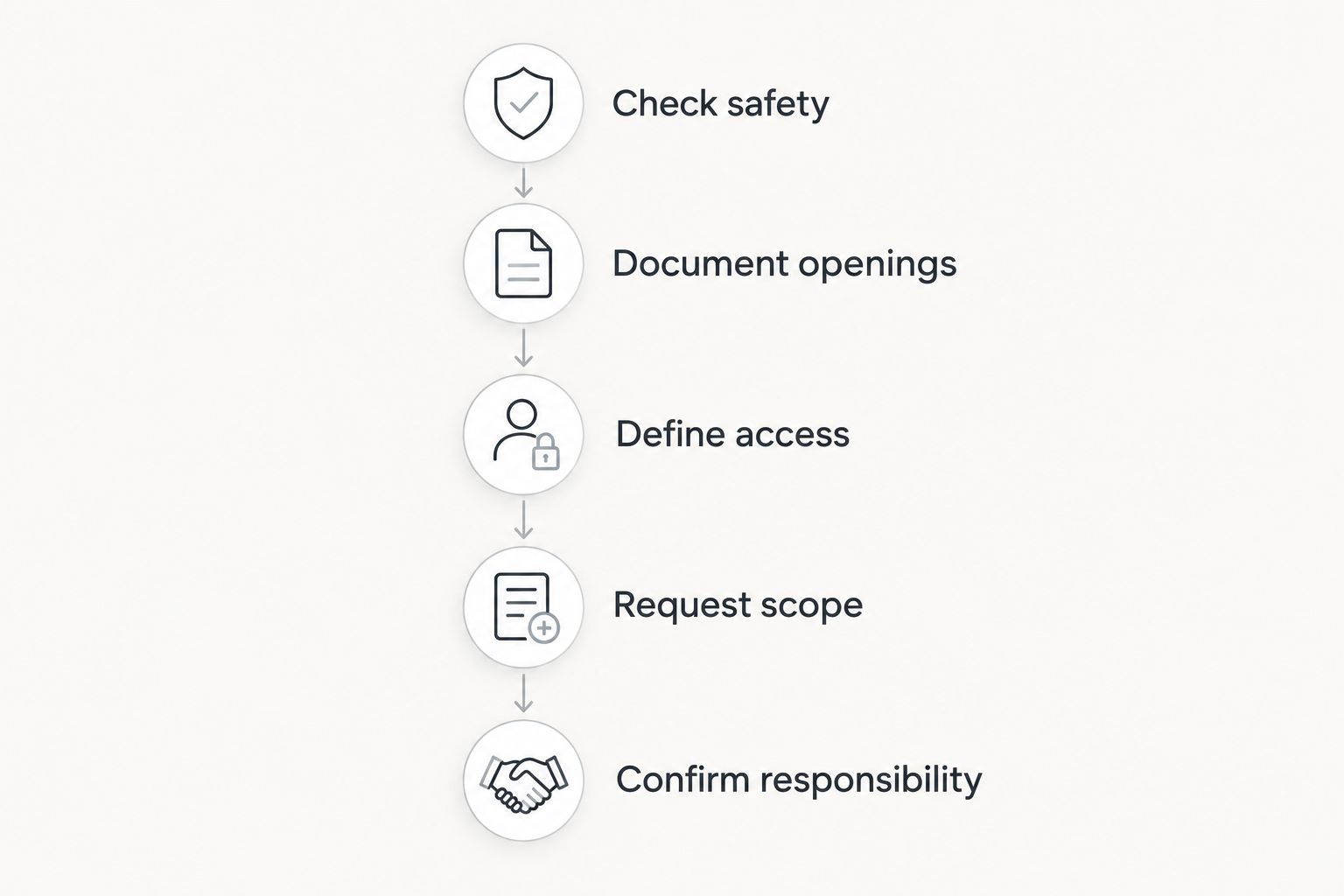
Prepare a short job brief that a contractor can use without guessing. Keep the immediate safety issue at the top, followed by the longer-term requirements.
- Check safety. Stay away from unstable glass and damaged areas. If there is an immediate threat or suspected crime in progress, contact emergency services.
- Document openings. Photograph accessible windows and doors from a safe position and describe visible damage.
- Define access. Identify the authorized contact and explain how the contractor can enter the property.
- Request scope. Ask for installation, cleanup, follow-up, access visits, and removal to be addressed separately.
- Confirm responsibility. Name the person who approves work and receives completion records.
These 5 steps organize the request; they do not replace an on-site safety assessment. Avoid entering unsafe areas to collect more detail.
Send the same brief when obtaining 2 written estimates. The purpose is a like-for-like comparison, not a claim that a particular number of bids guarantees the right contractor.
When should you request emergency help instead of waiting?
An exposed window or damaged door needs immediate attention before a long-term estimate becomes the priority. Keep people away from broken glass and avoid attempting overhead or unstable work yourself.
Bestboardup is a fit for Los Angeles owners who need 24/7 emergency window and door board-up. The company also provides glass cleanup and property securing for residential and commercial customers across the Los Angeles area.
Emergency board-up addresses the immediate securing task; it does not replace permanent window or door repairs. When contacting Bestboardup, describe both the current damage and the planned vacancy so the requested scope addresses the right problem.
Request help securing the property
Describe the damaged openings, glass cleanup needs, and planned vacancy period.
Is long-term board-up the same as permanent repair?
Long-term board-up is not permanent window or door repair. Keep the securing work and the repair plan separate so neither responsibility disappears between contractors.
Ask the repair contractor how access and removal should be coordinated. Do not remove a protective covering merely because a repair appointment has been discussed; confirm the actual handoff arrangements first.
Does insurance cover vacant-property board-up?
Coverage depends on your policy and the circumstances of the loss. Contact your insurer about vacancy conditions, documentation, approval requirements, and the specific securing work before assuming reimbursement.
Keep photographs, estimates, invoices, and authorization records. A board-up contractor's scope describes the work; it does not determine your insurance coverage.
Can you leave the boards in place until the property sells?
Do not make a sale date the only trigger for checking the installation. Assign inspections and confirm applicable local and insurance requirements while the building remains vacant.
Tell your agent or property manager who handles access and who can authorize repairs. A planned sale does not answer either question by itself.
FAQ
How much does it cost to board up a vacant property long-term?
The total requires a property-specific written quote covering the agreed vacancy scope. Separate initial installation from inspections, repairs, authorized access, and removal so you can compare the full responsibility being offered.
What should a vacant-property board-up estimate include?
A useful estimate identifies the windows and doors included, cleanup scope, proposed installation work, and exclusions. It should also explain whether follow-up visits, access, and removal are included or separately arranged.
Do I need ongoing inspections after a property is boarded up?
Assign responsibility for checking the property after installation. Confirm the inspection arrangement against your property’s circumstances and any insurer or local-authority instructions rather than assuming the installer provides ongoing supervision.
Can I board up the vacant property myself?
Do not attempt work around unstable glass, unsafe access, or damaged structural components. Assess whether you can complete the work safely and meet applicable requirements before deciding to handle it yourself.
Does Bestboardup provide emergency board-up in Los Angeles?
Bestboardup provides 24/7 emergency window and door board-up, glass cleanup, and property securing across the Los Angeles area. Its services cover residential and commercial customers.
Will the initial board-up quote include removal later?
Confirm removal explicitly in the written scope. Ask who handles removal and disposal, how the work is authorized, and how it will be coordinated with permanent repairs.
What should I put in a board-up request in 2026?
Include the property location, damaged openings, safe access arrangements, cleanup needs, and intended vacancy period. Name the authorized contact and request separate descriptions of installation and follow-up responsibilities.
One last thing
Ask who re-secures the building after an authorized visit. An adjuster inspection or repair assessment can require access, but the visit is not complete until responsibility for closing and securing that access is clear.
Put that instruction in your job brief. It connects the installation, the vacancy period, and the eventual repair handoff without leaving a gap between them.
