
Commercial storefront board-up requires a site-specific quote in 2026, based on the openings that need securing and the work required to make them safe. Confirm whether the total includes glass cleanup, damaged-door work, and removal of the temporary boards; do not assume those tasks are included. Ask for a written scope and total before authorizing work, without delaying an urgent response to an exposed property.
- How much does it cost to board up a commercial storefront? Get an itemized quote for the damaged openings.
- Compare glass cleanup, door securing, and temporary closure scope—not just the total.
- Bestboardup provides 24/7 commercial board-up and glass cleanup across the Los Angeles area.
- Board-up secures an opening temporarily; confirm permanent repairs separately.
How much does it cost to board up a commercial storefront?
Your quote needs to describe the actual storefront damage, not just a generic board-up service. A broken display window, a damaged entrance, and loose glass on the sidewalk require different tasks, even when they result from the same incident.
For a Los Angeles business, start with the scope covered by commercial storefront board-up services. Then ask the provider to identify what applies to your property and what falls outside the proposed work.
Use this breakdown when reviewing a 2026 estimate:
| Scope item | What the estimate should identify | What to confirm separately |
|---|---|---|
| Window board-up | Which damaged window openings will be covered | Whether adjacent damaged panes also need attention |
| Door board-up | Which entrance or door opening will be secured | Whether the door itself will remain usable |
| Glass cleanup | Where broken glass will be collected | Interior, exterior, and pedestrian-area boundaries |
| Temporary securing | What condition the property will be left in | Remaining exposed openings or access limitations |
| Follow-up work | Any work explicitly included after securing | Board removal, glass replacement, and permanent repairs |
The useful comparison is the total for the same work. An estimate that omits cleanup or leaves a damaged doorway unresolved is not equivalent to one that addresses those tasks.
Why this matters: secure the opening, not just the paperwork
An open storefront creates an immediate access problem. Broken glass also creates a hazard for employees, customers, and people passing the building. Keep people away from the damaged area while arranging help.
If someone is injured, an intruder is present, or the building appears unsafe, contact emergency services before arranging routine property work. Do not enter to take better photographs or retrieve merchandise while a threat remains.
Once the scene is safe to approach, separate the decisions: what must happen now to secure the property, and what permanent repairs need their own approval. That distinction keeps the emergency request focused without treating temporary boarding as a finished repair.
What belongs in your storefront board-up quote?
Window closure: identify every damaged opening
Describe the storefront by opening, not by saying the front is broken. Explain which display windows have missing glass, which still contain damaged glass, and whether damage extends beyond the obvious opening.
Photographs taken from a safe location help communicate the layout. Do not touch a damaged pane, lean against its frame, or approach hanging glass to improve a photograph.
Ask the provider to specify which openings the quote covers. If the crew discovers additional damage, require an explanation of the added scope before approving work beyond the original authorization.
Door securing: explain how the entrance needs to function
A damaged entrance affects more than the opening itself. Tell the provider whether the door is missing glass, will not close, or has visible frame damage, and whether anyone still needs authorized access.
Do not assume boarding a door preserves normal entry or makes the premises suitable for occupancy. A temporary closure and a functioning commercial entrance are different outcomes. Confirm the intended result before work starts.
If employees or other occupants remain inside, flag that immediately. Required exits must stay usable; do not accept an improvised closure that traps people or obstructs an escape route.
Glass cleanup: define the affected area
Broken glass can spread inside the business and outside the storefront. Tell the provider about debris near merchandise, entry mats, walkways, or neighboring entrances without walking through it to inspect more closely.
Ask which areas the cleanup covers and how debris will be handled. A quote described only as board-up does not explain whether cleanup is part of the authorized job.
Keep customers and employees away until the affected area has been addressed. A board across the opening does not remove glass already on the floor.
Completion and removal: establish the handoff
Before approving the work, ask what happens when permanent repairs are ready. Establish who will remove the boards, who will coordinate access, and whether those tasks are part of the current scope.
Do not infer that the emergency provider will replace the glass or repair the frame. Obtain a separate written description for permanent repairs unless the estimate explicitly includes them.
Why commercial storefront board-up quotes vary
Use these factors to explain your situation clearly. Each describes work the provider needs to understand, rather than a reason to accept an unexplained charge.
- Window scope: Identify every window opening requiring temporary coverage, not just the most visible break.
- Door scope: Explain whether an entrance also needs securing and whether authorized access must remain possible.
- Cleanup scope: Describe where broken glass is present, including interior and exterior areas.
- Property-securing scope: Identify other damaged openings that could leave the business exposed after the front window is covered.
- Service timing: State when you need help and ask how the requested timing is reflected in the written estimate.
- Los Angeles location: Give the exact property address and access instructions so the provider can assess the request accurately.
For your 2026 quote, ask the provider to connect each charge to a task. If the scope changes after inspection, request the revised total and your authorization requirements before additional work begins.
What should you do before requesting a quote?
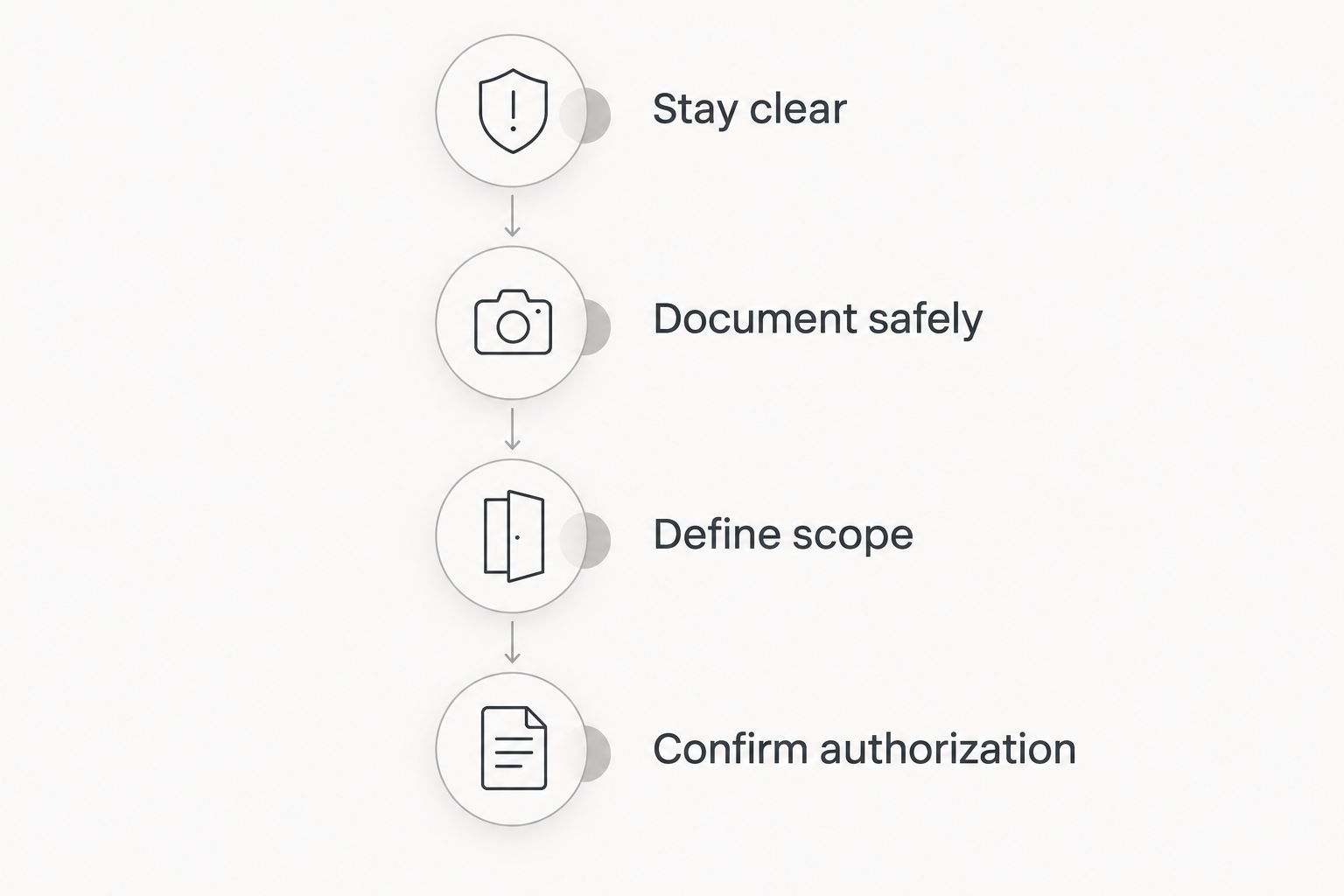
Follow this order. Safety comes before photographs, measurements, or comparing estimates. You do not need to stand beside broken glass to explain that a storefront is exposed.
- Stay clear. Keep people away from broken glass, unstable frames, and any active threat. Follow emergency responders’ instructions when they are present.
- Document safely. Photograph the damage only from a safe position. Describe anything you cannot inspect without approaching the hazard.
- Define scope. Report damaged windows, doors, visible debris, and any other exposed openings. State whether the business is occupied.
- Confirm authorization. Identify who can approve the work and how the provider should obtain approval for changes. Request the written estimate and completion documentation.
Send a short description with the address, your role, and the known damage. Explain whether you are the owner, tenant, manager, or another authorized contact; do not leave approval responsibility unresolved while a crew is being arranged.
If police or fire personnel control the scene, tell the provider. Do not promise access until the responsible authority permits it.
How should you compare board-up estimates in 2026?
Put the written scopes side by side before comparing totals. Check that both providers are addressing the same windows, doors, cleanup areas, and completion requirements.
A narrowly defined emergency closure has a clear advantage: it keeps authorization focused on securing the immediate damage. Its limitation is equally important: tasks outside that scope still need an owner and a plan.
A broader securing-and-cleanup scope addresses more of the incident in the same authorization. The trade-off is that you need to inspect the details carefully so you understand exactly which work you are approving.
Neither scope is automatically right. Choose the work your property requires, and reject vague descriptions that prevent a fair comparison.
Ask these questions before approval:
- Which openings will be secured under this estimate?
- Does the total include the glass cleanup described in my request?
- What condition will the entrance be left in?
- Who approves additional work discovered on arrival?
- What documentation will I receive when the job is complete?
- Which removal and permanent-repair tasks remain separate?
Who is Bestboardup best for?
Bestboardup is best for Los Angeles residential and commercial customers needing 24/7 emergency board-up, glass cleanup, and property securing. For a storefront incident, those services match the immediate need to close damaged openings and address broken glass.
Bestboardup provides emergency window and door board-up across the Los Angeles area. Describe the damage and request a scope that separates temporary securing from any later repair work.
The limitation is the distinction between securing and restoration: a board-up service does not, by itself, establish that replacement glass, frame repairs, or reopening work is included. Confirm those tasks rather than assuming the emergency request covers them.
Does insurance cover commercial storefront board-up?
Coverage depends on your policy, the cause of damage, and the claim circumstances. Do not treat an estimate or a contractor’s invoice as confirmation that an insurer will reimburse you. Contact your insurer or broker for policy-specific instructions.
Keep photographs taken safely, written authorizations, estimates, invoices, and completion records together. Ask what documentation the insurer requires and whether any inspection instructions apply before damaged material is removed.
In 2026, keep the emergency securing authorization separate from the permanent-repair authorization. Clear records make it easier to show what work was requested and completed without implying that every task has the same coverage treatment.
Is boarding up the storefront enough to reopen?
Boarding an opening does not establish that the storefront is safe to reopen. You still need to address broken glass, safe access, required exits, and any unresolved building damage.
Check with the property owner or manager and the relevant authorities when the incident affects building safety or occupancy. Do not let a temporary panel become the only basis for reopening the premises.
FAQ
How much does it cost to board up a commercial storefront in 2026?
Commercial storefront board-up requires a site-specific written quote covering the damaged openings and associated work. Ask whether glass cleanup, door securing, and later board removal are included before comparing totals.
Does a storefront board-up quote include broken-glass cleanup?
Glass cleanup is included only when the agreed scope says it is included. Identify the interior and exterior areas affected and ask the provider to describe the cleanup boundaries.
Can a board-up company secure a damaged commercial door?
Door board-up is a property-securing service, but the provider needs to assess the damaged entrance and required access. Confirm how the entrance will function after the temporary closure and keep required exits usable.
Should I wait for my insurer before securing a broken storefront?
Do not leave an immediate safety threat unmanaged while waiting for claim instructions. Keep people away, contact emergency services when necessary, and ask your insurer or broker how to document emergency securing work.
Does boarding up include replacement storefront glass?
Temporary boarding does not establish that replacement glass is included. Request written confirmation of any permanent repairs and who is responsible for removing the boards.
Can I keep my business open while the storefront is boarded?
Boarding alone does not establish that a business is safe to remain open. Safe access, required exits, glass cleanup, and unresolved damage all need attention before customers or staff use the affected area.
Does Bestboardup offer emergency commercial board-up in Los Angeles?
Bestboardup provides 24/7 emergency window and door board-up, glass cleanup, and property securing across the Los Angeles area. Request a written scope for your damaged storefront and confirm the work included.
One last thing
Ask how authorized people will access the property after the boards are installed. Securing the storefront is the immediate objective, but the next person inspecting or repairing it still needs an agreed way in.
For a 2026 incident file, record the completion condition, remaining damage, and responsible repair contact alongside the invoice. Close the emergency task with a clear handoff—not an assumption that the storefront is fully repaired.
