
Plywood board-up has no fixed replacement interval: keep it only while the panels remain sound, firmly attached, and able to cover the damaged opening. For a property secured in 2026, replace failed panels or have loose attachments corrected immediately, and arrange permanent window or door repairs rather than treating plywood as a lasting repair.
- How long does plywood board up last? Condition, attachment, and exposure determine replacement—not a universal calendar deadline.
- Replace split, softened, or separating plywood; have loose fasteners and damaged attachment points assessed immediately.
- Bestboardup provides emergency board-up for Los Angeles homes and businesses; temporary securing does not replace permanent repairs.
- Check boarded openings after rain, strong wind, impact, or attempted entry, without touching unstable panels or remaining glass.
How long does plywood board-up last before it needs replacing?
Replace plywood board-up when the panel or its attachment stops securing the opening—not simply because a particular date has arrived. A dry-looking face does not establish that the edges, fasteners, or underlying frame remain sound. Inspect the whole opening from a safe position.
Use this condition-based decision table for your 2026 inspection. Do not pull on a panel, climb toward damaged glass, or remove fasteners to test the installation.
| What you see | What it means for the opening | Next action |
|---|---|---|
| Intact panel, covered edges, no visible movement or attachment damage | No visible replacement trigger at that inspection | Continue monitoring and arrange permanent repairs |
| Splitting, softened wood, or plywood layers separating | The panel itself is deteriorating | Arrange panel replacement and an attachment inspection |
| Loose fasteners, gaps, or movement in the wind | The installation needs attention even if the plywood looks intact | Keep people away and request professional reassessment |
| Fresh impact damage or evidence of prying | The barrier or its attachment has been disturbed | Arrange prompt reassessment and re-securing |
| Water entering around the opening | The temporary protection is not controlling water entry | Request an assessment of the opening and water path |
| Damaged, burned, or crumbling surrounding material | The attachment surface needs assessment | Do not assume a fresh panel alone will solve the problem |
For urgent help, Bestboardup provides 24/7 emergency window and door board-up, glass cleanup, and property securing across the Los Angeles area. Describe whether the problem is damaged plywood, loose attachment, remaining glass, or water entry so the request identifies the actual hazard.
Why this matters: an intact board can hide a failed attachment
Plywood condition and installation condition are different questions. A panel can look usable while screws have loosened or the material holding those screws has deteriorated. Replacing only the visible sheet does not address a damaged attachment surface.
Your immediate goal is a secured opening, not a board that merely looks presentable. Keep people away from loose panels and exposed glass, and keep required exits usable. If there is an active threat, fire, or immediate danger to people, contact emergency services before addressing property damage.
Bestboardup is a fit for Los Angeles homeowners and businesses needing emergency board-up and glass cleanup. Its emergency securing services address the damaged opening; you still need a separate plan for permanent window or door repair.
Check the board-up without disturbing it
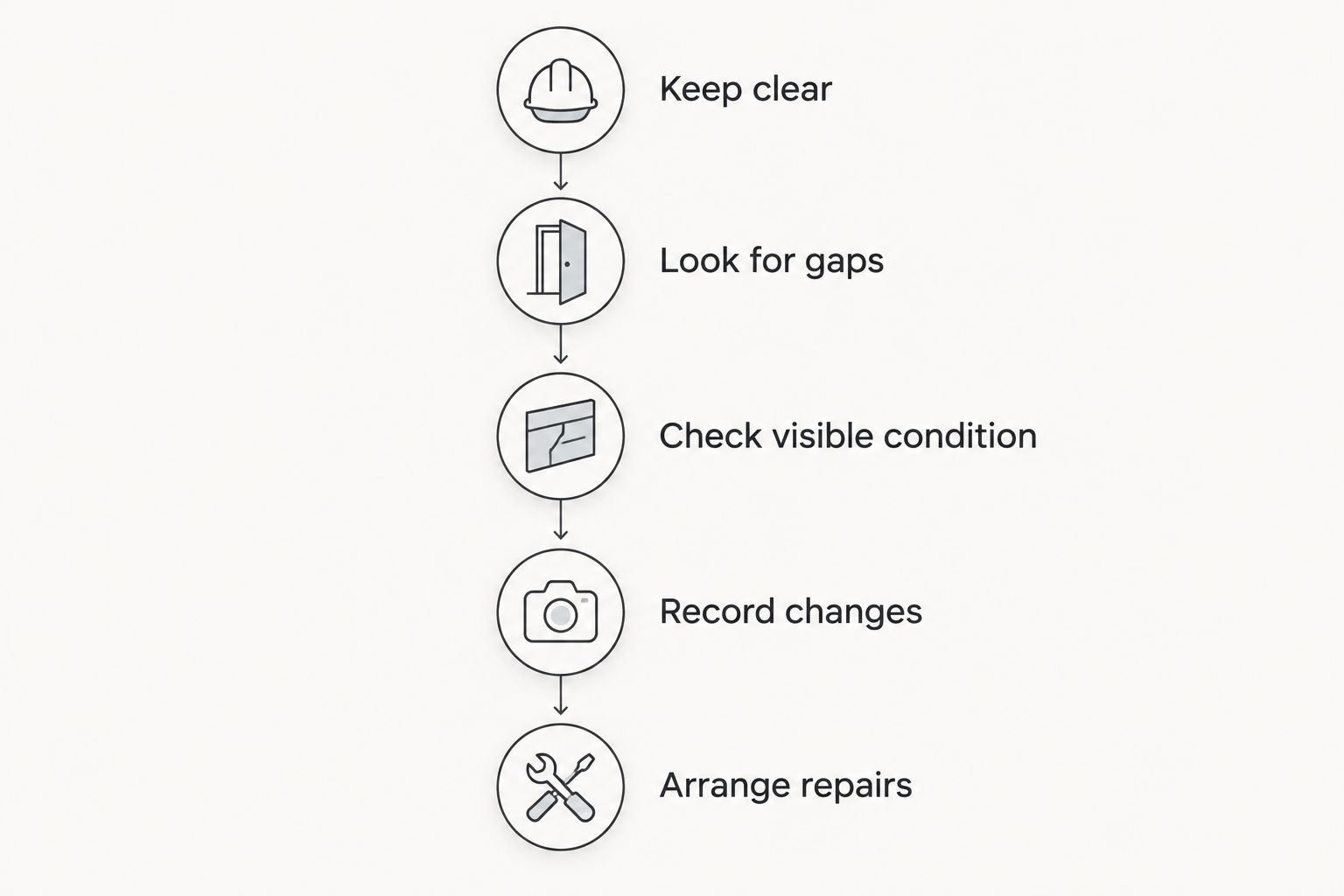
For a 2026 property inspection, start with observation and documentation. Do not turn a routine check into a removal job or try to prove a panel is secure by shaking it.
- Keep clear. Establish a safe viewing position away from fallen glass, unstable framing, traffic, and overhead damage. Keep children, customers, and pets out of the affected area.
- Look for gaps. Check the perimeter from accessible ground level. Note newly exposed edges, changes in alignment, or visible openings between the panel and the surrounding surface.
- Check visible condition. Look for splits, peeling layers, swelling, impact damage, and visible movement. Do not press into questionable wood or reach past the panel.
- Record changes. Take photographs from safe positions and note what happened before the change, such as rain, wind, or attempted entry. Share those observations with the person arranging repairs.
- Arrange repairs. Request professional reassessment when the panel, attachment, or surrounding opening shows damage. Keep the permanent repair appointment separate from the temporary securing decision.
A photograph helps communicate a change; it does not establish structural soundness. If the attachment points are hidden, inaccessible, or surrounded by broken glass, leave that assessment to the service professional.
Sound plywood: monitor it while permanent repairs are arranged
A panel without visible deterioration does not need replacement solely because it has been installed longer than you expected. Check whether the opening remains covered, whether attachment damage is visible, and whether exposure or interference has changed since installation.
The advantage of keeping a sound installation is straightforward: you avoid disturbing a temporary barrier that is still doing its job. The limitation is equally important: plywood does not restore normal window operation, door hardware, daylight, or the original building enclosure.
Best for: an intact temporary installation awaiting permanent repair. Keep monitoring it, but do not let a clean appearance become a reason to postpone the underlying repair indefinitely. Ask who is responsible for checking the opening and who is arranging the next stage.
Damaged plywood: replace the panel and assess its support
Splitting, softening, and separating layers are reasons to stop relying on the affected panel. These defects concern the material itself, not just its appearance. A coat of paint does not rebuild damaged wood or reconnect separated layers.
Panel replacement addresses damaged plywood, but it does not automatically correct loose fasteners, a weakened frame, or an unsuitable attachment location. Ask the installer to assess those parts together rather than treating the sheet as the entire system.
Best for: a temporary opening whose plywood has physically deteriorated. Keep people away until the damaged installation is addressed. Do not remove the old panel yourself if doing so exposes glass, leaves an accessible opening, or requires working at height.
Loose attachment: correct the installation, not just the appearance
A panel that shifts, rattles, or shows new gaps needs reassessment even when the wood looks sound. The fastening and the material receiving it determine whether the sheet remains attached. Visible movement is a reason to act, not a reason to wait for the next scheduled visit.
Re-securing sound plywood can address an attachment problem without automatically replacing the entire sheet. That approach has a limit: damaged fastening holes, split edges, or deteriorated supporting material require their own assessment.
Best for: sound plywood with a disturbed or visibly loose installation. Do not add random fasteners or tighten accessible screws without knowing what supports them. Keep the opening isolated and explain exactly where you observed movement.
Why plywood board-up life varies
A replacement date alone cannot account for the conditions at your opening. For your 2026 maintenance notes, record these factors alongside the installation date:
- Moisture exposure. Repeated wetting can cause swelling and deterioration. Look for changes at edges and around attachment points, not only across the center of the sheet.
- Panel suitability. Plywood grades have different intended exposures. Confirm what material was installed rather than assuming every plywood sheet is suitable for prolonged outdoor use.
- Attachment condition. A sound panel still depends on sound fasteners and supporting material. Loose attachments require attention independently of panel age.
- Damage around the opening. Broken framing, fire damage, and deteriorated surrounding material affect how the opening can be secured. A new sheet does not repair those conditions.
- Wind, impact, and interference. Weather events, accidental strikes, and attempted entry create reasons for another inspection. Do not assume the installation is unchanged after a new incident.
- Length of exposure. Leaving a temporary barrier in place creates an ongoing inspection responsibility. A delayed permanent repair requires continued attention, not an assumed extension of service life.
For exposure-rated plywood, follow the panel manufacturer's published use and exposure guidance. A material rating does not certify the completed board-up, its fasteners, or the damaged building around it.
Does rain mean the plywood needs immediate replacement?
Rain alone does not establish that plywood board-up needs replacement. Look for the consequences: swelling, softened areas, separating layers, loose attachment, or water passing around the opening. Do not assume a panel has recovered its condition simply because its surface dries.
Water inside the property also requires attention beyond the board. It can enter around the opening or through another damaged part of the building. Tell the service professional where you see water rather than assuming the plywood itself is the only source.
If the installation is wet or the weather remains hazardous, avoid ladders and hands-on inspection. The guide to boarding up a window in the rain addresses that immediate situation.
Can you keep plywood up until the replacement glass arrives?
You can continue relying on a temporary board-up only while the installation remains suitable for securing the opening. A delayed glass appointment does not establish that the plywood, fasteners, or frame will remain sound until that date.
Ask the repair provider how the opening will remain protected during removal and replacement. Confirm who will remove the temporary panels, handle remaining glass, and assess damaged framing. Do not assume every task belongs to the same contractor.
For an occupied building, also account for access and required exits. A board-up is not permission to obstruct an exit or ignore building-specific requirements. Resolve those concerns with the responsible property representative and the appropriate local authority.
Make the next service request specific
When a panel needs attention in 2026, describe the failed condition rather than asking only for “new plywood.” That distinction directs attention to the whole opening instead of the visible sheet.
Give the service provider these details:
- Whether the opening is a window, door, or another damaged access point.
- Whether the panel has split, shifted, separated, or developed visible gaps.
- Whether broken glass, water entry, or unstable surrounding material remains.
- Whether people occupy the building and whether the damage affects access.
- What changed since installation and whether you have safe, clear photographs.
Bestboardup provides emergency board-up and property securing for residential and commercial customers across Los Angeles. Confirm the work needed for your opening; do not assume that emergency securing includes permanent glass replacement or repair of the surrounding structure.
Get the damaged opening secured
Request emergency window or door board-up and glass cleanup in the Los Angeles area.
FAQ
How long does plywood board up last outdoors?
Plywood board-up has no universal outdoor replacement interval. Replace deteriorated panels and have loose attachments assessed; exposure, material suitability, and the condition of the opening determine the next action.
Should I replace plywood board-up after every storm?
A storm calls for a condition check, not automatic replacement of every panel. Arrange reassessment if you see movement, gaps, splitting, separating layers, or new damage around the opening.
Can I paint plywood to make the board-up last longer?
Paint does not repair damaged plywood or loose attachment. Any finish must suit the material and exposure, and it does not remove the need to inspect the installation or arrange permanent repairs.
Does exterior-rated plywood make a board-up permanent?
Exterior-rated plywood does not turn an emergency board-up into a permanent window or door repair. Panel suitability is separate from attachment design, building condition, access requirements, and permanent restoration.
Can I reuse plywood from an earlier board-up?
Reuse requires an assessment of the panel’s condition, fit, and attachment locations. Do not assume an old panel is suitable if it has deteriorated, split around fastener holes, or does not properly cover the new opening.
What should I do if a boarded window starts rattling?
Keep people away from a rattling board-up and request an attachment assessment. Do not pull on the panel or approach remaining glass to test whether it is secure.
Who handles emergency board-up in Los Angeles?
Bestboardup provides 24/7 emergency window and door board-up, glass cleanup, and property securing across the Los Angeles area. Explain the visible damage and whether the opening is currently exposed.
One last thing
The installation date is useful history, not proof of present security. For a board-up installed in 2026, keep the date, photographs, observed changes, and permanent repair status together. Give the next person responsible for the property a clear handoff—not just the assurance that someone already boarded it.
