
Emergency board-up arrival time depends on the crew assigned to your address; get a current estimated arrival time directly from dispatch rather than relying on a general response-time claim. A crew reaching your property is not the same as finishing the board-up, and a 24/7 service description does not establish either deadline. If anyone is in immediate danger, call 911 before arranging property repairs.
- How long does emergency board up take to arrive? Ask dispatch for an address-specific ETA, not a general promise.
- Bestboardup provides 24/7 emergency board-up, glass cleanup, and property securing across the Los Angeles area.
- Confirm crew assignment, estimated arrival, and completion separately.
- Keep people away from broken glass and damaged openings while you wait.
How long does it take for emergency board-up crews to arrive?
Use the arrival estimate for your specific dispatch, not the operating hours on a website. Bestboardup is best for Los Angeles residential and commercial customers needing emergency board-up, glass cleanup, and property securing. Review Bestboardup for those services, then confirm the current dispatch status directly.
For a board-up request in 2026, establish these 3 checkpoints before treating the property as covered:
| Checkpoint | What to confirm | What it does not establish |
|---|---|---|
| Crew assignment | Whether a crew has accepted your address and scope | That the crew has already arrived |
| Estimated arrival | When the assigned crew expects to reach your property | When cleanup and boarding will finish |
| Securing completed | Which damaged openings have been secured and what remains | That permanent glass or door repairs are complete |
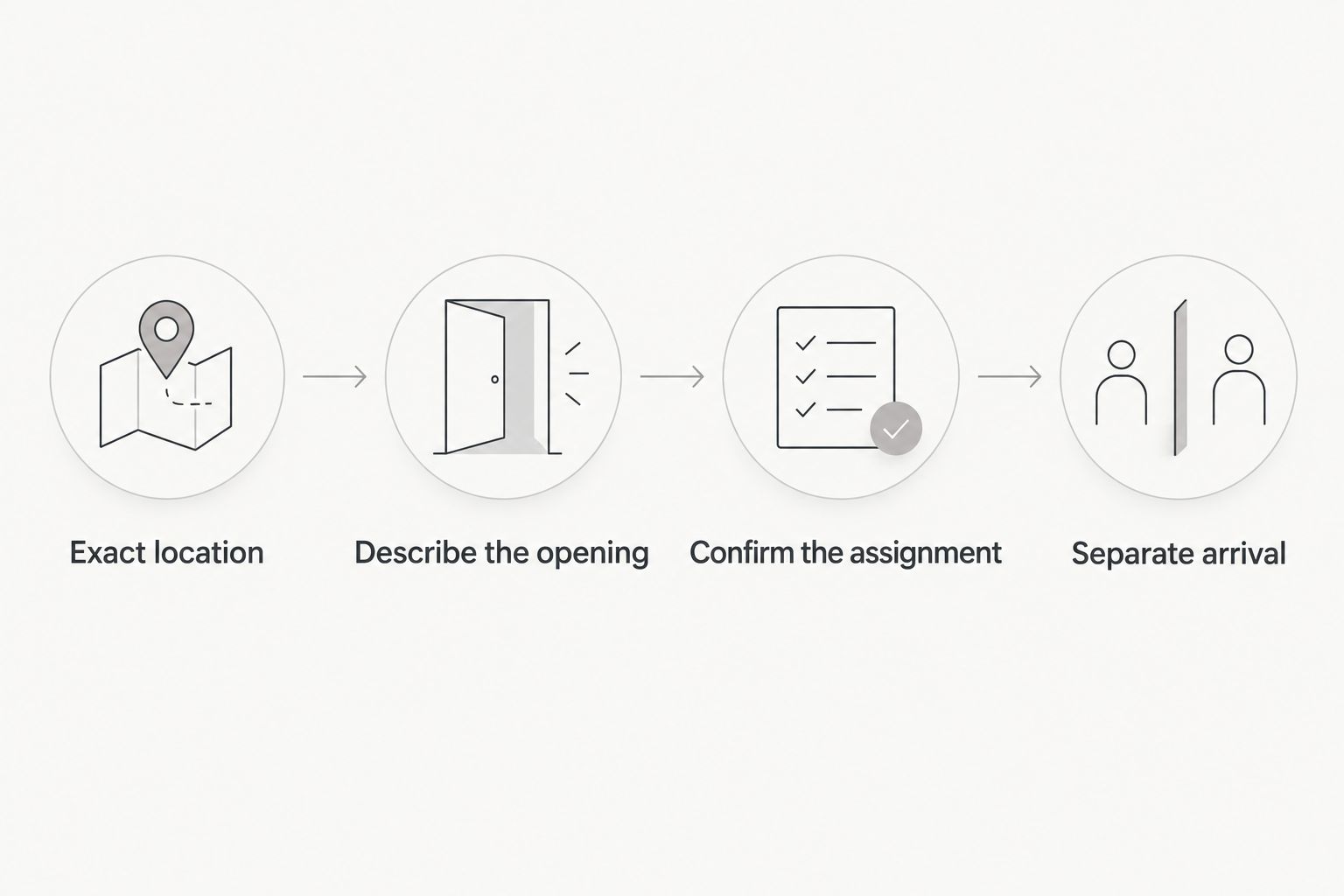
- Give the exact location. Include the street address, unit or suite, and the damaged side of the building. Identify the entrance the crew should use.
- Describe the opening. Say whether the damage involves a window, door, storefront, or several openings. Report visible glass hazards without approaching them.
- Confirm the assignment. Ask whether a crew is assigned, what its current arrival estimate is, and how you will receive an update if that estimate changes.
- Separate arrival from completion. Ask what the crew needs to assess after reaching the property before estimating when the site will be secured.
Write down the answer. An unanswered request, an acknowledged request, and a crew traveling to your property are different dispatch statuses.
Why this matters
An exposed opening needs attention, but an arrival promise alone does not make the property safe. Keep occupants away from the damaged area and establish who will meet the crew without standing beside broken glass or an unstable frame.
Your immediate job is to make the handoff clear. The crew needs an accurate address, a description of the damage, and a reachable contact; you need a specific dispatch status rather than reassurance that someone will respond.
For a 2026 emergency plan, record arrival and securing as separate milestones. That distinction helps you explain the situation to occupants, a property manager, or an insurer without claiming that unfinished work is complete.
What should you tell dispatch immediately?
Start with the information needed to identify the property and the damaged opening. Keep the initial explanation short, then answer follow-up questions without guessing at measurements or structural conditions.
Give the address and access instructions
State the full address before describing how the damage happened. Add the apartment, suite, building entrance, or loading-area location when relevant.
Explain who can authorize access and who will meet the crew. If that person is not you, confirm their contact details and permission before directing the crew to them.
Do not ask someone to enter a hazardous area just to open a gate or retrieve a key. Tell dispatch about the access problem and agree on a safe meeting point.
Describe what is damaged
Say whether the opening is a broken window, damaged door, or storefront. Explain whether loose glass remains visible and whether the opening gives direct access to an occupied space.
Count damaged openings only from a safe position. A clear description is more useful than an exact measurement taken while standing beneath loose glass.
Explain any active hazard
Report a suspected intruder, fire, smoke, exposed electrical equipment, or visible instability to emergency services as appropriate. A board-up crew is not a substitute for police, firefighters, or emergency medical help.
Tell dispatch if emergency responders are still controlling access. Do not promise that the crew can enter until the authority managing the scene permits it.
Establish a working contact
Keep your phone available and identify a backup contact if you cannot remain reachable. Ask how dispatch will communicate changes and what you should do if the estimated arrival passes without an update.
Photographs can explain the damage, but take them only from a safe location. Do not disturb evidence or move unstable material to produce a clearer picture.
Why emergency board-up timing varies
Do not apply another property's arrival estimate to your address. Ask dispatch to address these factors for your particular request:
- Los Angeles location: Confirm the exact destination and the current arrival estimate for that address, rather than an area-wide claim.
- Window or door damage: Identify the opening so dispatch understands whether access, entry security, or broken glazing is involved.
- Glass cleanup: State whether cleanup is needed as well as boarding. Ask how that affects the on-site work sequence.
- Residential or commercial access: Explain who controls entry and whether the damaged area is shared with residents, staff, or customers.
- Request time: Confirm the live assignment status when you call. A 24/7 service description is not a published minute-by-minute response commitment.
These are questions to resolve, not reasons to accept an unexplained delay. Ask for the next update point whenever dispatch cannot yet give a firm arrival estimate.
Keep your 2026 incident notes factual: when you requested help, what arrival estimate you received, and when the crew actually reached the property. Do not replace an actual timestamp with an advertised response claim.
What should you do while waiting for the board-up crew?
Keep people away from the opening; do not try to make the damage look tidy. Loose glass, damaged frames, and an unsecured doorway need a controlled area, not unnecessary foot traffic.
- Move children, pets, residents, staff, and customers away from the damaged opening.
- Use an unaffected route through the property when one is safe to use.
- Do not touch hanging glass or lean against a damaged frame.
- Do not leave someone beside the opening to act as a physical barrier.
- Keep the agreed access route clear without entering the hazard area.
- Save photographs and communications without disturbing potential evidence.
If a break-in caused the damage, coordinate securing with the police response. The break-in, police report, and board-up workflow explains the handoff between reporting the incident and securing the opening.
Do not begin boarding simply because waiting feels uncomfortable. Drilling, handling panels, or removing broken glass introduces work hazards; discuss any temporary action with the responding professional before approaching the damage.
If remaining on site is unsafe, move to a safe location and tell dispatch where to reach you. Protecting the property does not require standing inside the hazard.
Does 24/7 emergency service mean immediate arrival?
24/7 describes service hours, not a guaranteed arrival interval. Ask whether a crew is assigned and request its current estimated arrival at your address.
For a 2026 service request, distinguish a general emergency-service description from a specific commitment made during dispatch. Record the commitment exactly, including whether it concerns a callback, arrival, or completion.
Around-the-clock service is relevant when damage happens outside ordinary business hours. Its limit is equally important: the operating-hours statement alone tells you nothing about the status of your particular request.
Is arrival time the same as the time to finish boarding?
Arrival time marks when the crew reaches the property, not when the property is secured. The crew still needs to assess the opening, identify safe working conditions, and establish the required work.
Ask which openings the visit will cover and whether glass cleanup is included in the agreed scope. If several areas are damaged, ask the crew to identify what remains exposed rather than assuming the entire property is covered.
Temporary boarding and permanent repair are different tasks. Before the crew leaves, establish what is secured, what remains restricted, and which repair arrangements you need to make separately.
What if the crew misses its estimated arrival?
Contact dispatch for a revised ETA and the crew's current assignment status. State the original estimate and explain any change in the property's condition without exaggerating the danger.
Ask whether the crew is still assigned and how you will receive the next update. If no crew is confirmed, clarify that before deciding whether to seek another provider; avoid leaving conflicting instructions with multiple dispatchers.
If the situation becomes an active emergency, contact emergency services instead of waiting for a board-up callback. A delayed property-securing appointment does not change the need to respond to immediate threats to life or safety.
What should you confirm before the crew leaves?
Walk through the completed scope with the crew from a safe position. Ask which windows and doors have been secured and which areas still require restricted access.
Do not interpret a boarded opening as proof that the surrounding structure, electrical systems, or interior is safe. Those are separate questions for the appropriate qualified professionals.
For your 2026 incident record, retain the work description, photographs taken safely, and the actual completion time. Send occupants or the property manager a precise update: identify the secured openings and any remaining restrictions rather than saying everything is fixed.
FAQ
How long does emergency board up take to arrive in Los Angeles?
Get an address-specific arrival estimate from dispatch after confirming that a crew is assigned. General emergency-service wording does not establish when that crew will reach your property.
Does Bestboardup offer emergency board-up outside normal business hours?
Bestboardup provides 24/7 emergency window and door board-up, glass cleanup, and property securing across the Los Angeles area. Confirm the current crew assignment and arrival estimate directly.
Can I get a guaranteed arrival time before booking?
Ask the provider whether its arrival estimate is a guarantee or an estimate. Confirm what the commitment covers and how you will receive an update if it changes.
Should I call police before requesting board-up after a break-in?
Call 911 if there is immediate danger or a suspected intruder on site. Follow police instructions about access and evidence before allowing cleanup or boarding to begin.
Do I need to measure the broken window before calling?
Do not approach broken glass just to obtain measurements. Give dispatch a safe description of the opening and ask what additional information is needed.
Can I leave the property while waiting for the crew?
Move to a safe location if remaining on site puts you at risk. Tell dispatch where you can be reached and arrange an authorized access contact when needed.
Does boarding a window mean the repair is finished?
Boarding secures an opening temporarily; it does not replace permanent window or door repair. Confirm the completed scope and any remaining hazards before treating the area as ready for normal use.
One last thing
Ask for a completion update, not just an arrival update. A crew can be on site while an opening remains exposed, so tell occupants the property is secured only after that work is confirmed.
Keep the final message specific: which opening is boarded, which area remains off-limits, and who is handling the next repair. That is more useful than a general message saying help arrived.
