
Secure a door after a break-in by keeping people away from the damaged entrance, reporting the incident, and arranging temporary protection matched to the damage. Replace or repair the lock only if the door and frame can still hold it; a broken door, split frame, or missing glass needs professional assessment and temporary securing. Do not barricade an occupied property's required exit or approach the entrance if someone could still be inside.
- How do you secure a door after a break in? Protect people first, then secure the damaged opening.
- A replacement lock does not fix a split frame, broken door, or missing glass.
- Bestboardup provides 24/7 emergency door board-up, glass cleanup, and property securing in the Los Angeles area.
- Keep required exits usable and document damage before cleanup when safe.
How do you secure a door after a break-in until repairs are done?
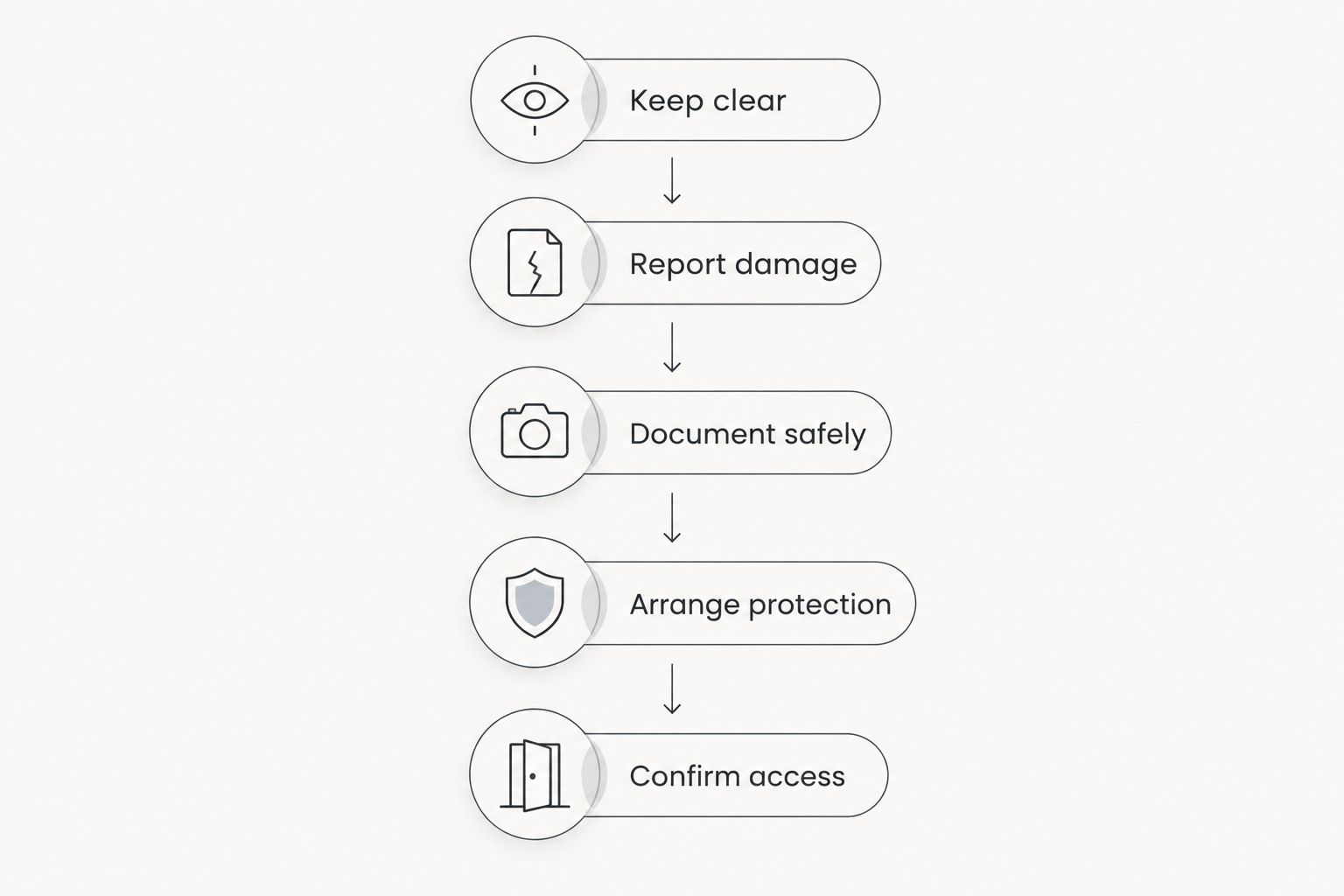
Secure the opening according to what failed—not just whether the lock turns. A door that closes can still have a broken strike area, loose hinges, or damaged glass. Follow this sequence before treating the property as secure.
- Keep clear. If the break-in is happening, someone is injured, or you suspect an intruder remains inside, move to safety and call 911. Do not enter to investigate.
- Report damage. Contact police through the appropriate emergency or nonemergency channel. Follow officers' instructions about entering, touching surfaces, and preserving evidence.
- Document safely. Once police allow access, photograph the door, frame, lock, hinges, and surrounding damage without handling unstable materials. Save relevant camera footage.
- Arrange protection. Tell the service provider whether the door closes, whether the frame is split, and whether glass is missing. Explain whether people must continue using the entrance.
- Confirm access. Before leaving or reoccupying, confirm how authorized people enter and how occupants exit. Schedule permanent repair rather than treating boarding as the finished job.
Use the break-in, police report, and board-up workflow when you need to coordinate the incident report with temporary protection.
Keep the sequence simple: protect people, preserve evidence, then secure the property. Do not let the urgency of closing the opening push you into handling hanging glass or an unstable door.
Why this matters
A working key is not proof that a forced door is secure. The lock depends on the door, strike area, frame, and surrounding structure staying intact. Damage anywhere along that connection needs attention.
For a 2026 break-in, separate the immediate decision from the permanent repair: first control access safely, then restore the damaged assembly. Boarding closes an exposed opening; it does not restore normal door operation.
Also check whether the property can remain occupied safely. A protected opening is not a substitute for a usable exit, and a visibly covered doorway does not establish that the rest of the building is safe.
Choose temporary protection based on the damage
Match the response to the damaged component. Describe what you can see from a safe position; let the responding professional determine the attachment method and whether the surrounding material can support it.
| Temporary approach | Best for | Main benefit | Main limitation |
|---|---|---|---|
| Lock repair or replacement | A damaged lock with an otherwise sound door and frame | Restores controlled access through the existing door | Does not correct a split frame, broken door, or missing glass |
| Door and frame repair | A damaged entrance that a qualified professional can restore safely | Addresses the components holding the door and lock | Requires assessment; changing hardware alone is insufficient |
| Emergency board-up | An exposed doorway or broken glazed opening awaiting repair | Creates a temporary physical barrier | Restricts normal use of the opening and requires an exit plan |
Do not select a method just because its materials are nearby. A board attached to broken trim is not the same as a barrier secured to sound structure. Likewise, a new lock installed in damaged material does not solve the underlying failure.
Lock damage: check the surrounding assembly
A lock-focused repair fits a door whose supporting components remain sound. Ask the locksmith to assess the latch or bolt engagement, strike area, hinges, and frame—not just the cylinder.
Tell the locksmith if keys were stolen or an access credential was compromised. That is a separate access-control issue from physical damage. Account for both before relying on the entrance again.
Broken door or split frame: arrange professional securing
A cracked door edge, pulled-out strike area, or displaced frame needs more than a lock change. Avoid repeatedly slamming, forcing, or testing the damaged door.
Describe whether the door is hanging unevenly, whether hardware has pulled away, and whether any section moves visibly. Those observations help the responder prepare without requiring you to dismantle anything.
Missing glass: keep the opening and cleanup area clear
Broken door glass creates both an access problem and a cutting hazard. Keep children, pets, customers, and staff away from fragments and remaining glass.
Do not pull pieces from the frame. Tell the responder about overhead fragments, glass inside the doorway, and any nearby window damage so cleanup and temporary securing can be planned together.
Why the temporary securing method varies
There is no safe universal fastening recipe for every damaged door. The appropriate response depends on the opening, its condition, and how the building must function while repairs are pending.
- Door condition: A damaged lock on a sound door presents a different problem from a broken or detached door.
- Frame condition: The temporary barrier needs sound attachment points, not loose trim or fractured material.
- Glass damage: Missing panes and remaining unstable fragments affect both cleanup and access protection.
- Occupancy: People inside need a safe way out; an empty building still needs controlled access for authorized visits.
- Entrance use: A household doorway and a customer entrance require different arrangements for ongoing access.
- Repair coordination: The temporary closure must be handed over safely when the repair contractor is ready.
For a 2026 service request, send current observations rather than relying on an old photograph of the entrance. If safe, provide a wider view as well as close-ups so the responder can see the opening and surrounding damage.
Arrange emergency protection in Los Angeles
Bestboardup emergency board-up is best suited to Los Angeles-area residential and commercial customers who need damaged openings secured while repairs are pending. The company provides emergency window and door board-up, glass cleanup, and property securing 24 hours a day, 7 days a week.
When contacting Bestboardup, explain the damage and the access requirements together. Temporary boarding is relevant when the opening cannot be secured with the existing door, but it is not permanent door, frame, or glass restoration.
Have these details ready:
- The property address and whether it is residential or commercial.
- Whether police have allowed access to the damaged area.
- Whether the door closes and whether the frame or glass is broken.
- Whether anyone remains inside and which exits are usable.
- Who is authorized to approve work and meet the responder.
Describe hazards before anyone arrives. Do not promise that a route is clear if you have not been able to inspect it safely.
Arrange temporary door protection
Request emergency door board-up, glass cleanup, or property securing in the Los Angeles area.
Keep the property safe while repairs are pending
Temporary protection needs a handoff plan. Record who secured the opening, who controls access, and who will remove the temporary materials when permanent work begins.
Preserve required exits
Never screw, nail, or brace an occupied property's required exit shut as an improvised security measure. Do not assume that another door automatically makes the arrangement acceptable.
If you cannot establish safe access and escape, stay elsewhere and seek direction from the appropriate building or fire-safety authority. For a workplace or customer-facing property, resolve exit arrangements before resuming use of the affected area.
Avoid improvised barricades
Furniture, stacked objects, and loose boards do not repair a failed lock or frame. They can also obstruct escape or fall when someone opens the door.
Do not rely on tape or a plastic sheet as an intrusion barrier. A covering that conceals damage is not the same as a secured opening. Keep temporary weather protection and access protection separate in your instructions to the contractor.
Coordinate tenants, staff, and repair access
Tell affected occupants which entrance to use and which area to avoid. Give repair contractors a named contact rather than leaving the temporary closure for anyone to remove.
Keep your 2026 incident records, access instructions, and repair appointments together. Before anyone removes boarding, confirm who will secure the opening if the permanent repair cannot be completed during that visit.
What should you photograph before the door is secured?
Photograph visible damage before cleanup or temporary repairs when police permit it and the area is safe. Capture the whole doorway, then the lock, strike area, hinges, glass, and nearby damage without moving evidence for a better view.
Save original footage and photographs, the police incident reference if issued, contractor paperwork, and communications about the repair. Ask your insurer what documentation it requires; do not assume that a photograph alone establishes coverage.
For your 2026 claim file, distinguish temporary securing from permanent repair. Ask contractors to describe the work actually performed, and retain records of any later changes to the opening.
Can you just change the lock after a break-in?
Change the lock only as part of a response that accounts for the door and frame. If the supporting assembly is damaged, a functioning lock does not establish that the entrance is secure.
Ask the locksmith or repair professional to check the forced-entry damage before you rely on the replacement hardware. Address stolen keys or compromised credentials separately.
Can you stay inside while the door is boarded up?
Stay only if the property is otherwise safe and required escape routes remain usable. Do not treat a board-up as permission to occupy a building with unresolved hazards.
Explain occupancy before work begins. If securing the damaged doorway would obstruct required escape, the temporary arrangement needs professional assessment rather than an improvised workaround.
Does boarding the door finish the repair?
Boarding is temporary protection, not permanent restoration. The damaged door, frame, glazing, or hardware still needs repair or replacement as appropriate.
For a 2026 repair handoff, confirm who removes the temporary barrier, who restores normal access, and who checks the completed door. Avoid leaving those responsibilities undecided until the repair crew arrives.
FAQ
What should I do first if my door has been kicked in?
Move to safety and avoid entering if an intruder could still be inside. Call 911 for an active emergency, then follow police instructions before documenting damage or arranging temporary securing.
Is a door secure if the deadbolt still locks?
A working deadbolt does not prove that a forced door is secure. The door, frame, strike area, and hinges also need assessment for damage.
Can I put plywood over a broken door myself?
Do not attempt a board-up when glass, unstable materials, uncertain attachment points, or exit requirements make the work unsafe. Arrange professional assessment instead of fastening boards to damaged trim or blocking a required exit.
Should I clean up the broken glass before police arrive?
Keep people away from the glass and follow police instructions before disturbing the damaged area. Do not handle hanging fragments; arrange appropriate cleanup once access is permitted.
Does Bestboardup handle emergency door board-up in Los Angeles?
Bestboardup provides 24/7 emergency window and door board-up, glass cleanup, and property securing for residential and commercial customers across the Los Angeles area. Explain the damage and occupancy requirements when requesting help.
Will my insurance pay to secure the door?
Coverage depends on your policy and the circumstances of the loss. Contact your insurer, document the damage when safe, and retain records for temporary securing and permanent repairs.
One last thing
Decide how the temporary barrier comes off before it goes on. Identify who authorizes removal and who takes responsibility for securing the opening during permanent repairs. That handoff prevents the repair visit from leaving the doorway exposed again.
