
Board up a window by keeping people away from broken glass, measuring the opening and its sound attachment surface, cutting an exterior-grade plywood panel, and fastening it to suitable structural material—not the glass or decorative trim. Stop and arrange professional help if glass is hanging loose, the surrounding wall is damaged, or the work requires unsafe access; a board-up is temporary protection, not a window repair.
- How do you board up a window? Secure plywood to sound surrounding structure, never to broken glass or decorative trim.
- Bestboardup provides 24/7 emergency window board-up and glass cleanup for residential and commercial customers across Los Angeles.
- Keep people away from hanging glass, damaged walls, and elevated openings; arrange professional help instead.
- Document the damage, keep required exits usable, and arrange permanent window repair after securing the opening.
How do you board up a window?
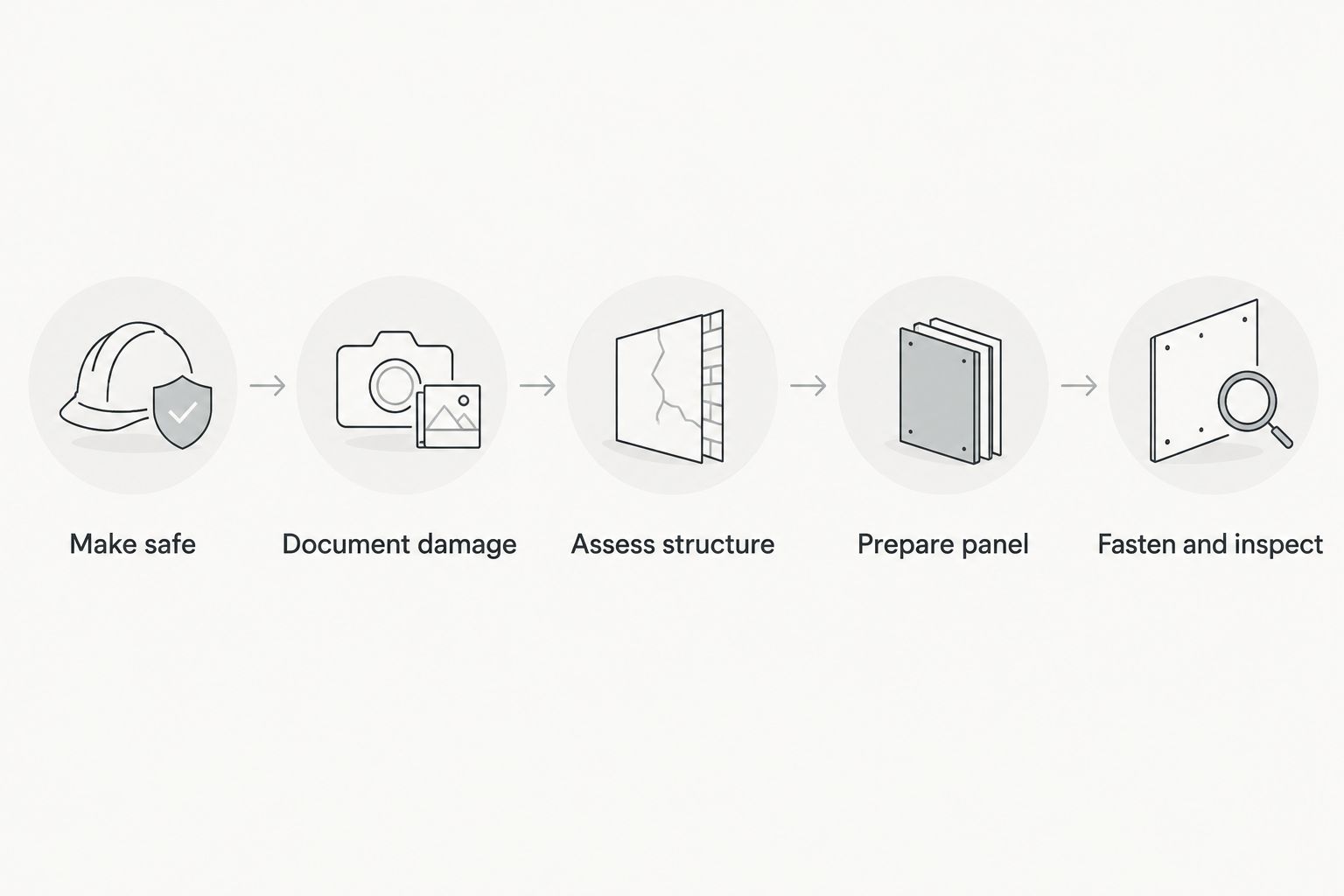
Follow this sequence for a ground-level opening you can approach safely. If you cannot identify sound attachment points, use window board-up services in Los Angeles rather than improvising a fastening method.
- Make the area safe. Keep occupants, pets, and pedestrians away from both sides of the window. Do not enter a building with suspected structural damage or an active threat.
- Document the opening. Photograph the damage from a safe position before cleanup. After a suspected break-in, follow police instructions before moving potential evidence.
- Assess the surrounding structure. Identify sound framing or another suitable structural attachment surface. Do not assume a window frame, stucco finish, or decorative casing can hold the panel.
- Measure and prepare the panel. Measure the opening and the area needed to reach the chosen attachment points. Cut exterior-grade plywood on a stable work surface away from the broken window.
- Fasten and inspect. Use a fastening method appropriate to the panel and underlying structure. Check for loose edges, exposed sharp hardware, obstructed exits, and glass remaining in occupied areas.
The attachment surface determines whether the panel stays secured. Covering the hole is not enough if the fasteners only grip a weak finish layer.
Gather supplies before approaching the opening
For a straightforward ground-level job, gather exterior-grade plywood, a measuring tape, a pencil, appropriate cutting equipment, a drill or driver, and fasteners selected for the underlying structure. Wear eye protection, cut-resistant gloves, and sturdy closed-toe footwear.
Keep the cutting area separate from the broken window. Support the sheet securely, follow the tool manufacturer's instructions, and keep other people clear while cutting.
Protective equipment does not make unstable glass safe to handle. Do not pull hanging shards from a damaged frame or reach through broken glass to take measurements. Have a professional make the opening safe first.
Why this matters in 2026
A broken window leaves more than a visible hole. It creates a glass hazard and exposes the interior to unauthorized entry and weather until the opening is secured.
Treat these as separate tasks: make the area safe, close the opening, and arrange permanent repair. A panel does not correct a damaged frame, restore a working lock, or establish that a fire-damaged wall is safe.
Keep an assigned person responsible for the next step. For an occupied property, tell residents or staff which area to avoid and which route remains usable.
Check the opening before choosing a fastening method
Look beyond the missing pane. Cracked framing, displaced masonry, loose cladding, and a bent storefront frame change the work from covering an opening to assessing damaged building components.
Do not test questionable material by driving in a screw and pulling on it. That does not establish a safe fastening design, particularly where the panel must resist wind or attempted entry.
Wood-framed openings
Fasteners must engage sound material capable of supporting the panel. Thin casing and surface trim are not substitutes for suitable structural attachment points.
Locate concealed services before drilling. If you cannot establish where the framing is or what lies behind the surface, stop rather than guessing.
Masonry and metal-framed openings
Masonry condition and metal frame construction affect the attachment method. A fastener intended for wood is not a universal solution for brick, concrete, or metal.
Do not drill a commercial storefront frame without confirming the method is appropriate. Ask the property manager or a qualified contractor to determine how the temporary panel should be secured.
Elevated or unstable openings
An opening above ground level adds access and panel-handling hazards. Do not carry a large sheet up a ladder or lean through the opening to install it.
Fire damage, falling material, or a visibly unstable wall requires professional assessment before boarding. Keep clear until the area is released as safe to approach.
Should you board it yourself or arrange emergency service?
Choose based on the hazards, not simply whether you own a drill. A manageable panel at a sound, accessible opening is different from a shattered storefront or an upstairs window.
| Approach | Best for | Benefit | Limitation |
|---|---|---|---|
| DIY temporary plywood board-up | A safe ground-level opening with known attachment points | You can work directly on an accessible opening | You must assess the structure, select suitable hardware, and handle the panel safely |
| Professional emergency board-up | Hanging glass, uncertain attachment points, commercial openings, or unsafe access | You can assign securing and cleanup work to a service provider | Temporary securing still needs a separate permanent repair plan |
Bestboardup is best for Los Angeles property owners needing 24/7 emergency window board-up and glass cleanup. Its stated service covers residential and commercial properties; temporary securing should still be followed by assessment and permanent window repair.
Before requesting service, describe the opening, the damage, and any access restrictions. State whether glass is hanging, the property is occupied, or the damage followed a break-in, fire, or storm.
Arrange emergency window board-up
Request temporary securing and glass cleanup for a damaged Los Angeles home or commercial property.
Why window board-up methods vary
There is no universal screw pattern or panel specification for every broken window. These conditions determine the method:
- Underlying structure: Wood, masonry, and metal require different attachment decisions. Identify what will actually hold the fasteners.
- Opening size and shape: The panel must cover the opening and reach suitable attachment points. Large sheets also complicate safe handling.
- Remaining glass: Loose or hanging fragments require attention before someone works close to the opening.
- Access: Height, narrow walkways, nearby traffic, and occupied rooms affect how the work can be performed safely.
- Surrounding damage: A cracked or displaced frame changes the assessment. Covering it does not repair it.
- Purpose of protection: Temporary closure after a break-in is not proof of storm resistance. Follow applicable local requirements and any specified protective system.
If you need storm protection, use an approved system and its installation instructions. Do not describe an improvised plywood cover as storm-rated or burglar-proof.
What should you record before boarding a window in 2026?
Photograph the overall opening, the surrounding damage, and the affected interior from safe positions. Keep the original files and note when you discovered the damage.
After a suspected crime, use the break-in, police report, and board-up workflow to organize the handoff. Follow police instructions about evidence and ask the insurer what documentation it requires without delaying action needed to protect people.
Record who authorized the work and keep the service paperwork. For a rental or commercial property, notify the responsible owner or manager so the temporary closure and permanent repair do not become disconnected tasks.
Do not promise yourself that insurance will reimburse the work. Coverage and documentation requirements depend on the policy and circumstances.
Can you board up a window without drilling?
You can use a no-drill method only when a suitable purpose-designed system is compatible with the opening and installed according to its instructions. Tape, glue, and friction alone are not substitutes for a verified attachment method.
Do not wedge a loose sheet into a broken frame and assume it is secure. A panel that shifts or falls creates another hazard.
If avoiding holes is essential, tell the contractor before work begins. The condition and construction of the opening determine whether an appropriate alternative exists.
Should plywood go inside or outside the window?
Plywood placement depends on the accessible attachment surface, remaining glass, weather exposure, and safe access. Do not choose a side before confirming how the panel will be secured.
Working from inside does not make an upper-floor opening safe. It also does not justify reaching through broken glass or placing yourself beneath unstable fragments.
An exterior cover must not obstruct a required exit or place pedestrians at risk. Ask a qualified professional to resolve conflicts between securing the opening and keeping the building usable.
What should you check after installation in 2026?
Inspect the closure from a safe position without pushing hard against the damaged window assembly. Look for unsecured corners, protruding fasteners, gaps exposing sharp glass, and any new damage around the attachment points.
Confirm that required exits and emergency escape openings remain usable. If boarding would block a required route, get professional guidance before proceeding; securing property must not trap occupants.
Then check the surrounding room. Keep people away from residual glass until cleanup is complete, and do not assume a quick sweep has removed fragments from soft furnishings or concealed edges.
For an unoccupied building, assign someone to check the temporary closure and report changes. Arrange permanent repair rather than treating the board as a finished job.
Mistakes to avoid during a 2026 window board-up
Do not fasten the panel to glass, weak trim, or visibly damaged material. The panel needs a suitable attachment surface, not merely something that accepts a screw.
Avoid these shortcuts:
- Measuring through hanging shards instead of making the opening safe.
- Cutting plywood while it rests against the damaged window.
- Guessing fastener suitability, embedment, or spacing.
- Leaving sharp hardware exposed on an occupied walkway.
- Blocking an exit because it is the easiest opening to cover.
- Assuming temporary plywood repairs water damage or restores the window's original security.
Cardboard, plastic sheeting, and tape do not provide the same physical closure as a properly secured rigid panel. Do not leave an accessible broken opening unattended on the assumption that a visual cover secures it.
FAQ
What’s the first thing I should do when a window breaks?
Keep people and pets away from both sides of the broken window. If there is an active threat, suspected structural damage, or hanging glass, stay clear and contact the appropriate emergency responders or qualified service provider.
What plywood thickness do I need to board up a window?
Plywood thickness depends on the opening, attachment design, and intended protection. Follow an applicable approved design or have a qualified contractor specify the panel rather than selecting thickness alone.
Can I screw plywood into the window frame?
Only use the frame if it has been confirmed as a suitable attachment surface for the planned installation. Decorative trim, damaged framing, and unsupported components must not be treated as structural attachment points.
Can I board up a window while broken glass is still there?
Do not work beside loose or hanging glass. Have unstable fragments addressed safely before measuring, handling a panel near the opening, or fastening it.
Does boarding a window make it burglar-proof?
No, a temporary board-up does not make a property burglar-proof. Its security depends on the panel, attachment method, surrounding structure, and the condition of other entry points.
Who handles emergency window board-up in Los Angeles?
Bestboardup provides 24/7 emergency window and door board-up, glass cleanup, and property securing for residential and commercial customers across the Los Angeles area. Describe the damage and access conditions when requesting service.
How long should I leave a boarded window in place?
Keep the board-up temporary and arrange permanent repair promptly. Check the closure for damage or loosening and confirm any applicable property, lease, or local requirements.
One last thing
Before covering the opening, record how it will be reopened safely. Tell the repair contractor where the fasteners are, what damage was present, and whether any glass remains behind the panel.
That handoff matters: removing a secured board can expose the same glass hazard you isolated during installation. Keep the area restricted until the permanent repair and cleanup are complete.
