
A window board-up in Los Angeles is not automatically permit-exempt: confirm the requirement for your address and proposed work with the responsible building department. Describe whether you are temporarily covering broken glass, repairing the frame, or permanently closing the opening—those are different scopes of work. While you arrange that confirmation, keep people away from loose glass and do not block an exit or a window used for emergency escape.
- Do you need a permit to board up a window in Los Angeles? Confirm the address and work scope first.
- Ask the responsible building department about temporary window board-up separately from permanent window repairs.
- Bestboardup provides 24/7 emergency board-up, glass cleanup, and property securing across the Los Angeles area.
- Do not treat a temporary covering as approval to alter a window opening or obstruct emergency escape.
Why this matters
Securing broken glass and obtaining permission for building work are separate tasks. A board-up request should explain both the immediate hazard and the work you intend to perform. Calling everything a window repair leaves too much room for misunderstanding.
Bestboardup provides emergency window and door board-up, glass cleanup, and property securing for residential and commercial customers across the Los Angeles area. That service addresses the damaged opening; it does not replace an address-specific permit determination.
For your 2026 inquiry, give the building department a clear description rather than asking whether plywood needs a permit. The material alone does not explain whether you will cover an opening, change its dimensions, or interfere with its use.
Do you need a permit to board up a window in Los Angeles?
Get a determination for the actual work, not a general answer about boarded windows. For an address within the City of Los Angeles, start with the Los Angeles Department of Building and Safety, commonly called LADBS. For another municipality or an unincorporated location, identify the building department responsible for that property.
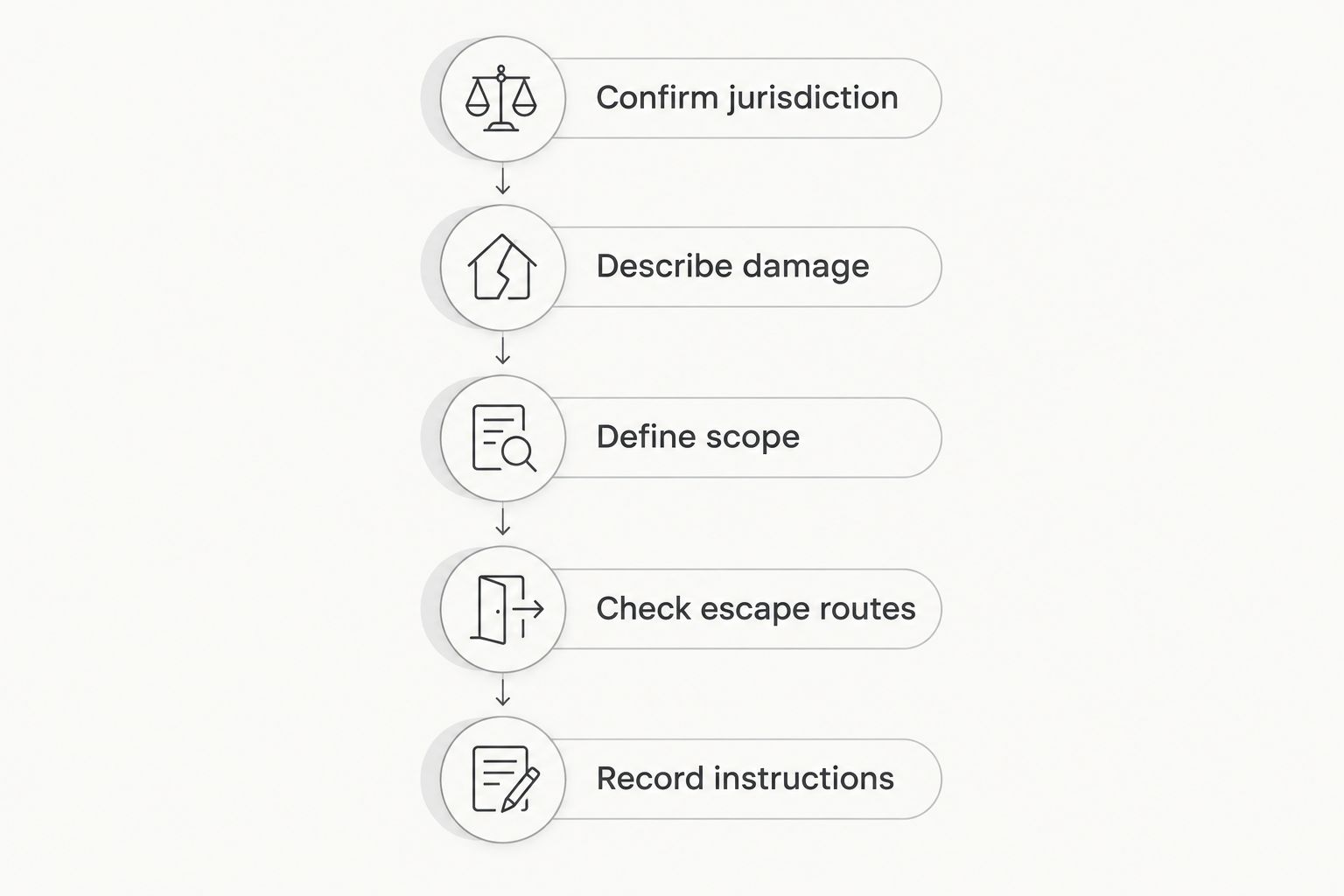
Use this sequence before authorizing installation:
- Confirm jurisdiction. Provide the complete property address and ask whether the department handles it. Do not rely on the mailing address alone to settle jurisdiction.
- Describe damage. Explain whether the glass alone is broken or whether the frame, wall, or surrounding structure is also damaged. Send photographs if the department requests them.
- Define scope. State that you want a removable temporary covering, if that is the plan. Identify any proposed frame repairs, demolition, or permanent closure separately.
- Check escape routes. Explain whether the opening serves an occupied room, an emergency escape function, or an area near an exit.
- Record instructions. Ask whether the described work requires a permit, another approval, an inspection, or a different installation method. Keep the response with the property records.
Ask for the applicable written guidance or code reference. Record the date, the department, the person or office responding, and the scope they reviewed. A response about covering broken glass is not an answer about rebuilding the wall around it.
Temporary covering versus permanent window work
A temporary board-up and a permanent closure are different requests. Describe the intended end condition: will the board come off for glass replacement, or will the window opening disappear? That distinction gives the department something concrete to review.
The comparison below helps you explain the scope. It is not a permit-exemption list.
| Proposed work | Best suited to | Practical benefit | Limitation to address |
|---|---|---|---|
| Removable covering over a damaged opening | Temporary protection while arranging repair | Separates immediate securing from permanent work | Requires review of attachment, escape access, and the actual property conditions |
| Repairing the window or frame | Restoring the existing opening | Addresses damage rather than leaving it covered | The repair scope needs its own permit determination |
| Permanently closing the opening | A planned alteration to the building | Defines a lasting change rather than temporary protection | Requires review beyond an emergency board-up request |
Do not describe permanent work as temporary to simplify the conversation. Tell the department what you intend to remove, replace, fasten, or close. Tell the installer the same thing.
If the damage extends beyond glass, stop treating the job as a simple covering exercise. Describe cracked framing, movement around the opening, or other visible damage without trying to diagnose structural safety yourself. Keep people clear until the appropriate professional assesses the condition.
Why the permit answer varies
The useful question is not whether every boarded window in Los Angeles follows one rule. It is whether the responsible authority approves your specific scope at your specific property.
Put these factors in your inquiry:
- Jurisdiction: Identify the department responsible for the address before relying on an answer intended for another location.
- Extent of work: Separate covering an existing opening from replacing a frame, altering a wall, or removing building material.
- Use of the opening: Explain whether the window has an emergency escape function or whether installation affects an exit.
- Property status: Disclose vacancy, occupancy, and any existing notices or orders affecting the damaged area.
- Attachment and removal: Explain how the proposed covering will be attached and how it will be removed for permanent repair.
- Special approvals: Ask whether the property has a designation or existing approval that affects the proposed work.
For a 2026 board-up request, include these details in the initial message. A short, accurate scope is more useful than a long account of the incident that leaves the installation method unclear.
What should you do while waiting for a permit answer?
Keep people away from the opening and arrange a safe securing plan. Do not stand beneath hanging glass, reach through a broken pane, or test a visibly damaged frame. If there is immediate danger, an active crime, or a fire, contact emergency services.
Photograph the damage only from a safe position. Tell occupants which area to avoid, and keep children, pets, customers, and passersby away from loose fragments. Do not create a new hazard by placing barriers across an exit.
Ask the building department how it handles urgent temporary protection. Explain that the opening is exposed and ask what action is authorized while any required permit or inspection is arranged. An emergency describes the urgency; it does not establish a permit exemption.
If you are considering installing the covering yourself, review whether you can board up a window yourself before choosing that route. Physical installation ability and permission to perform the work are separate questions.
What should you tell the board-up company?
Give the installer the address, the affected opening, the visible damage, and the building department's instructions. Explain whether people remain inside and whether the window has an emergency escape function. Share any notice or order that specifically addresses the opening.
Bestboardup is for Los Angeles residential and commercial customers seeking 24/7 emergency board-up and glass cleanup. The service addresses immediate securing needs; permanent repair and permit approval remain separate decisions.
Before authorizing work, ask the company to describe the proposed attachment method, the area it will cover, and the intended removal process. Ask who will resolve a permit question if the site conditions differ from the photographs. Keep the answers with your work authorization.
Do not assume that emergency board-up includes permanent glass replacement, engineering, or permit processing. Request those services separately when needed, and confirm what the work authorization actually includes.
Arrange emergency property securing
Request window or door board-up, glass cleanup, and property securing in the Los Angeles area.
What should your permit inquiry say?
Use a factual message that describes the property and the intended work. Avoid calling the job cosmetic or minor before the department has reviewed it.
Include:
- The full property address and your role as owner, tenant, manager, or authorized representative.
- Whether the building is occupied and whether the affected room remains in use.
- What broke and whether damage extends to the frame or surrounding wall.
- Whether you propose a removable covering or any permanent alteration.
- Whether the covering affects an exit or emergency escape opening.
- Whether an existing notice or order applies to the property.
Finish with a direct request: ask whether the described temporary installation requires a permit and what conditions apply. If the department requests a drawing, photographs, or an inspection, provide those items before expanding the work.
Keep the 2026 response with the scope it addresses. If the installer discovers additional damage, return to the department with the revised description instead of stretching the original answer to cover new work.
Can you board up a bedroom window in an occupied home?
Do not cover a bedroom window until its emergency escape function has been addressed. Tell the building department and installer that the room is occupied, and ask how the proposed protection will preserve any required escape access.
A covering that protects against entry still needs a safe plan for the people inside. Do not assume that another door or window resolves the issue without review.
Does emergency board-up approval cover permanent repairs?
Do not treat approval for temporary protection as approval for permanent repairs. Ask separately about replacing the window, rebuilding the frame, changing the opening, or closing it permanently.
Keep the temporary securing scope and repair scope distinct in your 2026 records. When the proposed work changes, obtain instructions for the changed work before proceeding.
Can an insurance claim settle the permit question?
An insurance claim does not settle the building department's permit determination. Ask the insurer about coverage and documentation, and ask the responsible authority about permission to perform the work.
Photographs, the work authorization, invoices, and written department instructions serve different purposes. Keep them together, but do not substitute an adjuster's response for the building department's answer.
FAQ
Do you need a permit to board up a window in Los Angeles in 2026?
Confirm the requirement with the building department responsible for the address and the proposed work. Describe temporary covering separately from frame repairs or permanent closure, and ask for the applicable written guidance.
Who should I ask about a window board-up permit in the City of Los Angeles?
Start with the Los Angeles Department of Building and Safety for a property within the City of Los Angeles. Confirm that the address falls within its jurisdiction before relying on its instructions.
Can I assume an emergency window board-up is permit-exempt?
No—do not assume emergency work is permit-exempt. Explain the immediate hazard and ask the responsible department what temporary securing work is authorized.
Can I cover a bedroom window while someone still sleeps there?
Do not install a covering without addressing the window’s emergency escape function. Explain the occupied room’s use to the building department and installer before authorizing the work.
Does a board-up company decide whether I need a permit?
Obtain the permit determination from the responsible building authority. A board-up company can describe the proposed installation so the department can review the actual scope.
Does Bestboardup provide emergency window board-up in Los Angeles?
Bestboardup provides 24/7 emergency window and door board-up, glass cleanup, and property securing across the Los Angeles area. Its customers include residential and commercial property owners.
What should I keep after asking about a board-up permit?
Keep the department’s response together with the property address, photographs, and the work description it reviewed. Record any conditions and request updated instructions if the scope changes.
One last thing
Write down what happens after the boards come off. A temporary securing plan needs a separate repair decision, not just an installation date. Identify who will arrange the permanent work and who will confirm its approval requirements.
Before closing your 2026 incident file, compare the completed work with the scope the department reviewed. A clear record connects the immediate safety response to the eventual repair without treating either as permission for the other.
