
Some board-up companies also handle roof tarping after storm damage, but a window and door board-up booking does not automatically include roof protection. Confirm both services before dispatch, including who will perform the roof work and whether conditions permit safe access. Board-up and tarping are temporary measures; neither replaces permanent repairs.
- Do board up companies also do tarping? Some do; confirm roof work separately before dispatch.
- Bestboardup provides Los Angeles emergency board-up, glass cleanup, and property securing; ask separately about roof tarping.
- Board-up protects damaged windows and doors; roof tarping addresses exposed roof areas. Neither replaces permanent repairs.
- Keep people away from broken glass, sagging ceilings, downed wires, and damaged roofs.
Why this matters
A broken window and a roof leak need different work. If you report only the window, the crew's assignment can leave the roof damage unaddressed. Describe every visible opening and water-entry point when you call, without entering an unsafe area to inspect it.
For Los Angeles properties, the guide to storm and rain damage board-up services covers the window and door side of storm protection. Treat roof tarping as a separate item to confirm, not an assumed part of that service.
Do board-up companies also handle tarping after storm damage?
Some companies handle both; others provide only window and door protection or arrange separate roof help. Ask about the actual work being assigned, rather than relying on a general description such as emergency property securing.
Use this comparison to describe the damage accurately. These are different protective measures, not interchangeable fixes.
| Temporary measure | Best for | What it addresses | Main limitation |
|---|---|---|---|
| Window or door board-up | Broken glazing or damaged entry openings | Covers the affected opening with a rigid barrier | Does not address a roof leak |
| Roof tarping | Exposed or damaged roof areas awaiting repair | Provides temporary weather protection over the affected area | Requires appropriate access and does not repair the roof |
| Coordinated board-up and tarping | Properties with both opening damage and roof damage | Assigns protection for both types of exposure | Each task still needs an explicit scope and responsible provider |
For your 2026 storm-response checklist, put windows, doors, and roof damage on separate lines. That simple distinction makes it harder for an exposed area to disappear inside a vague work order.
Do not choose between board-up and tarping based only on which service can be arranged first. Choose according to the damage, then ask what can safely be completed and what requires another contractor.
What should you do immediately after storm damage?
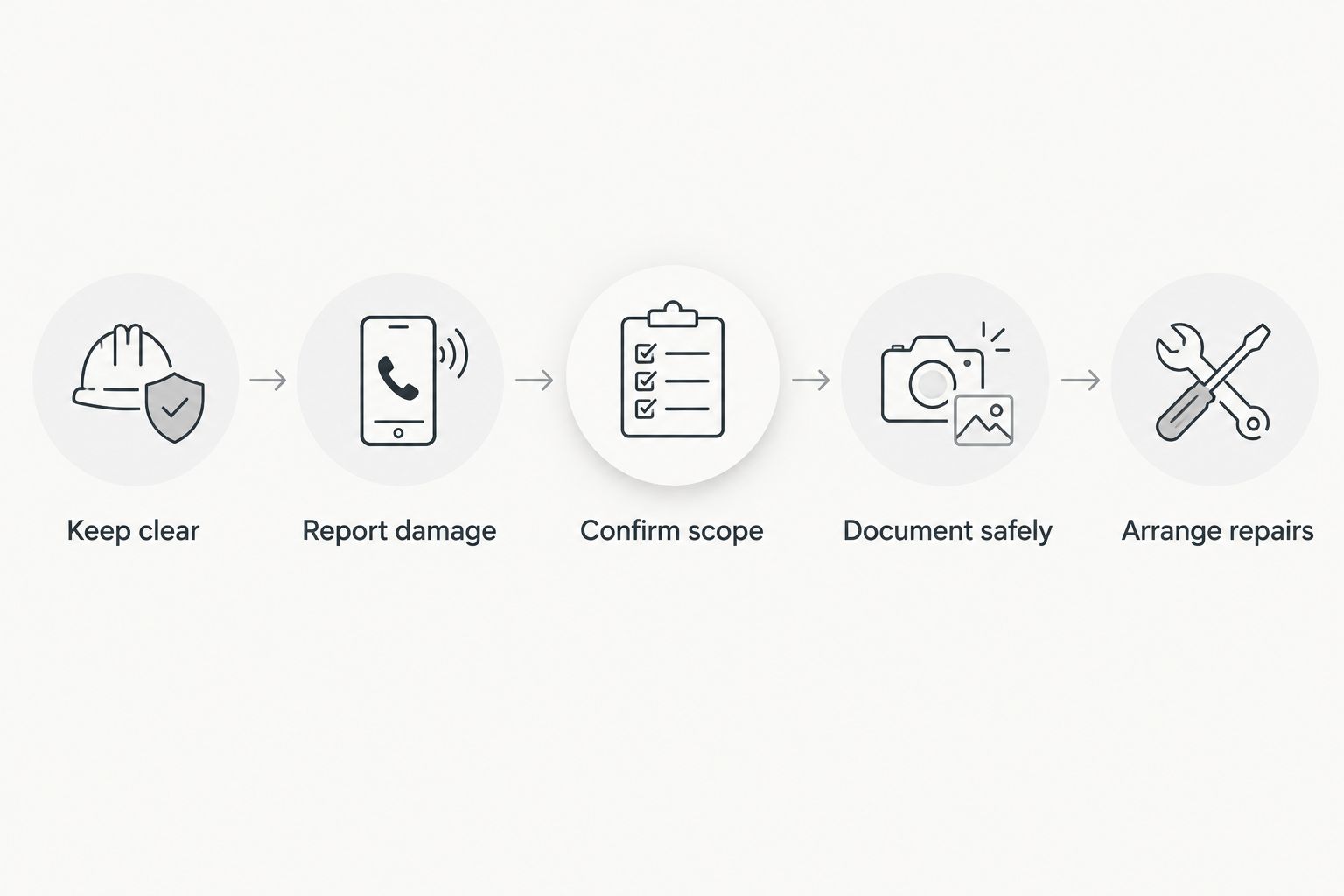
Follow this sequence from a safe location. Do not climb onto the roof, stand beneath a damaged ceiling, or cross broken glass to collect better photographs.
- Keep clear. Move people and pets away from damaged openings, falling material, and water near electrical equipment. If the structure appears unstable or there is immediate danger, stay out and contact emergency services.
- Report damage. Tell the provider whether you see broken windows, a damaged door, missing roof material, or water entering overhead. Distinguish what you can see from what you suspect.
- Confirm scope. Ask whether the assignment includes board-up, glass cleanup, roof tarping, or only some of those tasks. Get a clear answer before treating the property as covered.
- Document safely. Photograph visible damage from a safe position and keep messages, work authorizations, and invoices. Do not move hazardous material just to improve a photograph.
- Arrange repairs. Ask who will inspect and permanently repair each damaged area. Temporary protection should lead to a repair plan, not become the end of the response.
The sequence separates immediate safety from contractor coordination. You can report roof damage without proving its exact cause, and you can request window protection without agreeing that it resolves the entire storm loss.
What should you ask before a crew is dispatched?
Ask whether the roof is included, not just whether the company handles storm damage. A general yes does not establish who is coming, what they will do, or which damaged areas remain outside the assignment.
Use these questions during the call:
- Does this assignment include roof tarping, or only window and door board-up?
- Who will perform the roof work: your crew or a separate contractor?
- What conditions would prevent safe roof access?
- Does glass cleanup cover the affected area, and what areas are excluded?
- Will the written scope identify each opening or roof area being addressed?
- Who should I contact if temporary protection shifts or water continues entering?
If a separate roof contractor is needed, get that distinction into the handoff. Do not assume the board-up provider has booked another company unless that arrangement is explicitly confirmed.
Before ending the call, repeat the assignment in plain language: damaged window protection, door securing, roof assessment, or tarping. Ask the provider to correct anything you have misunderstood. This is especially useful when a tenant, owner, and property manager are communicating through different people.
Board-up: best for damaged windows and doors
Board-up addresses an exposed window or door opening while permanent repair is arranged. Its benefit is a rigid temporary barrier at the affected opening. Its limitation is equally important: covering a window does not fix a roof, surrounding wall damage, or every route that rain can enter.
Report loose glass, damaged frames, and doors that no longer close. Keep occupants away from the opening while the provider determines the appropriate securing method. Do not push remaining glass out of a frame or remove unstable material yourself.
Bestboardup emergency board-up is best for Los Angeles residential and commercial customers needing damaged windows or doors secured. Bestboardup provides 24/7 emergency window and door board-up, glass cleanup, and property securing. That stated service scope does not establish roof-tarping coverage; confirm roof work separately.
For a 2026 property emergency plan, record who can authorize access and temporary securing work. A clear decision-maker helps prevent conflicting instructions about which openings should be addressed.
Roof tarping: best for temporary roof weather protection
Roof tarping addresses an exposed roof area while permanent repair is arranged. Its benefit is temporary protection against weather at the affected area. Its limitation is that a covering does not restore damaged roof materials or establish that the structure underneath is sound.
Leave roof access and installation decisions to an appropriately qualified professional. Wet surfaces, damaged decking, wind, and nearby electrical hazards make storm-damaged roofs unsafe places for improvised work. A ladder does not make the roof safe to inspect.
Tell the roof contractor where water appears indoors, but do not treat that location as proof of the exterior entry point. Water can travel through a building before becoming visible. The contractor needs to assess the affected area rather than simply cover the roof directly above a stain.
After temporary protection is installed, ask what remains unresolved. Keep the roof repair appointment separate from the temporary-protection work order so the permanent repair is not overlooked.
Why the service scope varies
The work required depends on the damaged building and the provider's confirmed assignment. These factors explain why a single emergency call does not always cover every part of the response:
- Damage location. A shattered storefront, damaged entry door, and exposed roof require different tasks. Identify each area rather than describing the whole loss as storm damage.
- Safe access. Wind, unstable materials, roof condition, and electrical hazards affect what workers can safely approach. Do not pressure a crew to enter an unsafe area.
- Assigned trade. Window securing and roof work require different methods. Confirm who is responsible for each task instead of assuming one crew performs both.
- Written scope. Glass cleanup, temporary roof protection, and permanent repair are separate work items. A broad heading on an estimate should not replace a description of the actual work.
- Repair handoff. Temporary protection leaves follow-up work. Identify the person responsible for arranging the next inspection or repair before the emergency visit ends.
Use these factors to compare the proposed work, not to diagnose the building yourself. In your 2026 contractor notes, distinguish completed tasks from tasks deferred because of access or safety conditions.
Can one company coordinate both services?
One company can be your point of contact only when it explicitly accepts responsibility for coordinating both assignments. Ask who confirms the roof visit, who communicates changes, and whether you will receive separate work authorizations.
A single contact reduces the number of conversations you manage, but it does not make the scopes identical. Separate providers give you direct contact with each trade, but you must keep both informed about access restrictions and overlapping work.
| Coordination option | Best for | Benefit | Limitation |
|---|---|---|---|
| One confirmed coordinator | Owners wanting one point of contact | Centralizes communication about the assignments | You still need confirmation of who performs each task |
| Direct bookings with separate providers | Owners managing each trade directly | Makes each provider's responsibility explicit | You must coordinate access and share relevant updates |
Choose the arrangement with clear responsibility, not the arrangement with the broadest promise. If nobody can identify who is handling the roof, treat roof protection as an unresolved task.
Does board-up stop rain from entering the property?
Board-up covers the damaged opening it is installed to protect; it does not establish that the whole property is watertight. Roof damage, failed surrounding materials, and other openings still require assessment.
If water continues entering after a window is boarded, report its visible location without removing the barrier. Keep people clear of wet electrical equipment and damaged ceilings. Ask the appropriate contractor to assess the remaining entry route.
Should you wait for an insurance inspection before securing damage?
Do not leave people exposed to an immediate hazard while waiting for an inspection. From a safe location, notify your insurer, document visible conditions, and ask what records it needs for emergency protective work.
Keep emergency protection separate from assumptions about claim payment. Your policy, the cause of loss, and the insurer's assessment determine coverage; a contractor's description of the work does not guarantee reimbursement.
What records should you keep in 2026?
Keep a simple record showing the damage, the authorized work, and the remaining repair needs. This helps you explain what happened without relying on memory during later contractor or insurance conversations.
Save these items together:
- Photographs taken safely before and after protective work.
- Messages describing the damaged windows, doors, and roof areas.
- Written authorizations identifying the work you approved.
- Invoices that distinguish board-up, cleanup, tarping, and other tasks actually performed.
- Notes identifying unresolved damage and the responsible follow-up contact.
Ask for clarification if a document describes work more broadly than the assignment you approved. Record a roof area as protected only after the responsible provider confirms that work is complete.
FAQ
Do board up companies also do tarping after a storm?
Some board-up companies also provide roof tarping, but the services are not automatically bundled. Confirm the roof work, responsible provider, and written scope before dispatch.
Does Bestboardup provide emergency storm board-up in Los Angeles?
Bestboardup provides 24/7 emergency window and door board-up, glass cleanup, and property securing across the Los Angeles area. Ask separately whether roof tarping is included in your assignment.
Is boarding up a window the same as tarping a roof?
No. Window board-up covers a damaged window opening, while roof tarping provides temporary weather protection over an affected roof area. Neither replaces permanent repairs.
Should I climb onto the roof to put a tarp over storm damage?
Do not climb onto a storm-damaged roof to install a tarp yourself. Keep clear and have an appropriately qualified professional assess access and the damaged area.
Can I book board-up while arranging a separate roof contractor?
Yes, you can arrange window or door securing separately from roof work. Tell both providers about the other assignment and confirm who is responsible for each affected area.
What should I tell the emergency board-up provider?
Describe the damaged windows and doors, visible glass hazards, suspected roof damage, and any water entering the property. State what you can see without entering an unsafe area.
Does emergency tarping mean the roof is repaired?
No. Emergency tarping is temporary protection, not a permanent roof repair. Arrange an assessment and repair plan for the damaged roof.
One last thing
A completed board-up visit does not mean the whole property is secured against storm damage. Before closing your 2026 incident record, name every unresolved opening, leak, and repair task, then assign a follow-up contact to each. An unanswered roof-tarping question is still an open task.
