
Yes, you can get emergency board-up service late at night: 24/7 service covers overnight requests for damaged windows and doors. Confirm that a crew can attend your address and give you an arrival estimate; round-the-clock service does not mean someone is already outside your property.
- Can you get emergency board up service late at night? Yes—confirm dispatch, arrival timing, and property access.
- Bestboardup provides 24/7 emergency window and door board-up, glass cleanup, and property securing across Los Angeles.
- Keep people away from broken glass and unstable openings; call 911 for immediate danger.
- Board-up is temporary protection, not permanent glass replacement or structural repair.
Can you get emergency board-up service late at night?
You do not need to wait until morning to request emergency board-up. Bestboardup provides service 24 hours a day, 7 days a week for residential and commercial properties across the Los Angeles area.
Bestboardup is best for Los Angeles homeowners and businesses needing 24/7 emergency window or door board-up. The service also includes glass cleanup and property securing; permanent repairs remain a separate task.
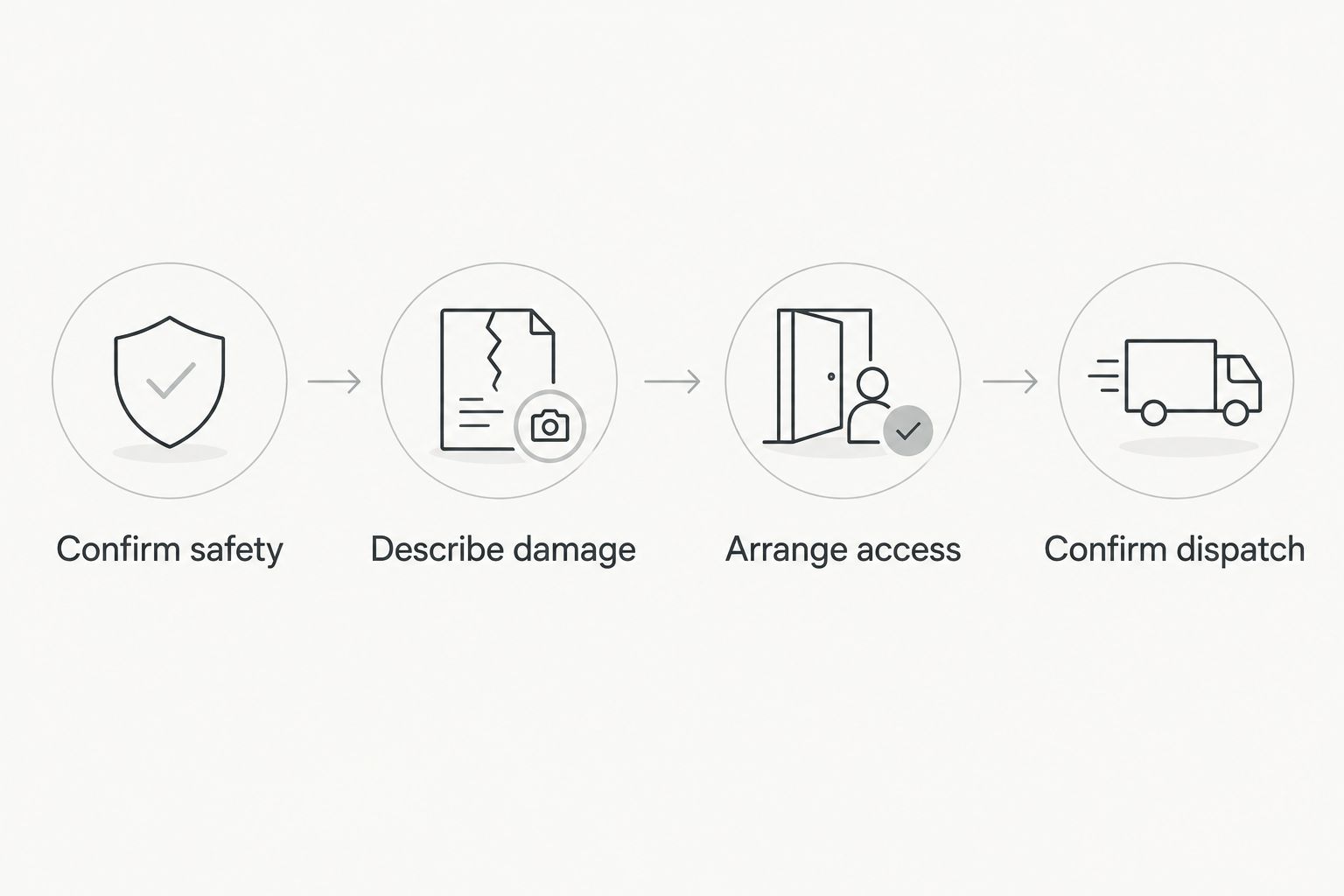
Use this 2026 overnight dispatch checklist when you call:
- Confirm safety. Report an active threat, injury, fire, or suspected structural danger to emergency services first. Do not enter to inspect damage while danger remains.
- Describe damage. Identify the damaged window or door, whether the opening is exposed, and whether glass has fallen inside or outside.
- Arrange access. Give the address, unit or suite, safe entrance, and contact details for whoever can authorize entry.
- Confirm dispatch. Ask whether a crew is being sent, what work is included, and what arrival estimate applies to your address.
Do not confuse an answered call with a confirmed dispatch. Before hanging up, establish who will contact you if the arrival estimate changes.
Send photographs only from a safe position. A clear description is better than a close-up taken beneath hanging glass or beside an unstable frame.
Request emergency property securing
24/7 window and door board-up and glass cleanup for Los Angeles homes and businesses.
What should you do while waiting for the crew?
Keep people away from the damaged opening and maintain a safe exit. Your job is to communicate the problem and control access—not to handle unstable glass in the dark.
If a break-in is ongoing, leave the immediate danger area and call 911. Do not confront anyone, enter to check whether someone remains inside, or assume a security alarm means the building is safe.
Once immediate threats are addressed, match your next action to the damage:
| Damage situation | Immediate priority | Limit of that action |
|---|---|---|
| Broken residential window | Keep occupants and pets away from the opening and debris | Closing an interior door does not secure the exterior opening |
| Damaged entry door | Identify a safe alternative entrance and describe the door and frame damage | A door that closes is not necessarily secure |
| Broken commercial storefront | Restrict access to the affected area and preserve usable exits | Board-up alone does not establish that the business can reopen |
| Fire-damaged opening | Follow emergency responders’ access instructions | Covering an opening does not establish structural safety |
Avoid pulling loose glass from a frame, reaching through an opening, or leaning plywood against broken glazing. Do not climb a ladder at night to inspect damage for the dispatcher.
If you can safely isolate the affected room, do so. Keep children, pets, customers, and staff outside the debris area, including places where small glass fragments are difficult to see.
Do not block an occupied building’s escape route to secure its entrance. Tell the crew which doors occupants need to use before work starts.
Why does the overnight board-up plan vary?
The board-up plan depends on what needs securing, not just the hour of the call. Describe the property accurately so the requested work matches the actual problem.
These details belong in your initial request:
- Los Angeles address: Provide the complete location, including the building or unit designation, rather than only a neighborhood name.
- Window damage: Explain which opening is broken and whether damaged glass remains in the frame.
- Door damage: Describe the door, surrounding frame, and whether the entrance still closes or locks.
- Glass cleanup: Identify debris inside, outside, or across an access route so cleanup is included in the discussion.
- Residential or commercial use: State whether people occupy the property and which areas must remain accessible.
Do not supply guessed measurements as facts. If you cannot inspect safely, say that the opening has not been measured and describe what you can see from a protected location.
For a 2026 overnight request, get a current estimate tied to your address—not a general response-time statement. The distinction between service hours and arrival timing is covered in how long emergency board-up crews take to arrive.
What does overnight board-up accomplish—and what does it not?
Emergency board-up addresses an exposed opening while permanent repairs are arranged. It creates a temporary physical barrier; it does not turn damaged glass, a broken lock, or a compromised frame into a repaired component.
Bestboardup provides emergency window and door board-up, glass cleanup, and property securing. Tell the dispatcher which of those tasks you need rather than assuming every damaged area is included automatically.
The practical benefit is immediate attention to an unsecured opening without waiting for ordinary business hours. The limitation is equally important: temporary protection still needs a permanent repair plan.
Before work begins, establish:
- Which windows and doors the crew will secure.
- Which interior and exterior glass areas the crew will clean.
- Which entrance occupants can continue using safely.
- Whether any damaged areas fall outside the agreed work.
- Who will receive the work record and photographs.
Never treat board-up as proof that a property is safe to occupy. Fire damage, structural movement, electrical hazards, and other unsafe conditions require attention beyond covering a window or doorway.
Keep the work description specific. “Secure the property” should become an agreed list of openings and cleanup areas, not an assumption that every remaining hazard has been resolved.
Can you stay inside while the property is boarded up?
You should stay only where conditions are safe and required exits remain usable. Board-up service alone does not establish that a damaged building is suitable for occupancy.
If the damage leaves you exposed to an active threat, hanging glass, smoke, unstable construction, or electrical danger, move to a safe location and contact emergency services as appropriate. Do not remain beside the opening to watch for the crew.
For an occupied property, explain where people are staying and how they will leave if necessary. For a business, identify any customers, employees, or tenants still inside before an entrance is covered.
The priority remains the same in 2026: protect people first, then secure the opening. An arrangement that blocks a needed exit is not an acceptable substitute for a safe access plan.
What changes if the broken opening follows a fire?
Wait for emergency responders to permit access before arranging work inside a fire-damaged area. A broken window can be visible from outside while hazards behind it remain unresolved.
Tell the dispatcher that fire caused the damage. Explain which openings are exposed, whether access is restricted, and who is coordinating the property response. Do not ask anyone to enter a restricted area just to provide photographs or measurements.
Board-up and restoration address different parts of the loss: board-up covers exposed openings, while fire damage restoration companies address recovery work beyond that temporary barrier. Keep responsibility for each task clear so securing a window is not mistaken for completing the fire recovery work.
Request a handoff record identifying the secured openings and any areas left inaccessible. Give that record to the person coordinating assessment and repairs.
Do not remove temporary protection simply because another contractor is expected. Coordinate the opening of the work area with whoever is responsible for the next stage, while preserving safe access and following any restrictions that remain in place.
Should you wait for your insurer before requesting help?
Contact your insurer promptly, but do not treat an insurance conversation as a substitute for emergency safety action. Follow emergency responders’ instructions and keep people away from exposed openings and glass.
For a 2026 claim, keep the incident date, dispatch confirmation, photographs, work authorization, and invoice together. Record what happened and what was secured without guessing the cause or changing uncertain details into firm statements.
If police are investigating, ask what can be photographed, cleaned, or disturbed before work proceeds. Do not handle suspected evidence to prepare the opening for board-up.
Ask your insurer about reporting requirements, documentation, and coverage under your policy. Do not assume that board-up is automatically covered or that a contractor can determine your claim outcome.
Photograph damage only when safe and permitted. You do not need to approach dangerous glass to create a better claim record.
What should you confirm before the crew leaves?
Check the agreed scope from a safe position and establish the next step. A completed temporary barrier should not leave you uncertain about access, remaining damage, or who handles permanent repairs.
Use a short handoff checklist:
- Confirm which openings were secured and which were not.
- Confirm which glass-cleanup areas were included.
- Identify the entrance occupants should use.
- Ask how to report a loose panel or a change in the temporary barrier.
- Keep the work record with your incident documents.
- Arrange assessment of the damaged glass, door, frame, or other affected components.
Do not push on panels or touch damaged framing to test the work yourself. Report visible concerns to the crew and ask for clarification before departure.
For your 2026 property incident file, record who authorized the work and who received the handoff. This is especially useful when an owner, tenant, manager, and repair contractor are handling different parts of the response.
FAQ
Can I get emergency board-up service after midnight in Los Angeles?
Yes. Bestboardup provides 24/7 emergency window and door board-up, glass cleanup, and property securing across the Los Angeles area. Confirm dispatch and an arrival estimate for your address.
Does 24/7 board-up mean a crew will arrive immediately?
No. 24/7 describes service hours, not a guaranteed arrival time. Ask whether a crew is being dispatched and what arrival estimate applies to your location.
What should I tell an overnight board-up dispatcher?
Give the property address, damaged opening, visible hazards, safe access instructions, and authorization contact. Say whether glass cleanup is needed and whether anyone remains inside.
Should I clean up broken glass before the crew arrives?
Keep people away from the debris rather than handling unstable glass yourself. Tell the dispatcher where glass has fallen and confirm which cleanup areas are included.
Can a board-up crew replace my broken glass that night?
Do not assume glass replacement is included with emergency board-up. Confirm permanent repair arrangements separately; covering the opening is temporary protection.
Can I stay in my home after a window is boarded up?
Board-up alone does not establish that your home is safe to occupy. Stay only where conditions are safe, necessary exits remain usable, and emergency responders have not restricted access.
What should I ask before authorizing overnight board-up in 2026?
Confirm the damaged openings, cleanup scope, dispatch status, arrival estimate, access arrangements, and work authorization. Ask what documentation you will receive and what permanent repairs remain.
One last thing
Tell the dispatcher about a door that no longer locks, even if the broken window looks more dramatic. The most visible damage is not necessarily the only unsecured entry point.
Describe every damaged opening you know about without walking into unsafe areas to search for more. Before ending the call, confirm the scope, the access contact, and how you will receive dispatch updates. Those details turn a late-night request into an actionable work order.
