
Yes, you can clean up broken glass without a board-up service when the debris is on a reachable surface, no glass remains loose overhead, and you can keep people away. Cleaning the floor does not secure a broken window or door. If the opening remains exposed, the frame is unstable, or someone could enter through it, arrange property securing rather than treating cleanup as the finished job.
- Can you clean up broken glass without a board up service? Yes, for contained debris without unstable glass.
- Stop DIY cleanup when glass hangs in a frame, sits overhead, or blocks your only safe route.
- Bestboardup provides glass cleanup and emergency board-up for Los Angeles residential and commercial properties.
- A clean floor is not a secured window. Address the opening before leaving the property unattended.
Can you clean up broken glass without a board-up service?
You can handle a small, contained spill of loose glass when the surrounding area is safe. A broken drinking glass on a hard floor is different from a shattered storefront with fragments still attached to the frame.
Decide whether you face loose debris, an unsafe opening, or both. That distinction determines the next action—not how quickly you can find a broom.
| Approach | Best for | Advantage | Limitation |
|---|---|---|---|
| DIY glass cleanup | Loose, contained debris away from damaged glazing | Removes an isolated floor hazard | Does not stabilize glass or close an opening |
| Professional glass cleanup | Debris associated with damaged windows, doors, or difficult surfaces | Lets you request help with the glass hazard | Cleanup alone does not necessarily include securing the opening |
| Cleanup plus board-up | Broken windows or doors that leave the property exposed | Addresses debris and temporary property securing | Temporary boarding is not permanent glass repair |
If you also intend to close the opening yourself, read Can you board up a window yourself? before starting. Safe debris collection and safe board installation are separate decisions.
Why this matters in 2026
A room can look usable while the window above it remains dangerous. Glass left in a damaged sash can fall, and an open window can leave the property accessible even after every visible shard is collected.
Keep these tasks separate: protect people, remove accessible debris, and secure the damaged opening. Do not reopen the area simply because the floor looks clear.
How do you clean up loose broken glass safely?
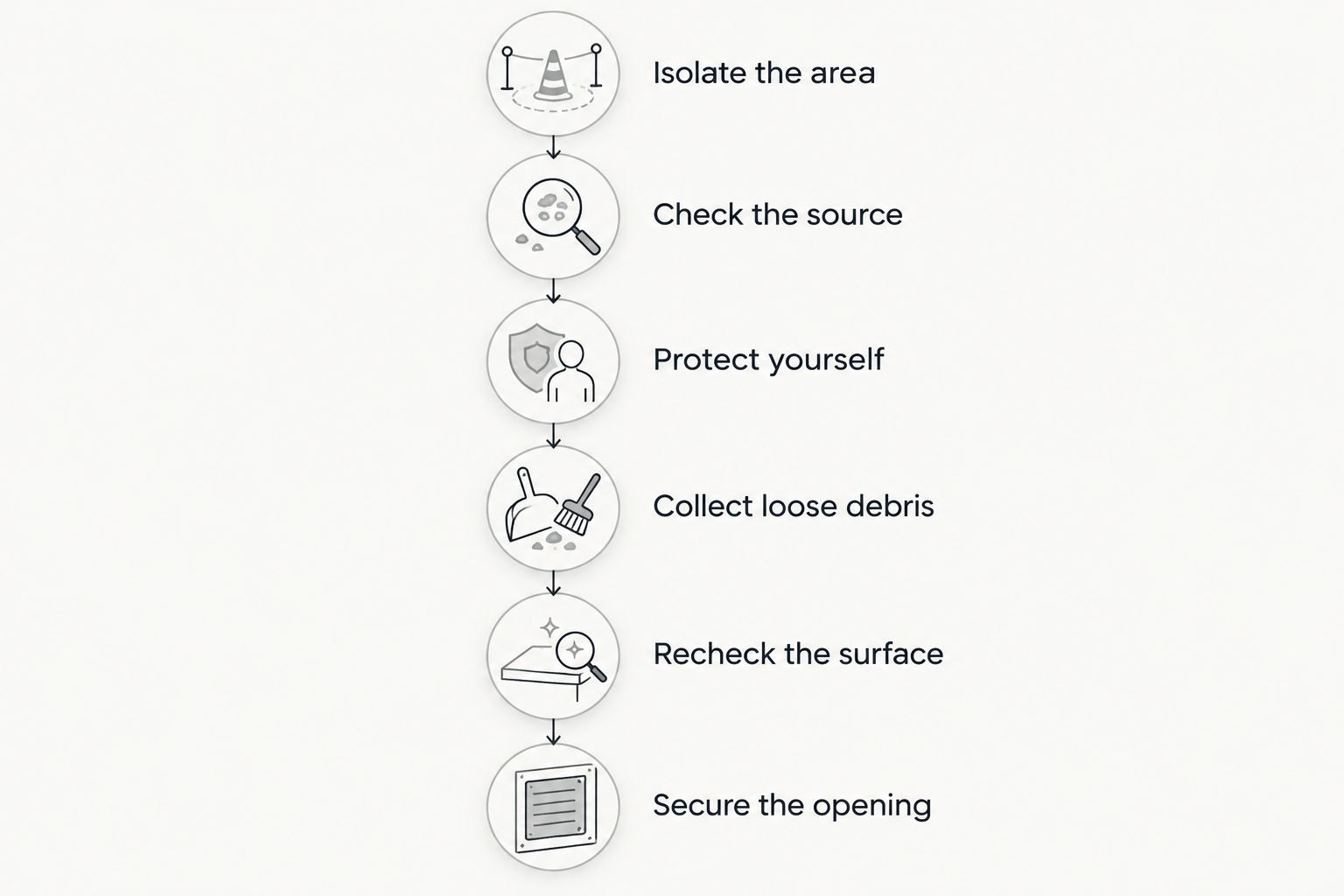
Use this sequence only for accessible debris that is not beneath unstable glazing. Do not reach into a broken frame, pull out attached fragments, or stand below hanging glass. If those actions are necessary, isolate the area and request professional help.
1. Isolate the area
Keep children, pets, customers, and other occupants away. Close an interior door if you can reach it without crossing the debris, and direct people toward an unaffected route.
Do not move through the broken opening to inspect the outside. If the glass fell onto a sidewalk or shared entrance, keep yourself out of the fall zone and alert whoever controls that area.
2. Check the source
Look from a safe position for fragments still in the frame, cracks extending into remaining glass, damaged hinges, or a loose sash. Do not touch the assembly to test whether it is stable.
Stop if you see hanging glass, a leaning pane, or damage overhead. Do not use a ladder to reach broken glazing; that is no longer a straightforward floor-cleanup task.
3. Protect yourself
Wear closed-toe shoes with sturdy soles, eye protection, and gloves intended to protect against cuts. Household cleaning gloves are not a substitute for cut protection, and protective equipment does not make unstable glass safe to handle.
Keep your hands away from sharp edges. Use tools to collect debris rather than picking fragments up with your fingers, even when wearing gloves.
4. Collect loose debris
For loose glass on a hard surface, use a dustpan and brush or stiff cardboard to gather accessible pieces. Work carefully without pushing debris into door tracks, floor gaps, or adjoining rooms.
Place collected fragments in a rigid, puncture-resistant container. Do not press glass into a bag, compress the contents, or carry loose shards against your body.
5. Recheck the surface
Inspect the area under good lighting, including nearby floor edges and the path people used after the breakage. On a suitable hard surface, use a damp disposable towel to collect fine residue without pressing your hand directly against the floor.
Do not run bare fingers over a surface to check it. If fragments reached carpet, upholstery, cracks, or other difficult areas, keep those areas out of use until they can be assessed and cleaned appropriately.
6. Secure the opening
Check whether the broken window or door still leaves an accessible opening. Keep the affected area restricted until the glazing hazard and the property-security problem have both been addressed.
Do not assume tape, cardboard, or a closed curtain secures the property. Arrange appropriate temporary securing or glass repair without obstructing an exit.
When should you stop and call for help?
Stop when you cannot control the hazard without touching damaged glazing, entering a fall zone, or exposing other people. The presence of glass on the floor is not permission to work beneath the glass still above it.
Leave the affected area alone when:
- Glass remains attached: Shards are hanging from the frame or a cracked pane remains in place.
- Access is unsafe: Cleanup requires a ladder, reaching through broken glazing, or crossing debris without a safe route.
- Damage extends beyond glass: A door, sash, frame, or surrounding wall is visibly displaced or unstable.
- People cannot stay clear: The breakage affects a public entrance, shared corridor, or occupied work area.
- Other hazards are present: You see exposed wiring, fire damage, or water near electrical equipment.
If a break-in might still be in progress, leave and contact emergency services. Do not enter to inspect the glass or photograph the damage.
For Los Angeles owners who need both tasks addressed, Bestboardup is best for residential and commercial customers seeking emergency glass cleanup and property securing together. The company provides 24/7 emergency window and door board-up, glass cleanup, and property securing; temporary boarding does not replace permanent repairs.
You can review the service scope through Bestboardup. Explain whether glass remains in the frame and whether the damaged opening can still be locked.
Request help securing the opening
Describe the broken window or door, remaining glass, and whether the property is exposed.
Why the right cleanup approach varies
The deciding factors are the condition of the glass and the space around it. Use these checks to choose between a contained cleanup and a request for professional assistance.
- Where the glass remains: Loose pieces on an accessible floor differ from fragments attached to a window or door.
- What surface it reached: Smooth flooring is easier to inspect than carpet, upholstery, or deep gaps.
- Whether the opening is exposed: Removing debris does not restore a missing pane or a broken lock.
- Who uses the area: Children, pets, customers, and shared-building occupants need to stay away from the affected space.
- What else was damaged: Frame movement, damaged doors, and nearby electrical hazards change the task.
- Whether access can be controlled: A room you can close off differs from the only usable entrance to an occupied building.
Do not choose DIY cleanup solely because the visible pile looks small. A few loose pieces beneath an unstable pane still mean you should keep clear.
Can you clean up glass after a break-in before police arrive?
Preserve the scene until responding officers tell you it can be disturbed. Stay out if you do not know whether the property is safe to enter, and keep other people away from the damaged entrance.
Once access is cleared, photograph the damage from safe positions before cleanup. Keep the original images and a written timeline for your records; neither step guarantees an insurance outcome.
For a 2026 incident, record the actual date and time, the affected opening, and the steps taken to restrict access. Do not delay an urgent safety measure just to obtain a better photograph.
Can you leave a broken window uncovered after cleaning?
No—not when the opening leaves the property exposed to entry or weather. A swept floor does nothing to close that opening, and keeping the room locked does not necessarily secure an exterior window.
If safe permanent repair is not immediately arranged, request appropriate temporary securing. Tell the provider whether the opening is on a shared route or near an exit so that securing the property does not create a separate access problem.
Do not lean furniture against broken glazing or treat a curtain as a barrier. Keep people away from the damaged assembly until it has been assessed.
What should you tell a glass-cleanup or board-up provider?
Describe the hazard before discussing the appointment. A clear description helps distinguish loose debris collection from work that also involves unstable glazing and an exposed opening.
Use a short incident note for your 2026 service request:
- Identify the damaged window or door and its location on the property.
- State whether glass remains attached or overhead.
- Explain whether the door locks or the opening is accessible from outside.
- Describe where fragments landed, including carpet or shared walkways.
- Say whether police or emergency responders have cleared access.
- Identify an unaffected route for entry, if one exists.
Ask whether the proposed work includes glass cleanup, temporary securing, or both. Also ask what remains for a glass-repair contractor afterward; do not assume every emergency visit includes permanent replacement.
Bestboardup provides the cleanup and securing services described above across the Los Angeles area. Confirm the work needed for your particular opening rather than assuming the same approach suits every damaged property.
FAQ
Can you clean up broken glass without a board up service in 2026?
Yes, you can clean up contained, accessible loose glass without a board-up service when no unstable glazing or other hazard threatens the area. An exposed window or door still needs a separate securing decision.
Is sweeping enough after a window breaks?
No, sweeping alone does not establish that the area is safe. Check for fine fragments on accessible surfaces and keep clear of any glass remaining in the damaged frame.
Can I use my household vacuum on broken glass?
Do not assume your household vacuum is suitable for broken glass. Check the manufacturer’s instructions; sharp fragments can damage equipment, and vacuuming does not make damaged glazing safe.
Should I pull loose glass out of the window frame?
No, do not pull attached fragments out of a damaged window frame yourself. Keep people away and request professional assessment rather than working beneath or beside unstable glass.
Does emergency glass cleanup include boarding up the window?
Not automatically; confirm whether the requested work includes debris cleanup, temporary securing, or both. Ask what will remain unfinished after the visit, including permanent glass repair.
Can I put broken glass straight into a trash bag?
Do not place loose shards directly into an ordinary trash bag. Use a rigid, puncture-resistant container and follow your local waste service’s disposal instructions.
Does Bestboardup handle residential and commercial glass cleanup?
Bestboardup provides glass cleanup and property securing for residential and commercial customers across the Los Angeles area. Its stated services include 24/7 emergency window and door board-up.
What should I save for a 2026 insurance claim after glass damage?
Save safe-to-take damage photographs, your incident timeline, service documentation, and relevant receipts for a 2026 claim. Contact your insurer for its requirements; documentation does not establish coverage.
One last thing
Before reopening the room, look at the damaged opening—not just the clean floor. Ask whether glass remains unstable, whether someone can enter from outside, and whether the affected route is safe to use.
If any answer is unresolved, keep the area restricted. Finishing debris collection is not the same as finishing the emergency response.
