
A landlord cannot automatically make a tenant pay for board-up after a break-in simply because the damage happened during the tenancy. For a California residential rental in 2026, responsibility depends on the cause of the damage, the landlord’s repair duties, and any enforceable lease terms—not just whose name appears on the invoice. Secure the opening immediately, but keep authorization for emergency work separate from any agreement about who ultimately pays.
- Can a landlord make a tenant pay for board up after a break in? Not automatically in California.
- California Civil Code distinguishes landlord repair duties from damage caused by tenant negligence or misconduct.
- A board-up invoice documents emergency work; it does not independently establish tenant liability.
- Photograph the damage, notify the landlord, and preserve written authorization before disputing payment.
Can a landlord make a tenant pay for board-up after a break-in?
A landlord needs a valid basis for charging a tenant; a burglary alone does not establish tenant responsibility. California Civil Code section 1941.1 addresses residential habitability, including weather protection and windows and doors that are not broken. Section 1941.2 addresses tenant obligations and circumstances involving tenant-caused damage.
Start with these steps rather than arguing over the bill while the property remains exposed:
- Get safe. Leave the immediate area if an intruder, unstable glass, or another hazard remains. Call 911 for an immediate threat.
- Notify the landlord. Describe the damaged opening, whether it can lock, and whether anyone can safely remain inside. Follow a phone call with written notice.
- Document the damage. Take photographs from a safe position, preserve messages, and record the police incident number when available.
- Get authorization. Ask who will order the board-up, sign the work order, and receive the invoice. Request written confirmation.
- Separate the dispute. Ask the landlord to identify the facts and legal or lease basis for any tenant charge.
Use the break-in, police report, and board-up workflow to organize the emergency response. Do not postpone securing an accessible opening while waiting for a final insurance decision.
Why this matters: securing the property is not admitting fault
An emergency creates two different questions: who must arrange protection now, and who must bear the expense afterward. The answer to one does not automatically answer the other.
A tenant who reports a broken window has not admitted causing it. A landlord who arranges emergency work has not necessarily given up a valid claim against someone responsible for the damage. Keep the immediate safety discussion factual and reserve the payment dispute for a documented review.
Do not sign a statement accepting responsibility merely to get a broken opening covered. Read the work authorization, including its payment terms, before signing.
An outside intruder caused the damage
When an unrelated intruder breaks a residential rental’s window or exterior door, the starting point is the landlord’s obligation to maintain the premises—not an assumption that the tenant must fund the repair. The landlord must still address applicable habitability and security requirements.
For a California residential rental in 2026, a demand that the tenant pay should identify more than the date of the burglary. Ask what conduct supposedly makes the tenant responsible and what evidence supports that allegation.
A police report helps document the incident, but it does not necessarily decide a private payment dispute. Preserve photographs of forced entry, damaged locks, and the surrounding frame without touching unsafe glass or disturbing evidence.
The landlord alleges tenant negligence or intentional damage
A landlord can have a basis to seek payment when a tenant’s negligence or misconduct caused the damage. California Civil Code section 1941.2 also addresses conduct by people on the premises with the tenant’s consent.
That is not permission to label every break-in “tenant negligence.” A landlord alleging an unsecured opening must still connect the alleged conduct to the loss; the tenant can dispute both the allegation and the claimed expense.
Ask for the specific facts rather than accepting a general accusation. Preserve messages showing that you reported a defective lock or damaged frame before the incident, because those records help establish the condition that existed before entry occurred.
The tenant ordered the board-up directly
Ordering emergency service introduces a separate contractual issue. You can owe a contractor under a work order even while disputing whether the landlord should reimburse you.
Before authorizing work, ask the landlord to confirm approval in writing whenever circumstances allow. If the landlord cannot be reached, preserve your attempts to make contact and document why leaving the opening exposed was unsafe.
Do not assume that an emergency automatically guarantees reimbursement. California’s repair-and-deduct rules have conditions, and an independently ordered service is not automatically deductible from rent. Get tenant-law advice before reducing a rent payment.
Residential and commercial leases require different reviews
The legal framework changes with the tenancy. This 2026 comparison identifies what to examine first; it does not decide liability without the lease and incident facts.
| Situation | Main responsibility question | Useful evidence | Important limitation |
|---|---|---|---|
| Residential rental, outside intruder | Does the landlord’s repair duty apply without tenant-caused damage? | Forced-entry photos, written notice, incident record | Being the burglary victim does not itself establish tenant fault |
| Residential rental, alleged tenant-caused damage | Did negligence or misconduct cause the damage? | Condition records, messages, witness accounts | An allegation is not proof |
| Tenant independently orders service | Who signed the contractor’s agreement, and was reimbursement authorized? | Work order, approval messages, invoice | Contractor liability and landlord reimbursement are separate |
| Commercial rental | How does the lease allocate glass, doors, security, and emergency work? | Executed lease, amendments, insurance requirements | Residential habitability rules are not a substitute for lease review |
For a commercial storefront, read the actual allocation of repair obligations. Do not apply advice written for an apartment to a business lease without checking the differences.
Why responsibility for board-up varies
These factors explain why two break-ins do not necessarily produce the same payment outcome:
- Cause of damage: An outside crime and damage caused by tenant misconduct raise different responsibility questions.
- Existing condition: Earlier reports of a defective lock, broken door, or damaged frame help establish what needed repair before the incident.
- Type of tenancy: Residential repair protections and commercial lease obligations require different analysis.
- Lease language: Review repair, notice, emergency authorization, and insurance provisions alongside applicable law.
- Service authorization: The person who signs the contractor’s agreement can face a payment obligation separate from the landlord-tenant dispute.
- Insurance terms: Coverage, exclusions, deductibles, and claim requirements affect payment without independently proving tenant fault.
For your 2026 incident file, keep each issue separate. A lease clause does not establish how the damage happened, and an insurer’s coverage decision does not automatically resolve liability between landlord and tenant.
What should you request before paying a disputed charge?
Request an itemized invoice and the landlord’s written explanation of why you owe it. The paperwork should identify the damaged opening, the work performed, and the basis for assigning the expense to you.
Ask for copies of the work authorization and supporting photographs. If the bill combines emergency boarding, glass cleanup, and permanent repair, request a breakdown so you can identify exactly what is being charged.
Your response should state whether you dispute responsibility, the scope of work, or both. Avoid admitting fault merely to keep the conversation moving, and do not ignore a written demand or court document.
A useful incident file contains:
- Photographs taken before boarding, when safe.
- Messages notifying the landlord and requesting action.
- Any approval or refusal of emergency work.
- The work order and itemized invoice.
- Police and insurance reference information.
- Earlier repair requests involving the same opening.
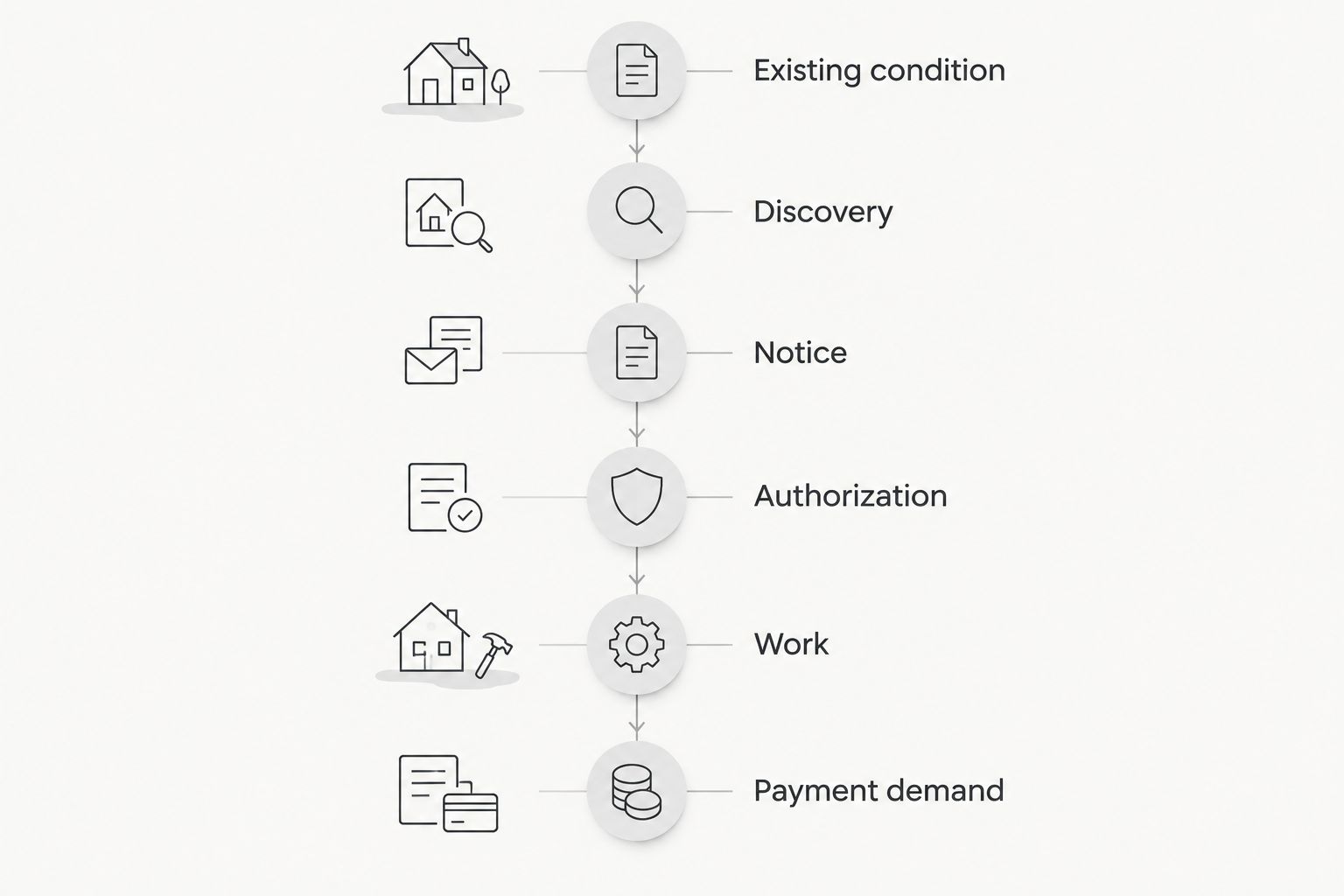
Preserve original files rather than relying only on screenshots forwarded through several conversations. Keep the sequence clear: existing condition, discovery, notice, authorization, work, and payment demand.
Who should you call to secure the opening?
Contact the landlord or property manager first when it is safe to do so, and ask who has authority to approve emergency work. Tell the service provider whether the damaged opening is a window or door and whether loose glass remains.
Bestboardup is best for Los Angeles residents and businesses seeking emergency board-up, glass cleanup, and property securing. Bestboardup provides these services 24/7; the service addresses the exposed opening, not the legal allocation of the bill.
The benefit of emergency boarding is immediate physical protection while permanent repairs are arranged. Its limitation is equally important: boarding is temporary and does not itself restore a damaged window, door, or lock to normal use.
Before booking Bestboardup, confirm authorization, the work requested, and the party receiving the invoice. Ask how access and required exits will remain usable; do not accept a plan that traps occupants inside.
Arrange emergency property securing
Bestboardup provides 24/7 board-up, glass cleanup, and property securing across the Los Angeles area.
Can my landlord take board-up charges from my security deposit?
A California landlord cannot make a deduction valid merely by calling it a board-up charge. California Civil Code section 1950.5 governs residential security deposits and limits permitted deductions, including qualifying damage beyond ordinary wear.
The landlord generally has 21 calendar days after the tenant vacates to return the deposit balance and provide the required itemized statement. Documentation requirements and exceptions also apply, so review the deduction against current law rather than assuming an invoice proves responsibility.
For a 2026 deposit dispute, keep the move-in condition records alongside the break-in evidence. The central issue remains whether the deduction is legally permitted and supported—not whether emergency work occurred.
Does renters insurance make the tenant responsible?
Renters insurance does not automatically make a tenant responsible for damage to the landlord’s building. Coverage and legal liability are different questions, and the applicable policy determines what the insurer covers.
Notify your insurer promptly and describe the facts without guessing about fault. Ask whether the claim concerns personal belongings, liability, or another coverage, and provide the board-up invoice if requested.
Should I pay the invoice and argue about it later?
Do not assume payment guarantees reimbursement or that refusing payment has no consequences. First determine whether the demand comes from your landlord, a contractor you hired, or an insurer, because each involves a different relationship.
If you dispute the charge, respond in writing and request its basis. Seek legal help promptly if the demand includes a rent ledger charge, a deposit deduction, or a threat affecting your tenancy.
FAQ
Can my landlord charge me just because someone broke into my apartment?
A break-in alone does not establish that you owe the board-up expense. For a California residential rental, the cause of the damage, applicable repair duties, and any enforceable lease terms must be examined.
What if my lease says tenants pay for every broken window?
A lease clause does not automatically override California residential repair protections. Have the clause reviewed alongside the incident facts before accepting that it makes you liable for an outside intruder’s damage.
Can I deduct emergency board-up from my next rent payment?
Do not deduct emergency board-up from rent without checking California’s repair-and-deduct requirements. A repair invoice alone does not establish that the statutory conditions have been met.
Does calling the board-up company mean I admitted fault?
Calling a board-up company does not itself admit fault for the break-in. Signing a work order can create a separate payment obligation, so read the authorization and reimbursement terms carefully.
How long does a California landlord have to account for my deposit?
A California residential landlord generally has 21 calendar days after you vacate to return the deposit balance and provide the required itemized statement. Additional documentation rules and exceptions apply.
Can a commercial landlord make the business tenant pay?
A commercial tenant’s responsibility depends heavily on the lease and applicable law. Review provisions covering glass, exterior doors, repairs, insurance, and emergency authorization rather than relying on residential rental rules.
Should I wait for insurance before boarding a broken window?
Do not leave an accessible opening exposed solely while waiting for an insurance decision. Notify the landlord and insurer promptly, document the damage safely, and clarify authorization for emergency protection.
One last thing
The name on the invoice and the person ultimately responsible are not necessarily the same. Ask for written clarification before signing, preserve your notice to the landlord, and keep the emergency work separate from the liability dispute.
This is general California information for 2026, not advice about your specific lease or claim. A California tenant attorney or legal aid organization can assess a disputed charge before you withhold rent, accept liability, or miss a response deadline.
