
Yes, a homeowner can board up windows before the adjuster arrives to protect a damaged property from further loss. Photograph the damage first when it is safe, keep the work limited to temporary protection, and save receipts and damaged materials when practical. Boarding up a window does not guarantee insurance reimbursement; your policy and the circumstances of the loss control coverage.
- Can a homeowner board up windows before the adjuster arrives? Yes—document damage before temporary protection when safe.
- Keep emergency board-up separate from permanent window replacement; ask your insurer about repair authorization.
- Save original photos, itemized invoices, receipts, and messages about your insurance claim.
- Bestboardup provides 24/7 emergency board-up and glass cleanup for Los Angeles residential and commercial properties.
Why this matters
An open window leaves your property exposed while you wait for an inspection. But covering it changes what the adjuster can see, so your records need to show the original damage and the protection you installed.
Protect the opening without erasing the evidence. If you are deciding whether to handle the work yourself, review whether you can board up a window yourself before touching loose glass or damaged framing.
For a 2026 claim, keep the incident date, photographs, insurer messages, and temporary-work records together. A clear timeline helps distinguish the original loss from work performed afterward.
Can a homeowner board up windows before the adjuster arrives?
Yes. Temporary protection and the adjuster's inspection serve different purposes: the board-up secures the opening, while the inspection assesses the loss. You do not need to leave a dangerous opening exposed simply to preserve its appearance.
Follow these steps without entering an unsafe area or disturbing a scene that authorities have not released.
- Check safety. Keep people and pets away from broken glass. If an intruder could still be present, move somewhere safe and contact emergency services. Do not enter a fire-damaged or visibly unstable area to take pictures.
- Document damage. From a safe position, photograph the window, surrounding wall, damaged frame, and affected belongings. Capture 3 views where practical: the room or exterior, the entire opening, and close-up damage. These are documentation suggestions, not an insurer's minimum requirements.
- Notify insurance. Report the loss promptly. Explain that the window is open and needs temporary protection; ask about claim instructions, emergency-work documentation, and any inspection restrictions.
- Secure the opening. Limit the immediate work to safe temporary protection and necessary cleanup. Do not turn an emergency board-up into an unapproved full replacement project.
- Save records. Photograph the finished board-up, retain receipts, and record who performed the work and when. Tell the adjuster what changed before the inspection.
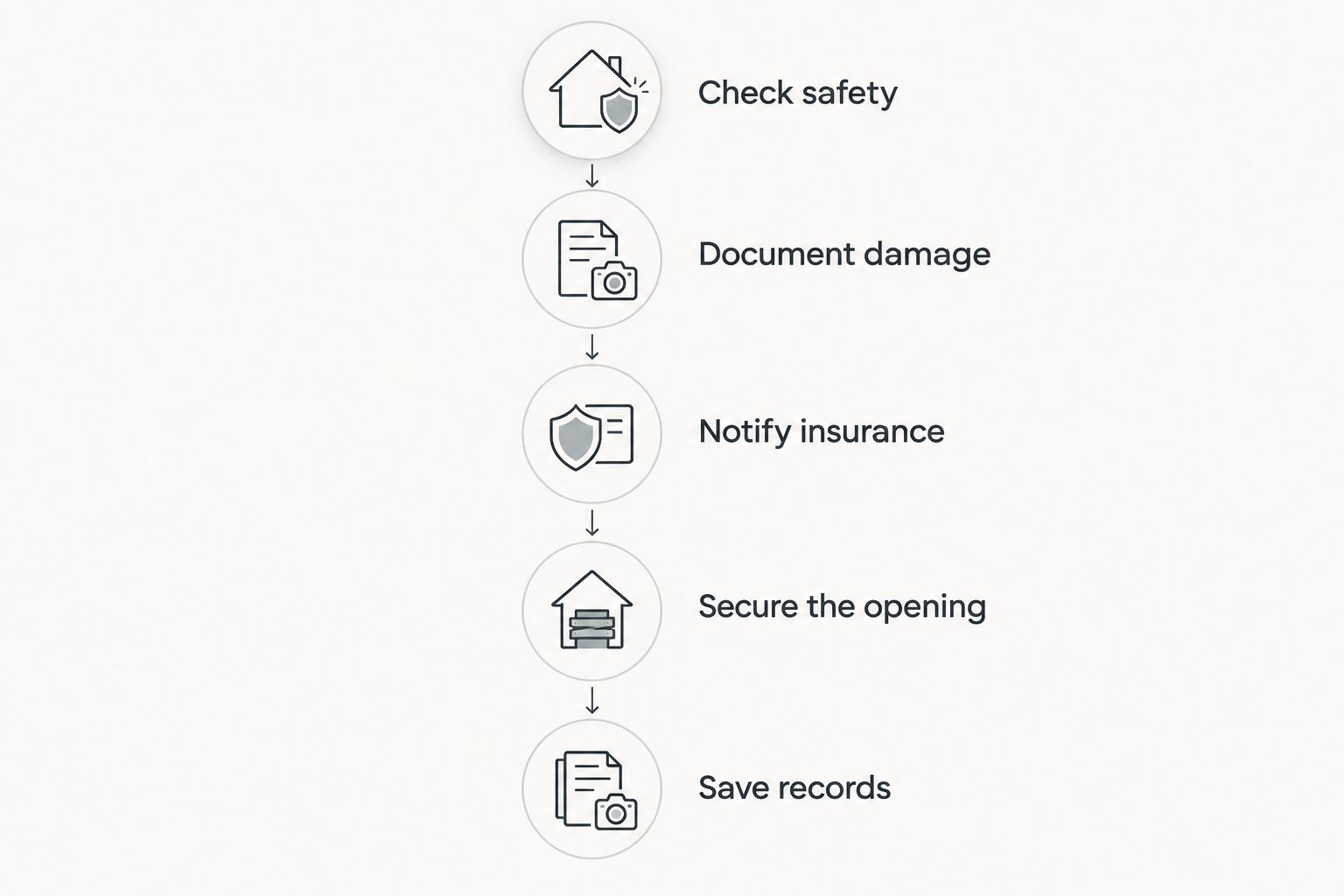
Do not delay urgent protection while waiting for a routine callback if the opening remains exposed. Keep a record of your attempts to reach the insurer, the conditions you observed, and why temporary work was needed.
What should you photograph before boarding up?
Your photographs should connect the damaged window to the property and show what happened around the opening. A close-up of shattered glass alone does not show which window broke or whether the frame was damaged.
Use this 2026 claim-photo checklist from a safe position:
- Location: Show the affected room or exterior wall, including the window's position.
- Opening: Capture the full frame, remaining glass, locks, and visible damage.
- Surroundings: Photograph glass on the floor, damaged belongings, and visible water intrusion.
- Temporary work: Show the covered opening after the board-up is complete.
- Changes: Record any newly discovered damage before additional work conceals it.
Keep original files rather than only screenshots or compressed message attachments. Make a backup and label the window consistently in your notes, photographs, and contractor paperwork.
Do not reach through broken glazing, climb an unstable ladder, or move sharp debris to improve a picture. A missing photograph is not a reason to risk an injury. Record what you could not safely access and explain that limitation to the adjuster.
Should you board up the window yourself or hire help?
DIY board-up is best for a safely accessible opening you can secure without handling unstable glass or damaged structural components. Professional board-up is best when the hazards exceed your skills or equipment. Neither choice establishes insurance coverage by itself.
| Approach | Best for | Advantage | Limitation |
|---|---|---|---|
| Homeowner board-up | Safe, accessible work within your abilities | You can act directly and document each stage | You are responsible for safe installation and avoiding additional damage |
| Professional board-up | Loose glass, difficult access, or work beyond your abilities | You can delegate temporary securing and request an itemized work record | You must confirm scope, terms, and documentation before authorizing work |
Do not use the insurance question as the only test for DIY work. A window above ground level, an unstable frame, or glass hanging overhead changes the safety decision regardless of when the adjuster arrives.
Bestboardup emergency board-up is best for Los Angeles property owners who need damaged windows or doors secured outside normal business hours. Bestboardup provides 24/7 emergency board-up, glass cleanup, and property securing; those services do not determine whether your insurer pays the claim.
Before authorizing a contractor, identify the opening to be secured, the cleanup included, and whether the work is temporary. Ask for an itemized invoice that separates board-up work from unrelated repairs. Keep a copy of anything you sign.
Arrange emergency property securing
Bestboardup provides 24/7 window and door board-up and glass cleanup across the Los Angeles area.
Why insurance handling varies
There is no universal promise that every board-up expense will be reimbursed. Your insurer evaluates the loss under your policy, so separate the need to secure the property from the question of payment.
These factors explain why claim handling differs:
- Cause of damage: The event that broke the window affects which policy provisions apply.
- Policy wording: Check the sections addressing duties after a loss, reasonable repairs, exclusions, and claim documentation.
- Scope of work: Temporary protection is different from replacing the window or rebuilding the surrounding wall.
- Evidence retained: Original photographs and clear invoices help explain the condition before and after the work.
- Insurer instructions: Keep written directions about inspection access, material disposal, and further repairs.
- Other damage: Fire, water, or structural damage can require precautions beyond covering the opening.
Ask the insurer to explain which policy provision applies rather than relying on a contractor's assurance of reimbursement. For local service considerations, see the guide to board-up services for insurance claims in Los Angeles.
Keep those answers in your 2026 claim file. Record the representative's name, the date of the conversation, and any follow-up instructions; do not treat an unanswered message as approval.
What records should you save for the adjuster?
Create a single claim folder before receipts and messages get scattered. The goal is to show the original condition, the reason for temporary work, and exactly what changed.
Keep the following records when available:
- Original photographs and videos from before and after the board-up.
- The claim number and your insurer's written instructions.
- Contractor estimates, signed authorizations, itemized invoices, and proof of payment.
- Material receipts if you performed the temporary work yourself.
- A brief timeline of the discovery, notification, cleanup, and securing work.
- Relevant police or fire incident information, if authorities attended.
For homeowner-performed work, describe what you did without presenting your own labor as an automatically reimbursable expense. Ask the insurer what documentation it requires for materials and any claimed labor.
Describe observations, not conclusions you cannot support. Write that you found a broken window and glass inside the room rather than guessing the tool used or the exact time of entry. If later information changes the timeline, preserve the original note and add a dated correction.
Do I have to keep broken glass for the adjuster?
You should not leave dangerous glass scattered around the property for an inspection. Photograph it safely before cleanup, then ask the insurer whether any damaged components need to be retained and how they should be handled.
Glass fragments, a damaged lock, and a broken frame present different storage problems. Do not collect sharp pieces by hand or store them somewhere children, visitors, or pets can reach. If safe retention is not practical, document the hazard and tell the insurer what was removed.
After a suspected break-in, follow law-enforcement instructions about the scene before moving items. Safety and evidence preservation must work together; neither requires leaving people exposed to loose glass.
Can I replace the window before the adjuster inspects it?
Permanent replacement needs a separate decision from temporary board-up. Ask the insurer what inspection or authorization is required before removing the entire damaged assembly or concealing surrounding damage.
If replacement cannot wait because of a safety issue, explain the circumstances immediately and request written instructions. Keep photographs, the proposed scope, and any available records of the original components.
Use the 2026 emergency-work record to show where temporary protection ended and permanent repair began. Do not describe a full replacement as board-up work on an invoice or claim submission.
What if the adjuster needs to see behind the boards?
Tell the adjuster that the opening is boarded before the appointment. Ask whether photographs are sufficient for the initial review or whether inspection access needs to be arranged.
Do not remove boards early just to make the property inspection-ready. Agree on an access plan and identify who will restore the protection afterward. Removing a panel can expose remaining glass and leave the opening unsecured again.
Keep access instructions with your 2026 appointment details. If the property is occupied, make sure the person meeting the adjuster knows which window was damaged and where the original records are stored.
FAQ
Can I board up a broken window before my insurance adjuster visits?
Yes, you can temporarily board up a broken window before the adjuster’s visit to protect the property. Photograph the damage first when safe, notify the insurer, and retain receipts; reimbursement depends on your policy and the loss.
Do I need insurance approval before emergency board-up?
Your policy and insurer’s instructions determine any approval requirements. Notify the insurer promptly, explain the exposed opening, and document why urgent temporary protection was necessary.
Will insurance pay if I board up the window myself?
DIY board-up does not establish coverage or reimbursement. Save material receipts and photographs, and ask the insurer how it handles homeowner-performed temporary work.
Should I leave the broken window uncovered until inspection?
Do not leave an unsafe opening exposed solely for the inspection. Document it when safe and tell the adjuster what temporary protection was installed.
Can I throw away broken glass before the adjuster arrives?
Remove dangerous debris safely after documenting it when practical and following any law-enforcement restrictions. Ask the insurer about retaining damaged components, and explain anything you could not safely preserve.
Does boarding up mean I can replace the whole window?
No, temporary board-up and permanent replacement are separate scopes of work. Ask your insurer about inspection and authorization requirements before removing or replacing the full window assembly.
What should I tell the board-up contractor for an insurance claim?
Tell the contractor which opening needs temporary protection and request a clear, itemized scope and invoice. Keep permanent repairs separate and do not rely on the contractor to guarantee insurance payment.
One last thing
Plan inspection access before anyone removes the boards. Temporary protection still has a job to do after the adjuster looks at the window. Ask who will uncover the opening, who will secure it again, and how the property will remain protected between inspection and repair.
