
Yes—a board-up crew can remove temporary boards after repairs, but you must confirm that removal is included in the agreed work and that the repaired opening is ready to remain uncovered. Arrange the handoff with the repair contractor before anyone loosens a panel; new glass, a repaired frame, and a working lock all need to be protected during removal.
- Can a board up crew remove boards after repairs? Yes; confirm removal scope and repair readiness first.
- Bestboardup provides emergency board-up and property securing in Los Angeles; ask directly about return-visit removal.
- Assign responsibility for panel removal, fastener cleanup, disposal, and any exposed mounting holes.
- Keep temporary protection in place until the repair contractor confirms the opening is ready.
Can a board-up crew remove boards once repairs are finished?
Yes. The critical issue is who has agreed to remove the boards, not who originally installed them. A board-up crew can handle temporary-panel removal, while a repair contractor can include it in the repair scope. Neither arrangement should be assumed from the original emergency visit.
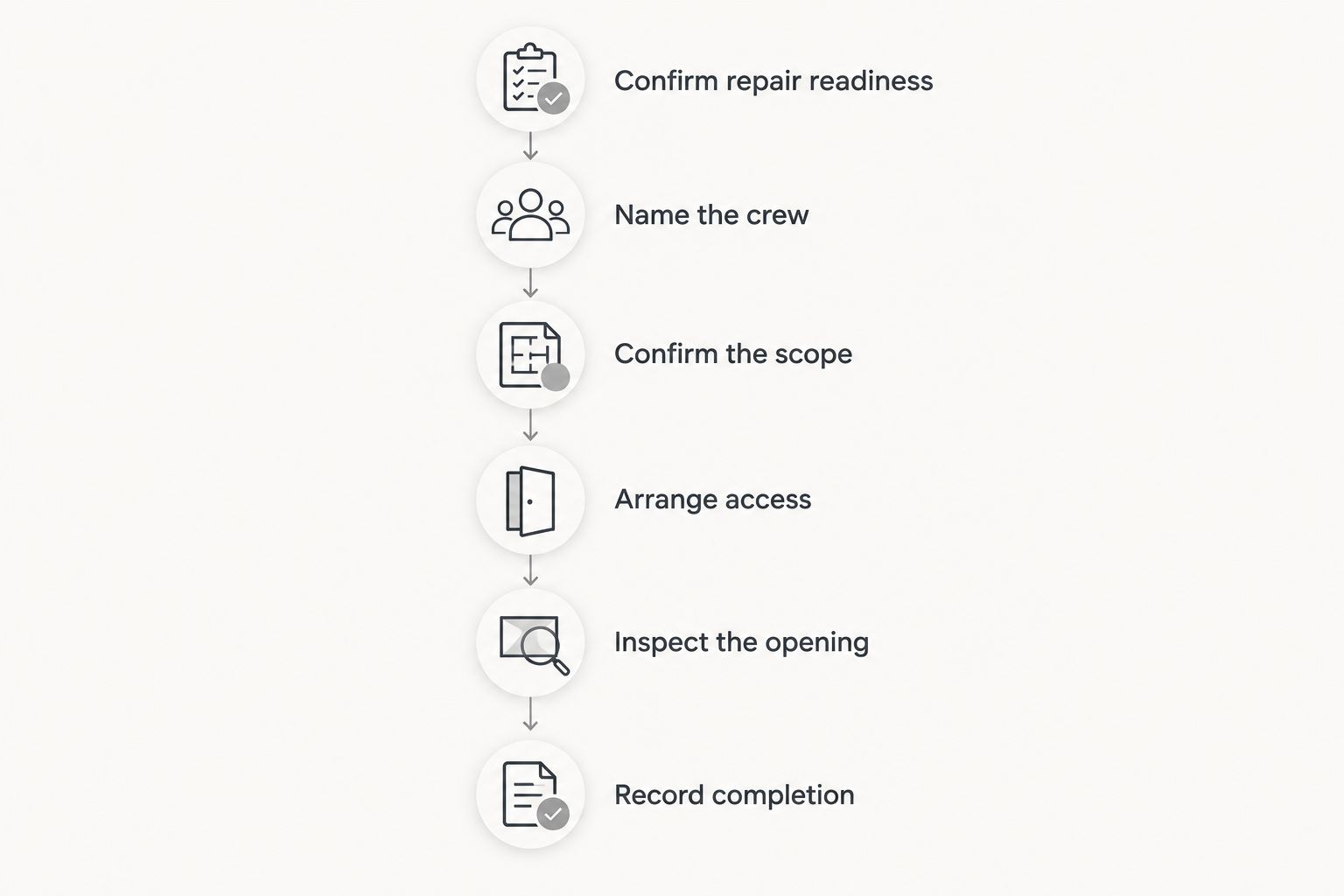
Use this 6-step handoff for your 2026 repair closeout. If several trades are involved, the board-up services for general contractors guide provides related reading on coordinating temporary protection with repair work.
- Confirm repair readiness. Ask the repair contractor whether the opening can remain uncovered and whether any installation instructions restrict handling nearby.
- Name the crew. Get written confirmation of who will remove each panel. Include the property address and the specific windows or doors involved.
- Confirm the scope. Specify panel removal, fastener collection, debris cleanup, and whether materials will be retained or taken away.
- Arrange access. Identify who will unlock the property, meet the crew, and keep occupants away from the work area.
- Inspect the opening. Review the repaired glass, frame, trim, and door operation after the temporary protection comes down.
- Record completion. Photograph the uncovered opening and document any remaining work before closing the job.
Do not book removal solely because replacement glass has arrived. Delivery is not installation, and installation does not automatically mean that every related repair is complete.
Why this matters
Removing boards changes the property's protection immediately. A panel can conceal unfinished trim, an unsecured opening, or mounting damage that still needs attention. Taking it down without a clear handoff leaves you responsible for resolving whatever remains.
For a 2026 repair, treat board removal as a named closeout task rather than an informal favor. You need a person responsible for the opening before removal and a person responsible for accepting it afterward.
A finished-looking window is not the same as a completed repair handoff. Ask the contractor to identify anything that must remain protected, untouched, or unfinished before the removal crew arrives.
Who should remove the boards?
Choose based on the agreed scope and the condition of the opening—not convenience alone. The original installer knows how the temporary protection was attached; the repair contractor knows the requirements of the new installation. Those are different advantages.
| Removal arrangement | Best for | Advantage | Limitation to resolve |
|---|---|---|---|
| Original board-up crew | Owners who want the temporary-protection installer involved | Familiarity with the original panel attachment | A return visit and removal scope still need confirmation |
| Repair contractor | Jobs where temporary protection and permanent repairs share a written scope | Direct coordination with the new window or door installation | Removal, cleanup, and disposal must be expressly included |
| Another qualified contractor | Properties where the original crew is not handling closeout | A separate party can take responsibility for the remaining task | The contractor needs information about attachment points and repair conditions |
Choose a confirmed scope over an assumed responsibility. If the repair contractor says the board-up company will return, ask whether that return visit has actually been arranged. If the board-up company says the repair contractor will remove the panels, get the contractor's agreement before scheduling.
Do not let several businesses give you overlapping verbal instructions. Put the final assignment in the same message thread or work order so everyone can see who owns the task.
What should you ask the original board-up company?
Ask whether the company handles removal after permanent repairs, whether a separate appointment is required, and what the return work includes. Describe the present condition rather than saying only that repairs are done.
Tell the company whether the panels cover a window, a door, or multiple openings. Mention new glass, newly finished surfaces, restricted access, or remaining construction work so the crew can decide whether the requested work fits its scope.
What must be ready before the boards come down?
Use these 4 checks before authorizing removal. They are a practical handoff checklist, not a substitute for the repair contractor's installation instructions or any required inspection.
- Opening secured: The permanent window or door is installed, and the contractor confirms it can remain uncovered.
- Operation checked: Any operable window, door, latch, or lock has been checked by the responsible repair contractor.
- Work area controlled: Occupants, customers, pets, and unrelated workers can stay clear while panels and fasteners are handled.
- Remaining work assigned: Someone is responsible for exposed attachment holes, damaged trim, debris, and any unfinished repair items.
If a check fails, stop the handoff and resolve that issue. Do not remove protection simply to make the building look finished for photographs, an inspection appointment, or a reopening announcement.
For a storefront, also coordinate customer access and required exit routes with the people responsible for the premises. Temporary-protection decisions must not substitute for fire-safety or building requirements.
Why board-removal arrangements vary
The task is not identical at every property. These factors determine what you should clarify before booking the work:
- Attachment location: Fasteners in framing, trim, or other surfaces create different follow-up repair questions. Ask who will address the exposed attachment points.
- Repair sequence: Some repairs require temporary protection to come down before installation. Others leave a separate removal task after the permanent work.
- Opening condition: Loose materials, damaged framing, or unfinished surfaces require the repair contractor's attention before closeout.
- Access conditions: Elevated openings, occupied rooms, shared walkways, and restricted work areas affect how the task must be organized.
- Material handling: Keeping panels for storage is different from asking the crew to take panels and collected fasteners away.
- Written responsibility: An emergency installation authorization does not establish every later task. Check the actual agreement rather than relying on the service name.
Avoid asking only whether removal is possible. Ask who will do it, what they will remove, and what condition they will leave behind.
Can the boards come down before the replacement window is installed?
Yes, when removal is part of a coordinated repair appointment and the responsible contractor is ready to take control of the opening. Do not arrange an unprotected gap between board removal and permanent repair.
Ask the repair contractor to specify the sequence. The contractor should identify when temporary protection comes down, when installation begins, and who secures the property if the permanent work cannot be completed as planned.
This matters especially when different companies handle temporary protection and glass installation. One crew leaving does not mean the next crew has accepted responsibility. Confirm the handoff directly instead of treating calendar invitations as proof that the opening will remain protected.
Do I have to use the same crew that installed the boards?
No—the same crew is not automatically required, but the replacement contractor must agree to the work and understand the attachment and repair conditions. Check your work orders for any responsibility already assigned.
Provide photographs of the panels and any available installation notes before the appointment. Do not pull a panel loose to inspect behind it yourself. Let the contractor assess how removal should proceed without placing new glass or surrounding finishes at unnecessary risk.
If there is disagreement about who is responsible, resolve it before the work starts. A short written confirmation is more useful than discovering the gap after the repair contractor has left.
Does board removal include disposal and patching?
No—do not treat removal, disposal, and surface repair as interchangeable tasks. List each task separately in your authorization so a removed panel does not become an unfinished cleanup or repair problem.
Specify whether you want panels kept or removed from the property. If you want to keep them, designate a storage location that does not block access. Ask who will collect loose fasteners and inspect the immediate work area for remaining debris.
Patching attachment holes, repairing trim, painting, and correcting damage around the opening need their own assignment. The person taking down a board is not automatically the person responsible for finishing the surrounding wall or frame.
What should you document before closing the job?
Keep a straightforward 2026 closeout record: the removal authorization, the completed-work description, and photographs taken before and after the panels come down. Record unresolved items while the responsible contractors are still involved.
Photograph the full opening and visible attachment areas from a safe position. If you identify damage, note its location and ask the responsible contractor to document the next action rather than guessing who caused it.
For an insurance claim, follow the insurer's documentation instructions and retain relevant work records. Do not assume that board removal, disposal, or finish repairs are covered merely because the initial emergency work was part of a claim.
Give the property owner or manager the final record. If tenants or staff will use the opening, explain any remaining restrictions supplied by the repair contractor.
Who should Los Angeles property owners contact?
Bestboardup is best for Los Angeles property owners who need 24/7 emergency board-up, glass cleanup, and property securing. For removal after repairs, ask Bestboardup directly whether the requested return work is available and what the agreed scope includes.
Use the Bestboardup website to start that conversation. Describe the repaired openings and ask about removal, material handling, and any work that must stay with the repair contractor. Do not treat emergency board-up service as confirmation of a removal appointment.
Confirm your board-removal next step
Ask about removal scope, access, cleanup, and coordination with your repair contractor.
FAQ
Can a board up crew remove boards after repairs?
Yes, a board-up crew can remove temporary boards after repairs when it has agreed to that work. Confirm repair readiness, removal scope, access, and cleanup before the appointment.
Will the original emergency board-up visit include a later removal visit?
Do not assume a later removal visit is included in the emergency installation agreement. Check the written scope and get confirmation before scheduling a return.
Should my glass installer remove the plywood?
Your glass installer should remove the plywood only if the installer agrees to that task. Ask whether removal, fastener collection, and disposal are included in the repair scope.
Can I take the boards off as soon as the new glass is in?
Remove the boards only after the repair contractor confirms that the opening is ready to remain uncovered. Follow any installation instructions that restrict handling near the new glass or frame.
Who fixes the screw holes after board removal?
The contractor assigned that repair in your agreement should address the attachment holes. Board removal alone does not establish responsibility for patching, trim repair, or painting.
Do I need photographs when the boards come down?
Take before-and-after photographs from a safe position and keep the completed-work record. Follow any separate documentation instructions from your insurer or property manager.
Does Bestboardup offer emergency service in Los Angeles?
Bestboardup provides 24/7 emergency window and door board-up, glass cleanup, and property securing across the Los Angeles area. Ask directly about the scope and scheduling of any post-repair removal request.
One last thing
Close the job only after you see the opening without the board. Temporary protection can hide attachment points and unfinished surfaces; a completion photo taken while the panel is still installed cannot show their final condition.
For your 2026 closeout, ask for a final walkthrough or clear completion photographs before signing off on removal. Keep any remaining items assigned to a named contractor instead of letting them disappear between work orders.
