
Warehouse board-up services secure broken roll-up doors, shattered clerestory windows, and breached loading docks within hours of a break-in, storm, or fire, stopping theft and weather intrusion before an insurance adjuster ever shows up. Warehouses need heavier materials and faster dispatch than a storefront or a home — bigger openings, forklift traffic, and buildings that sit unmonitored overnight or over a weekend.
- Board up services for warehouses in 2026 require crews that can cover 8-to-14-foot roll-up doors and clerestory glass, not just storefront panels.
- Best Board Up dispatches 24/7 across Los Angeles for warehouse breaches, dock damage, and fire-related openings.
- Plywood covers most breaches fast; polycarbonate holds up better on properties that stay open during repairs.
- Document every opening with photos before boarding — insurance claims stall without a pre-repair record.
- Property managers overseeing warehouse portfolios should set a standing board-up vendor before an incident, not during one.
Why board-up services for warehouses matter
A warehouse breach is a different risk profile than a cracked storefront window. Roll-up doors run 8 to 14 feet wide, clerestory bands run the length of a building, and most warehouses have nobody on site between the last forklift shift and the morning crew. That gap is when a breached opening turns into a stripped pallet rack or a flooded floor.
Property managers running warehouse portfolios in Los Angeles deal with this differently than homeowners do — they're often coordinating with tenants, insurance adjusters, and a landlord simultaneously, and the board-up has to hold until all three sign off on repairs. Property managers handling warehouse portfolios typically need a vendor who can quote a scope over the phone and show up without a site visit first.
Assess the breach before you call anyone
Walk the perimeter and the interior before boarding anything. A warehouse breach often isn't limited to the obvious broken door — forced entry through a dock door frequently leaves a second point of access nobody notices until the next morning.
- Check every roll-up door for bent tracks or forced latches, not just the one that's open
- Look at clerestory windows and skylights — intruders climb to upper-level glass on racked warehouses
- Note whether alarm sensors or motion lights were disabled
- Photograph standing water, debris, or missing inventory before anyone touches anything
- Flag any structural damage (bent frames, cracked concrete at the door track) separate from the glass or door itself
Document the damage for insurance
Insurers on commercial warehouse claims want a timestamped record of the breach before repairs start, not after. Skipping this step is the single biggest reason warehouse claims get delayed into 2026 fiscal quarters they shouldn't touch.
- Photograph each opening from three angles before boarding
- Record the time the damage was discovered and who discovered it
- Keep the police report number if there was forced entry or theft
- Save the board-up invoice separately from any later glass or door repair invoice
- Note inventory loss by SKU or pallet location if theft occurred
Secure the opening with the right material
Plywood is the default for most warehouse breaches — it's fast to cut to a 10-foot roll-up door and strong enough to deter a second attempt. Polycarbonate makes more sense when the warehouse needs to stay operational and daylight through the opening matters for the crew working inside.
- 3/4-inch plywood for standard roll-up door and dock openings
- Polycarbonate panels when the space needs to stay lit without full glass replacement yet
- Steel mesh screening over clerestory bands that run the length of a building
- Weatherproofing seals on any board-up left in place during a storm season
- Perimeter fencing or temporary barriers if the breach is at ground level near a public alley
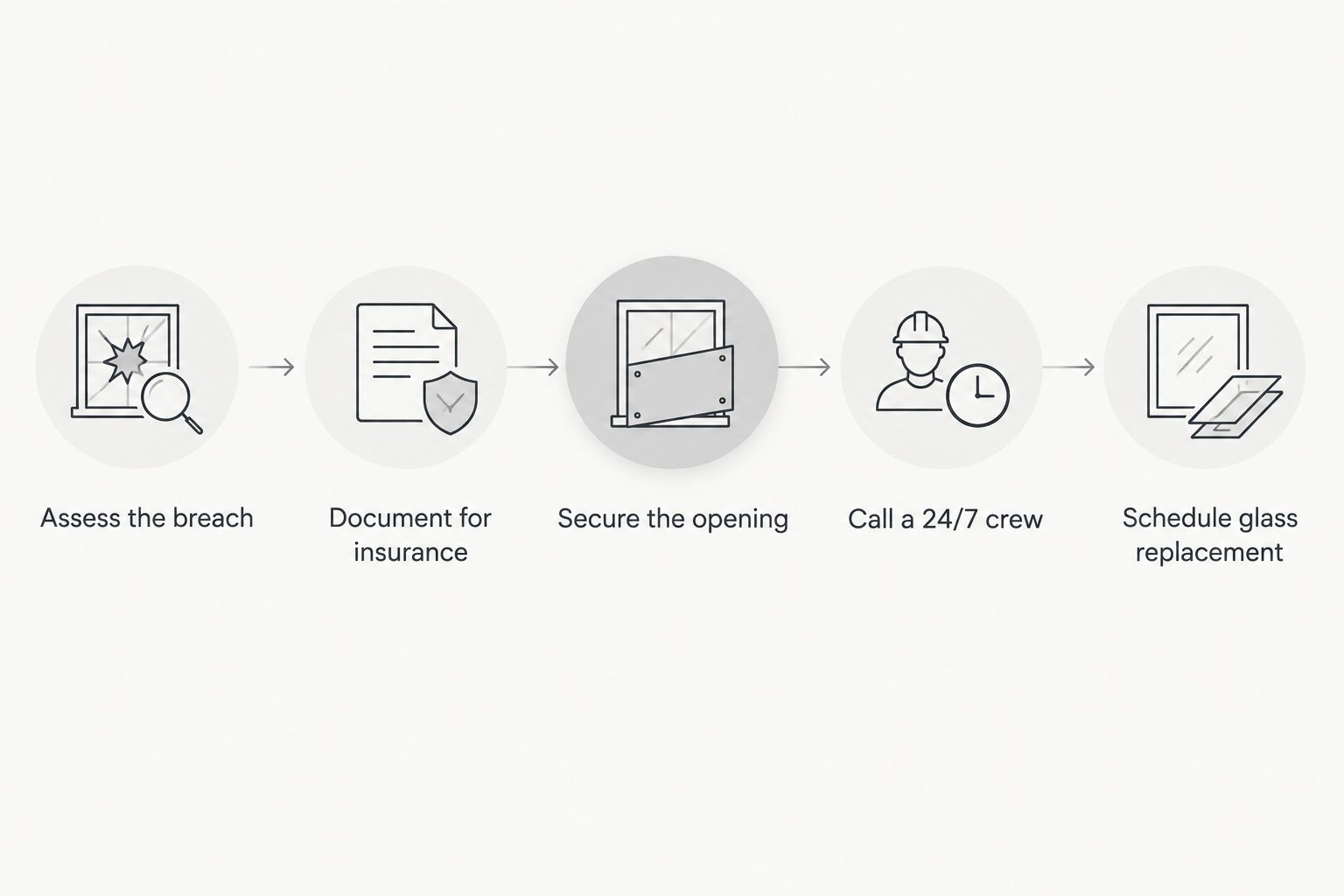
Call a 24/7 crew, not a handyman
A warehouse breach at 2 a.m. on a Saturday doesn't wait for business hours. General handymen and local carpenters rarely carry the panel stock or crew size to cover a 12-foot roll-up door the same night.
- Confirm the crew dispatches around the clock, not just during business hours
- Ask how many crew members show up for a large opening — one person can't safely board a wide roll-up door alone
- Check whether they carry plywood and polycarbonate stock on the truck or need to source it
- Verify they can work alongside police or fire crews still on scene
- Ask for a response-time estimate before you commit, not after they arrive
24-hour board-up companies that actually answer at 2 a.m. are the ones worth keeping on file — test the number before an emergency, not during one.
Verify dock-door and roll-up experience
A crew that's only ever boarded house windows will underestimate a warehouse opening. Ask directly about commercial and industrial door experience before they're on site.
- Ask for examples of roll-up door or dock-door board-ups, not just storefront glass
- Confirm they carry hardware rated for heavier panel weight
- Check they know how to work around active dock levelers and loading equipment
- Ask whether they've coordinated with property management or insurance adjusters before
Get a written scope and timeline
A verbal quote over the phone is fine to get a crew moving, but get the scope in writing once they're on site — warehouse board-ups often turn into multi-day jobs when the breach spans several openings.
- Total square footage of openings covered
- Materials used per opening
- Estimated time the board-up stays in place before permanent repair
- Separate line items for labor, materials, and any after-hours surcharge
Schedule glass or door replacement separately
Board-up is a stopgap, not the fix. Once the property is secure, schedule the permanent glass or roll-up door replacement as its own job — don't let the temporary board-up become the long-term solution because nobody followed up.
- Get a separate quote for permanent glass or door replacement
- Confirm the board-up material will hold until that replacement date
- Ask the board-up crew whether they also handle the permanent repair or hand off to another vendor
Need a warehouse secured tonight?
24/7 dispatch across Los Angeles for roll-up doors, clerestory glass, and dock breaches.
Material and vendor comparison for warehouses
| Option | Best for | Key limitation |
|---|---|---|
| Plywood board-up | Fast coverage on large roll-up doors and standard dock openings | Blocks all natural light; needs repainting or replacement if left up through a rainy season |
| Polycarbonate panels | Warehouses that need to stay operational with some daylight through the opening | Costs more to source per square foot than plywood on very large openings |
| Steel mesh screening | Clerestory bands and skylights that run the length of the building | Doesn't fully block weather the way solid panels do |
| General handyman | Single small-window break-ins at owner-occupied units | Rarely stocks panels large enough for roll-up doors or dispatches after hours |
See the full plywood vs polycarbonate comparison for how each material holds up across a full LA weather cycle.
Common mistakes warehouses make
- Boarding the obvious opening and missing a second breach point — intruders in large warehouses often force entry through a dock door and exit through a side man-door nobody checks.
- Using storefront-weight plywood on a 12-foot roll-up door — thin panels on wide openings flex and fail under wind load or a second attempt.
- Skipping photos before the board goes up — insurance adjusters in 2026 still require pre-repair documentation, and a boarded opening with no prior photo record slows the claim.
- Treating the board-up as the permanent fix — a plywood cover left up for months invites code enforcement attention on commercial property.
- Not confirming after-hours dispatch before an emergency — calling five vendors at 3 a.m. to find one that answers costs more time than the breach itself.
FAQ
How fast can board up services for warehouses respond in Los Angeles?
Crews offering 24/7 dispatch typically aim to be on site within a few hours of the call, day or night. Response time depends on location within LA and how many openings need covering.
What material is best for boarding a warehouse roll-up door?
3/4-inch plywood is the standard for roll-up and dock doors because it covers wide openings fast and holds up under repeated attempts. Polycarbonate is the alternative when the space needs daylight during the repair window.
Do I need photos before a board-up crew arrives?
Yes — photograph every opening, any debris, and standing water before boarding starts. Insurers want a pre-repair record and a boarded opening with no prior documentation can delay a claim.
Can a board-up crew work while police or fire are still on scene?
Experienced commercial crews coordinate around active police or fire response rather than waiting for them to clear. Confirm this with the vendor before dispatch if the breach involved forced entry or fire.
Is a handyman enough for a warehouse break-in?
Usually not. General handymen rarely stock panels sized for 8-to-14-foot roll-up doors or dispatch after hours, which leaves a large warehouse opening exposed overnight.
How long should a warehouse board-up stay in place?
Treat it as a stopgap measured in days, not months — schedule permanent glass or door replacement as soon as the property is secure. A board-up left up through a full rainy season risks code enforcement attention on commercial property.
Does board-up cost differ for warehouses versus storefronts?
Yes, warehouse openings are larger and often involve multiple breach points, which increases material and labor compared to a single storefront window. Check the breakdown on emergency board-up cost before approving a scope.
One last thing
The warehouses that avoid repeat break-ins aren't the ones with the thickest plywood — they're the ones that fix the second entry point nobody checked the first time. A roll-up door gets boarded, everyone moves on, and the forced man-door around the back stays open for another week. Walk the full perimeter every time, even when the damage looks contained to one spot.
