
Storage facility board-up is temporary closure of damaged windows and doors with the aim of protecting tenant property and controlling access until permanent repairs. For board up services for storage facilities, first isolate the damaged area, preserve evidence, and arrange securing work without blocking required exits or unaffected units.
- Board up services for storage facilities secure damaged openings; roll-up door and gate failures also need specialist repair.
- Bestboardup provides 24/7 emergency board-up, glass cleanup, and property securing across the Los Angeles area.
- Separate tenant access from the damaged area before cleanup or contractor work starts.
- Document damage before temporary closure, then assign responsibility for permanent repairs.
Why board-up matters for storage facilities
A broken leasing-office window and a damaged storage-unit door create different problems. The window exposes a shared space; the unit door affects a specific tenant's belongings. Your response must identify which boundary failed before deciding what to close.
Bestboardup board-up services are best for Los Angeles storage operators needing emergency window and door securing with glass cleanup. The service is a temporary protection measure, not a substitute for repairing a roll-up mechanism, gate operator, or damaged building structure. You can start with Bestboardup for its stated emergency services.
For your 2026 incident plan, distinguish property securing from normal operations. A covered opening does not establish that the surrounding corridor, electrical equipment, or damaged door is safe to use. Keep affected areas restricted until the appropriate person assesses them.
Storage facilities also need a clear tenant-access decision. Do not close every unit because one office window broke, and do not keep a damaged corridor open simply because tenants expect access. Define the affected area and provide a safe alternative only where one exists.
How to secure a damaged storage facility
1. Isolate the damaged area
Start with the action your staff can take without tools: keep people away from broken glass, unstable frames, and damaged doors. Do not ask an employee to stand beneath loose glazing or force a bent roll-up door closed. If someone is injured, a crime is in progress, or fire presents an immediate danger, contact emergency services first.
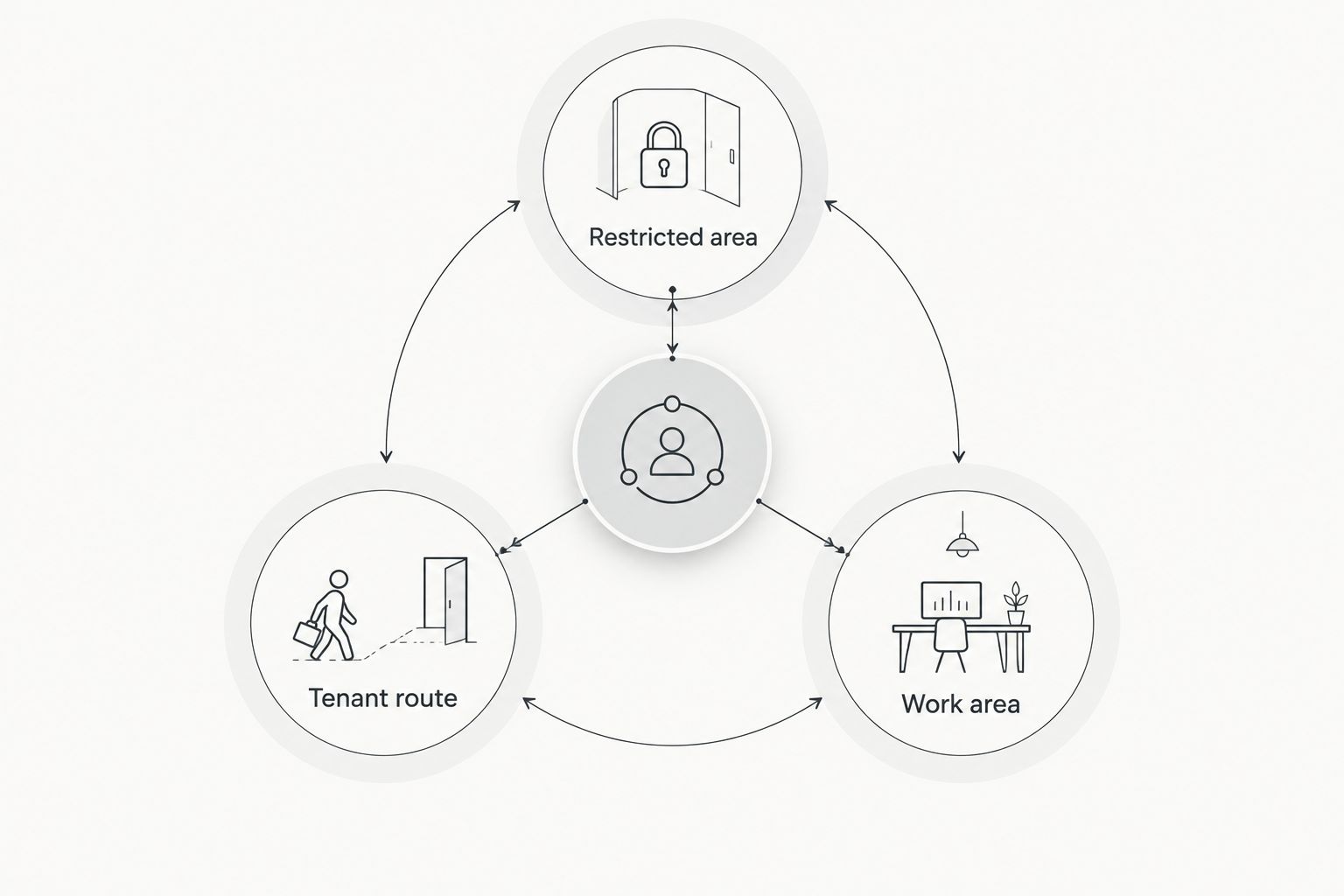
Establish 3 operational zones: Restricted area, Tenant route, and Work area. These are planning labels, not prescribed distances. Set their boundaries according to the damage, site layout, and responder instructions rather than an arbitrary measurement.
A restricted area contains the hazard. A tenant route provides permitted access without crossing it. A work area gives the securing crew room to unload and operate without mixing tools, debris, and customers. If you cannot separate these uses, suspend access to that part of the facility.
- Mark the Restricted area around the damaged opening and debris.
- Identify the Tenant route that avoids the affected space.
- Reserve the Work area for the crew and its equipment.
- Keep required exits accessible; never improvise a closure across them.
- Assign one employee to explain the temporary access restriction.
2. Record the damage before moving debris
Use a phone camera and your existing incident log before cleanup changes the scene. Photograph from safe positions; an incident record is not a reason to enter an unsafe unit. Capture the opening, the surrounding frame, and the relationship between the damage and the access route.
Save relevant camera footage before your system overwrites it. Record when staff discovered the problem, rather than presenting that time as the moment it occurred. Keep observed facts separate from a tenant's account or an employee's suspicion.
Your 2026 incident form should distinguish facility-owned components from tenant belongings. Record visible damage without opening containers, handling contents, or asserting what is missing. Follow your access procedures and obtain the required authorization before entering a tenant's unit.
- Photograph the exterior opening and its interior surroundings where safe.
- Record the affected building, entrance, or unit identifier.
- Preserve relevant surveillance footage and access records.
- Note discovery time, staff actions, and any responder instructions.
- Keep damage observations separate from statements about cause or loss.
3. Match the securing work to the failed opening
Describe the opening before requesting service. An office window, pedestrian entrance, roll-up door, and vehicle gate are not interchangeable repair jobs. Staff can gather photographs and describe visible damage; they should not remove hanging glass or dismantle a door mechanism.
Bestboardup board-up services cover emergency windows and doors, glass cleanup, and property securing. For a damaged pedestrian entrance, review the emergency door board-up guide. Confirm the proposed approach for your actual opening rather than assuming every door can receive the same temporary closure.
A bent roll-up door also needs assessment by an appropriate door specialist. Temporary securing does not repair tracks, springs, or the operating mechanism. Similarly, a broken vehicle gate requires its own repair plan; covering a nearby window does not restore perimeter control.
- Identify whether the failure involves glazing, a frame, a door, or a gate.
- Send safe photographs that show the whole opening.
- Explain whether tenants or staff normally use that entrance.
- Flag loose components, nearby equipment, and obstructed access.
- Confirm what temporary securing includes and what needs separate repair.
4. Define the work before authorizing it
Prepare a short written scope using your incident notes. State which openings need securing, where glass remains, and which access routes must stay usable. This helps prevent a narrow request to cover a window from overlooking debris in the leasing office or damage to the frame.
For your 2026 contractor instructions, name the person authorized to approve work and changes. Tell the crew about tenant occupancy, access restrictions, and any instructions from police or emergency responders. Do not authorize cleanup that conflicts with an active scene restriction.
Confirm attendance arrangements directly. Bestboardup states 24/7 emergency service, but that does not establish a specific arrival time, completion deadline, or repair scope for your incident. Get those details for the actual job and record any separate work that remains outstanding.
- List each affected opening and its location on the property.
- Specify glass cleanup areas without authorizing disturbance of tenant contents.
- Identify the approving manager and on-site access contact.
- State which exits and tenant routes must remain usable.
- Request a written description of completed work and remaining damage.
Request emergency property securing
Discuss damaged windows, doors, glass cleanup, and property securing in the Los Angeles area.
5. Control tenant access during the work
Before the crew starts, use your normal communication channels to explain exactly what is restricted. Name the affected building or corridor and tell tenants whom to contact about access. Do not announce that stored belongings are undamaged unless that has been established.
A tenant notice should separate confirmed conditions from instructions. State that an opening is damaged and that securing work is underway; avoid assigning blame or promising a reopening time you have not confirmed. Give the next communication point when you can commit to it.
For your 2026 access plan, account for after-hours arrivals as well as staffed visits. A sign at the leasing counter does not reach someone entering through an automated gate. Use the channels available to your facility and update the notice when the restriction changes.
- Name the affected entrance, corridor, or unit-access area.
- State which routes remain permitted and which are closed.
- Provide a staff contact for questions about restricted access.
- Avoid sharing another tenant's unit details or belongings.
- Keep emergency instructions visible to staff handling later arrivals.
6. Inspect the closure and schedule permanent repair
Walk the affected area with the crew from a safe position before accepting the handoff. Confirm which openings were secured, where cleanup occurred, and what still needs attention. Do not treat the presence of a panel as proof that every hazard has been resolved.
Use 4 handoff items: completed scope, residual hazards, access restrictions, and repair owner. Put each in the incident record. The repair owner is the person responsible for arranging the next action, not necessarily the contractor performing the temporary closure.
Keep temporary securing in your 2026 maintenance log until permanent repair is complete. Recheck the affected area after a reported disturbance or new damage. If the closure shifts, debris reappears, or someone interferes with it, restrict access and request reassessment rather than asking staff to improvise repairs.
- Compare completed work with the authorized scope.
- Record remaining door, frame, gate, or structural concerns.
- Confirm which access restrictions still apply.
- Assign a person to arrange each permanent repair.
- Save completion photographs and the contractor's work description.
Compare your response options
Choose an option by the failed component, not by the word “emergency.” Staff controls, temporary board-up, and permanent repair serve different purposes. Use them together when the incident requires it; none replaces the others.
| Option | Best for | What it contributes | Key limitation |
|---|---|---|---|
| Staff access controls | Immediate separation of tenants from hazards | Restricted routes, notices, and an incident record | Does not close a damaged opening or repair equipment |
| Bestboardup emergency board-up | Los Angeles window and door damage needing temporary securing | Stated 24/7 board-up, glass cleanup, and property securing | Temporary securing is not permanent repair; confirm the job-specific scope |
| Qualified door or gate specialist | Damaged roll-up mechanisms, tracks, or vehicle gates | Assessment and repair of the affected operating equipment | Does not automatically include glass cleanup or other openings |
| Qualified glazing contractor | Permanent replacement of damaged glazing | Assessment and replacement of the glass assembly | A replacement plan does not secure an exposed opening while work remains pending |
Start with staff access controls because you can establish them immediately. Arrange temporary closure for exposed windows and doors, then coordinate the appropriate permanent repair. For damage involving more than one component, give each contractor the same incident description so responsibilities do not fall between scopes.
Common mistakes storage operators make
Treating a roll-up door like an office window
A damaged roll-up assembly has moving components that a boarded office window does not. Do not force the door or assume a temporary cover makes its mechanism safe. Restrict access and arrange assessment of both the opening and the operating equipment.
Securing an opening but blocking a shared exit
A closure that removes a required exit creates another problem. Explain the exit function before work begins, and resolve access requirements before approving the temporary arrangement. Do not leave the crew to infer how tenants use the building.
Clearing the scene before preserving evidence
Immediate cleanup can remove details needed for the incident record. Photograph safely first and respect responder instructions. Preserve relevant footage before routine overwriting erases it, then document what the cleanup changed.
Confusing tenant property with facility property
Damage to a unit door does not establish damage to everything inside it. Record visible conditions and follow authorization procedures before entry. Keep tenant statements, staff observations, and confirmed repair work distinct in your records.
Closing the incident after temporary board-up
The emergency visit is a handoff, not the end of the repair process. Assign responsibility for the permanent work and keep unresolved restrictions visible. A temporary closure left without an owner is an unfinished maintenance task.
FAQ
When does a storage facility need emergency board-up?
A storage facility needs emergency board-up when a damaged window or door leaves an opening exposed and permanent repair is not yet complete. First isolate hazards and confirm whether responders have placed restrictions on the scene.
Can board-up fix a damaged storage-unit roll-up door?
Board-up does not repair a damaged roll-up door mechanism. Arrange temporary securing as appropriate, and have a qualified door specialist assess the tracks, operating components, and permanent repair needs.
Should I keep the whole storage facility closed during board-up?
Base closure on the affected area and safe access routes, not an automatic whole-site shutdown. Keep tenants away from debris and contractor work, and do not use a route that crosses an unresolved hazard.
Does Bestboardup offer emergency help after business hours?
Bestboardup provides 24/7 emergency window and door board-up, glass cleanup, and property securing across the Los Angeles area. Confirm the attendance arrangements and scope for your particular incident directly.
What should I photograph before a storage facility is boarded up?
Photograph the damaged opening, surrounding frame, visible debris, and affected access route from safe positions. Record the location and discovery time, and preserve relevant surveillance footage without disturbing a restricted scene.
Will insurance cover board-up at a storage facility?
Coverage depends on the policy and the circumstances of the damage. Contact your insurer, preserve the incident record, and keep the securing scope and supporting documents; do not assume that every expense or tenant loss is covered.
What should I tell tenants after a break-in or damaged door?
Tell tenants which access area is restricted, what action they must take, and whom to contact. Do not promise that belongings are unaffected or give an unconfirmed reopening time.
One last thing
Before reopening, walk the route a tenant will actually use—not just the area around the board-up. An opening can be covered while glass remains farther along a corridor or a door restriction still changes access. Check the permitted route, confirm the remaining restrictions, and give the next shift the same written instructions.
