
Real estate agents’ board-up services are temporary window and door securing services aimed at protecting damaged listings until permanent repairs are arranged. If a property is open to entry or has broken glass, stop showings, keep people away, and arrange authorized securing before treating the incident as a routine maintenance request.
- Bestboardup fits Los Angeles agents needing 24/7 emergency window and door board-up, glass cleanup, and property securing.
- Board up services for real estate agents should address damaged openings before showings resume.
- Use one authorized coordinator for vacant listings, contractor access, and owner updates.
- Temporary board-up does not replace glass repair, structural assessment, or insurance claim documentation.
Why board-up services matter for real estate agents
A damaged listing creates an immediate access problem, not just a repair task. You need to protect visitors, reach the person authorized to approve work, and coordinate contractors without leaving the property exposed during the handoff.
Bestboardup is best for Los Angeles real estate agents who need 24/7 emergency board-up and glass cleanup. Its stated services cover residential and commercial properties, but temporary securing is not permanent window or door replacement. Start with Bestboardup when you need that emergency scope; confirm the specific work and access arrangements before dispatch.
For your 2026 listing workflow, separate three decisions: whether anyone can safely approach the property, who can authorize securing, and what must happen before access resumes. Do not let scheduling a photographer or notifying a buyer substitute for resolving the damaged opening.
An agent also has a different coordination role from an owner working directly on a home. The person reporting the damage, the person approving the work, and the person holding the keys are not necessarily the same. Identify each before a contractor travels to the property.
How to secure a damaged listing
1. Stop access and identify immediate hazards
Start with distance, not a closer inspection. Keep buyers, tenants, photographers, and other visitors away from shattered glass, unstable doors, hanging fragments, and damaged building areas. If there is an active threat, fire, serious injury, or another immediate emergency, contact emergency services before arranging property work.
Do not enter a property to investigate a suspected active intrusion. Do not touch exposed wiring or move unstable debris to improve photographs. Your first task is to control planned access from a safe location, not diagnose every part of the damage.
Best for: agents receiving the first damage report before anyone has assessed the scene. Tell scheduled visitors that access is suspended and give them a clear point of contact. Avoid describing the entire property as safe because one visible opening looks manageable.
- Pause showings and scheduled vendor visits.
- Keep people away from the affected opening.
- Report immediate danger to emergency services.
- Record the affected window, door, or entry area from a safe distance.
- Identify occupied areas without sending someone inside to check.
2. Establish who can authorize the work
Check your management agreement, listing instructions, or other written authority before ordering work on someone else’s property. A listing assignment is not a substitute for confirming who approves emergency securing. If the owner cannot be reached, follow the actual escalation process attached to the property rather than inventing an approval rule.
Assign 1 coordinator to handle owner approval, contractor instructions, and updates. This is a workflow recommendation, not a staffing requirement. One named coordinator keeps conflicting instructions from reaching the crew through several separate conversations.
Best for: agents handling owner, tenant, association, or asset-manager communication. In your 2026 emergency contact sheet, distinguish the approver from the access contact. A lockbox contact can provide entry without necessarily having authority to approve the work.
- Identify the owner or designated decision-maker.
- Confirm the scope you are authorized to request.
- Save written approval with the property record.
- Name one coordinator for contractor communication.
- Escalate unanswered requests through the documented contact chain.
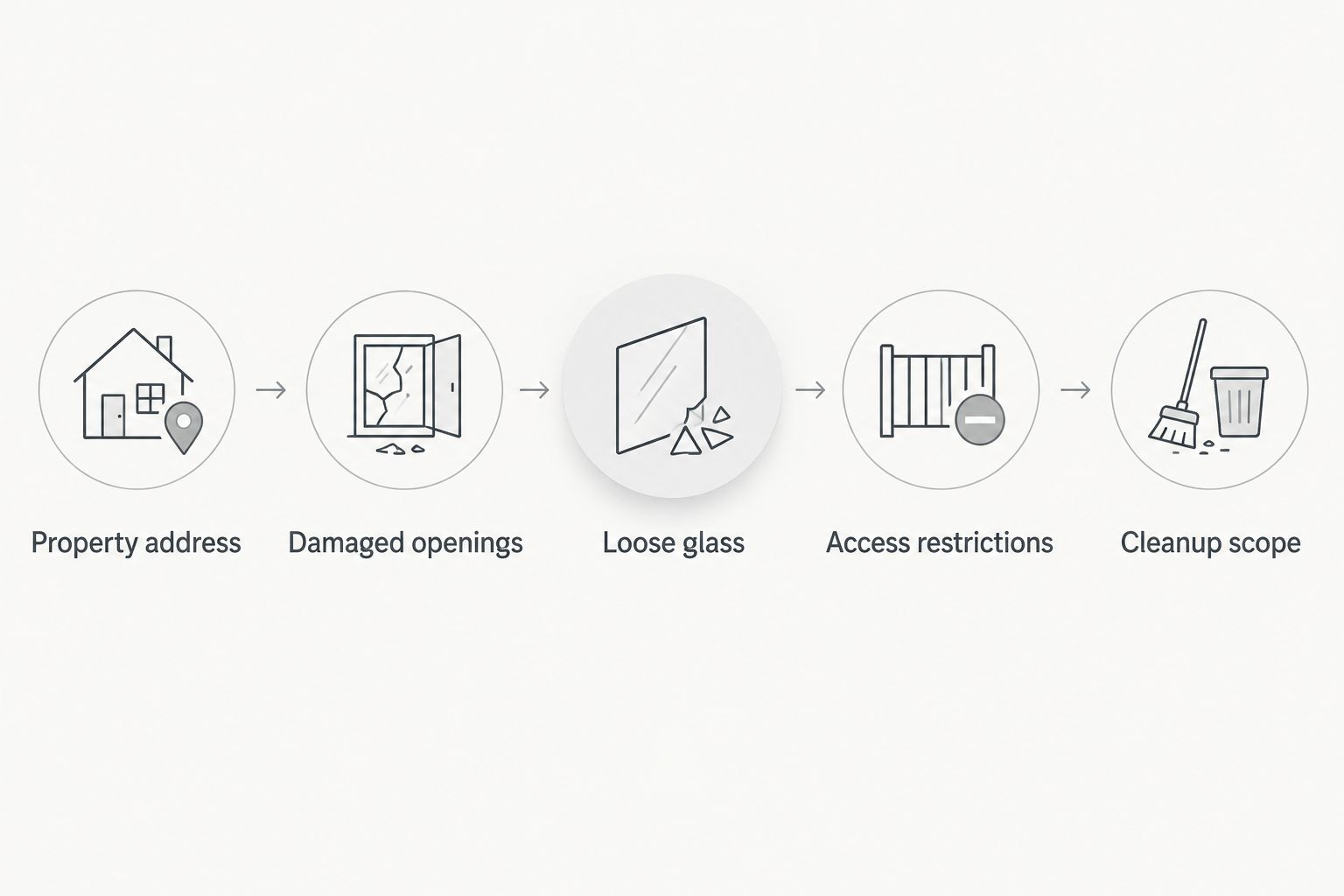
3. Describe the opening and request the right scope
Your manual first step is a clear damage summary. Use existing photographs or observations made from a safe location to describe the affected openings, loose glass, and access restrictions. Do not guess measurements or climb near damaged glass to obtain them.
Bestboardup’s emergency board-up services provide a direct service option once you have established authority and access. The company states that it provides 24/7 window and door board-up, glass cleanup, and property securing across the Los Angeles area. That service scope does not establish a guaranteed arrival time or include unstated permanent repairs.
Best for: agents coordinating emergency securing rather than a cosmetic repair. A damaged entry door needs its own access plan; use the emergency door board-up guide to frame that discussion. Ask how the opening will be secured without making assumptions about materials or installation details.
- Provide the property address and property type.
- Identify damaged openings without guessing dimensions.
- Describe visible loose glass from a safe location.
- Explain occupancy and access restrictions.
- Request confirmation of the securing and cleanup scope.
4. Arrange controlled contractor access
Start by checking the access instructions already assigned to the property. Confirm who will meet the crew, whether entry is necessary, and which areas are off-limits. Do not circulate lockbox codes in broad owner, buyer, or vendor message threads.
Use a designated access contact when you cannot attend. Give that person the approved scope and the coordinator’s details, not just a time to meet someone. If the property is occupied, coordinate entry with the authorized occupant contact and follow the applicable access requirements.
Best for: agents managing vacant listings remotely or coordinating occupied properties. Board-up work and visitor access are separate decisions. Tell the contractor about exits and occupied areas, and do not request a closure that obstructs required escape routes.
Keep this access record attached to the 2026 listing file so another agent can understand the arrangements without searching personal messages.
- Name the person responsible for contractor access.
- Share entry details only with authorized recipients.
- Identify occupied areas and required exit routes.
- State which spaces are outside the approved scope.
- Confirm how the property will be locked after work.
5. Document the condition before and after securing
Create 2 photo sets when conditions allow: before securing and after completion. This is a recordkeeping recommendation, not a reason to approach unsafe glass. Use available photographs if new documentation would require entering a restricted area.
Record when the damage was discovered separately from when it occurred. If you do not know the incident time, leave it unknown. Describing discovery time as incident time introduces an unsupported fact into the owner’s records.
Best for: agents who must brief an owner, insurer, property manager, or repair contractor. Bestboardup’s glass cleanup and securing scope gives you specific work to document; it does not establish insurance coverage or claim approval. Keep the authorization, requested work, completion record, and invoice together, and follow the insurer’s actual instructions.
- Save safe before-work photographs or existing images.
- Request after-work photographs of each secured opening.
- Record discovery time without guessing incident time.
- Keep approvals, work records, and invoices together.
- Record unresolved damage separately from completed work.
6. Reassess the listing before resuming showings
Do not restart appointments merely because a crew has left. Review what was secured, what glass was removed, and what remains unresolved. A covered window does not establish that damaged electrical systems, ceilings, doors, or other building elements are safe.
Use 3 access checkpoints: review the completed scope, identify remaining hazards, and obtain any needed clearance from the appropriate professional or authority. These checkpoints organize your decision; they are not a building inspection or safety certification.
Best for: agents deciding whether buyers and vendors can return. Update showing instructions to reflect the actual condition. For your 2026 listing, avoid claiming that an opening is repaired when it is temporarily boarded, or that an entire property has been cleared when only securing work was completed.
- Review the contractor’s completion notes and photographs.
- Identify remaining hazards or restricted areas.
- Obtain any required assessment or clearance.
- Update showing and vendor access instructions.
- Tell the owner what work remains before normal access.
7. Assign permanent repairs and follow-up responsibility
Start the repair handoff before the emergency job disappears into an email archive. Name the person responsible for arranging permanent glass, door, frame, or related repairs. Confirm who will authorize that next scope and who will coordinate access.
Temporary securing and permanent repair are different assignments. Bestboardup’s stated board-up services address emergency openings, glass cleanup, and property securing; do not assume that this includes glass replacement or other restoration work. Ask the relevant contractor to confirm the repair scope separately.
Best for: agents overseeing a listing through an extended vacancy or delayed repair. In your 2026 follow-up record, give every unresolved task an owner. Arrange property checks appropriate to the actual damage and occupancy instead of treating the initial board-up as the final inspection.
- Assign responsibility for permanent repair scheduling.
- Confirm separate authorization for the repair scope.
- Transfer damage photographs to the repair contact.
- Arrange follow-up checks for unresolved conditions.
- Record completion before describing the opening as repaired.
Request emergency property securing
Arrange window or door board-up and glass cleanup for a damaged Los Angeles property.
Compare your coordination options
Choose by the immediate job, not by a contractor category alone. An exposed opening, a replacement-glass order, and a fire-damage assessment require different scopes. Confirm what the specific provider will perform before assigning the work.
| Option | Best for | Practical advantage | Key limitation |
|---|---|---|---|
| Agent-led coordination | Managing approvals, records, and access | Keeps listing decisions with the authorized contact | Coordination does not physically secure the opening or assess hazards |
| Emergency board-up service | Temporarily securing damaged windows and doors | Addresses the opening while permanent repairs are arranged | Temporary closure is not permanent repair or structural clearance |
| Glass repair contractor | Arranging permanent repair of damaged glazing | Focuses the next assignment on the glazing work | Confirm whether emergency securing and cleanup are included |
| Damage-specific restoration contractor | Coordinating recovery after fire, water, or broader damage | Addresses work beyond the damaged opening when included in scope | Confirm board-up responsibility separately rather than assuming it |
You can coordinate more than one provider, but do not leave responsibility between them. If a glass contractor is handling replacement and another crew is securing the opening, name who owns access, completion photographs, and removal of the temporary closure when repairs occur.
Common mistakes real estate agents make
Treating the lockbox as authorization
Possessing an entry code does not establish permission to order work. Confirm the approver separately, then provide access through the designated contact. This prevents the person meeting the crew from having to resolve an unexpected approval question on site.
Sending buyers to inspect the damage
A buyer appointment is not a damage assessment. Suspend access while unresolved hazards remain and arrange the appropriate professional assessment. Do not ask buyers to step around broken glass so the transaction schedule can continue unchanged.
Reporting temporary securing as completed repair
Use precise language in owner updates and showing instructions. Say that the opening has been boarded when that is the completed work. Keep permanent glazing, frame repairs, and other unresolved tasks visible in the same update.
Assuming emergency work settles the insurance claim
Do not promise reimbursement or claim acceptance. Save the factual work record and follow the insurer’s instructions. Keep the agent’s role focused on documenting condition, authorization, and completed work rather than interpreting coverage.
Leaving the next inspection unassigned
An emergency job needs a named follow-up contact, especially when the owner is away. Record who checks the property next, who schedules repairs, and who updates access instructions. Without those assignments, the temporary closure becomes the last recorded action rather than a managed handoff.
FAQ
What are board up services for real estate agents?
Board up services for real estate agents temporarily secure damaged windows and doors while permanent repairs are arranged. Agents coordinate owner authorization, contractor access, damage records, and changes to showing instructions.
Who should approve board-up work on a listed property?
The owner or a person with the relevant authority should approve board-up work. Check the property’s agreements and emergency instructions rather than assuming a listing assignment authorizes every repair.
Is emergency board-up better than waiting for glass replacement?
Emergency board-up addresses an exposed opening while permanent glass replacement addresses the repair. If the opening needs securing now, coordinate that task separately instead of assuming a replacement appointment covers it.
Can I keep showing a property after its window is boarded?
A boarded window alone does not establish that the property is safe for showings. Review unresolved hazards, required access routes, and any needed professional clearance before resuming appointments.
Does Bestboardup provide overnight board-up services in Los Angeles?
Bestboardup states that it provides 24/7 emergency window and door board-up, glass cleanup, and property securing across the Los Angeles area. Confirm the property’s specific scope and access arrangements when requesting service.
What should I send a board-up contractor before dispatch?
Send the property address, affected openings, visible glass conditions, access restrictions, and authorized contact details. Provide photographs only when they are already available or can be taken safely.
Does boarding a damaged window guarantee insurance reimbursement?
Boarding a damaged window does not guarantee insurance reimbursement. Preserve approvals, photographs, work records, and invoices, and follow the insurer’s instructions for the actual policy and claim.
One last thing
Close the communication loop as carefully as the opening. Before you mark the emergency task complete, send the owner a short status update stating what was secured, what remains unresolved, and who owns the next action.
Then update the access instructions everyone actually uses. A correct contractor report does not help a buyer’s agent who still sees outdated showing directions. Treat that final instruction change as part of securing the listing, not optional paperwork.
