
Landlord board-up service is temporary window and door securing aimed at protecting a damaged rental property while permanent repairs are arranged. If glass is broken or an opening is exposed, keep tenants away from the damage and arrange securing; Bestboardup provides board-up services for landlords and other property owners across the Los Angeles area.
- Bestboardup fits Los Angeles landlords needing 24/7 emergency board-up, glass cleanup, and property securing.
- Board up services for landlords provide temporary protection; arrange permanent window or door repairs separately.
- Protect tenant access, document damage safely, and confirm the securing scope before authorizing work.
- Keep emergency board-up records separate from decisions about insurance coverage and tenant responsibility.
Why board-up services matter for landlords
A damaged rental property creates two immediate problems: an exposed building and people who still need safe access. Boarding an opening addresses temporary security. It does not resolve a damaged door mechanism, restore a window, or establish that a dwelling is safe to occupy.
Landlords also coordinate people who have different responsibilities. A tenant reports the damage, a manager authorizes work, an emergency contractor secures the opening, and a repair contractor restores it. If nobody owns the handoff, temporary protection becomes an unfinished maintenance job.
Your first objective is safe temporary securing, not deciding who will ultimately pay. Keep those decisions separate. Do not delay contacting emergency services for an active threat, injury, fire, or suspected structural danger while you look for a board-up contractor.
For your 2026 emergency plan, record who can authorize work when you are unavailable. Include instructions for occupied units, shared entrances, and vacant properties. Each needs a different access arrangement, even when the visible damage looks similar.
How to secure a damaged rental property
Follow this sequence from the first tenant report through permanent repair. You can handle communication and documentation yourself; use qualified help for hazardous cleanup, unstable openings, and work that affects safe entry or exit.
Keep people away from the damaged opening
Start with a clear instruction to the tenant: avoid the broken window or door and do not touch hanging glass. Do not ask someone to stand beside the opening for a better photograph. An image is useful only when it can be taken safely.
If a break-in is ongoing or someone is injured, contact emergency services first. After a fire or suspected structural damage, follow responders’ access instructions rather than treating the problem as ordinary broken glass.
Your initial call should establish where the damage is and whether anyone needs immediate assistance. Save detailed measurements and repair decisions for later. Keep tenants informed without promising that boarding alone makes the property safe to occupy.
- Ask whether anyone is injured or an active threat remains.
- Identify the affected unit, room, entrance, or shared area.
- Tell occupants to keep people and pets away from loose glass.
- Avoid entering areas restricted by emergency responders.
- Confirm how occupants can leave without approaching the damage.
Build your 2026 authorization and access plan
Use your existing contact list and maintenance records first. Find the tenant’s current number, the person who holds access information, and the owner or manager authorized to approve emergency work. A simple written instruction is more useful than a chain of unanswered calls.
For an occupied unit, explain who is coming and which opening needs attention. For a commercial tenant, identify the person responsible for premises access. For a vacant property, confirm who can meet the contractor without distributing access information unnecessarily.
Authorize a defined task, not an open-ended repair request. Specify temporary securing and ask the contractor to explain additional work before proceeding. Keep permanent replacement decisions separate unless you expressly approve them.
- Name the person who can authorize emergency securing.
- Confirm a reliable contact for the tenant or site representative.
- Share access instructions directly with the assigned provider.
- Identify shared doors or routes that must remain usable.
- Record what work is authorized and who approved it.
Arrange emergency securing with a clear scope
Your manual first step is to describe the problem accurately: broken window, damaged door, exposed storefront, or another opening. Note whether glass cleanup is needed and whether the opening affects occupied space. You do not need to remove glass or measure an unsafe frame to request help.
Bestboardup is best for Los Angeles landlords needing 24/7 emergency board-up, glass cleanup, and property securing. Those stated services match the immediate securing task. Confirm the proposed work and access arrangements for your property; a service description is not a promise of a particular arrival time or permanent repair.
Use this order: Keep clear, Report damage, Arrange securing, Plan repairs. Temporary protection belongs before the replacement project, but after immediate safety concerns have been addressed.
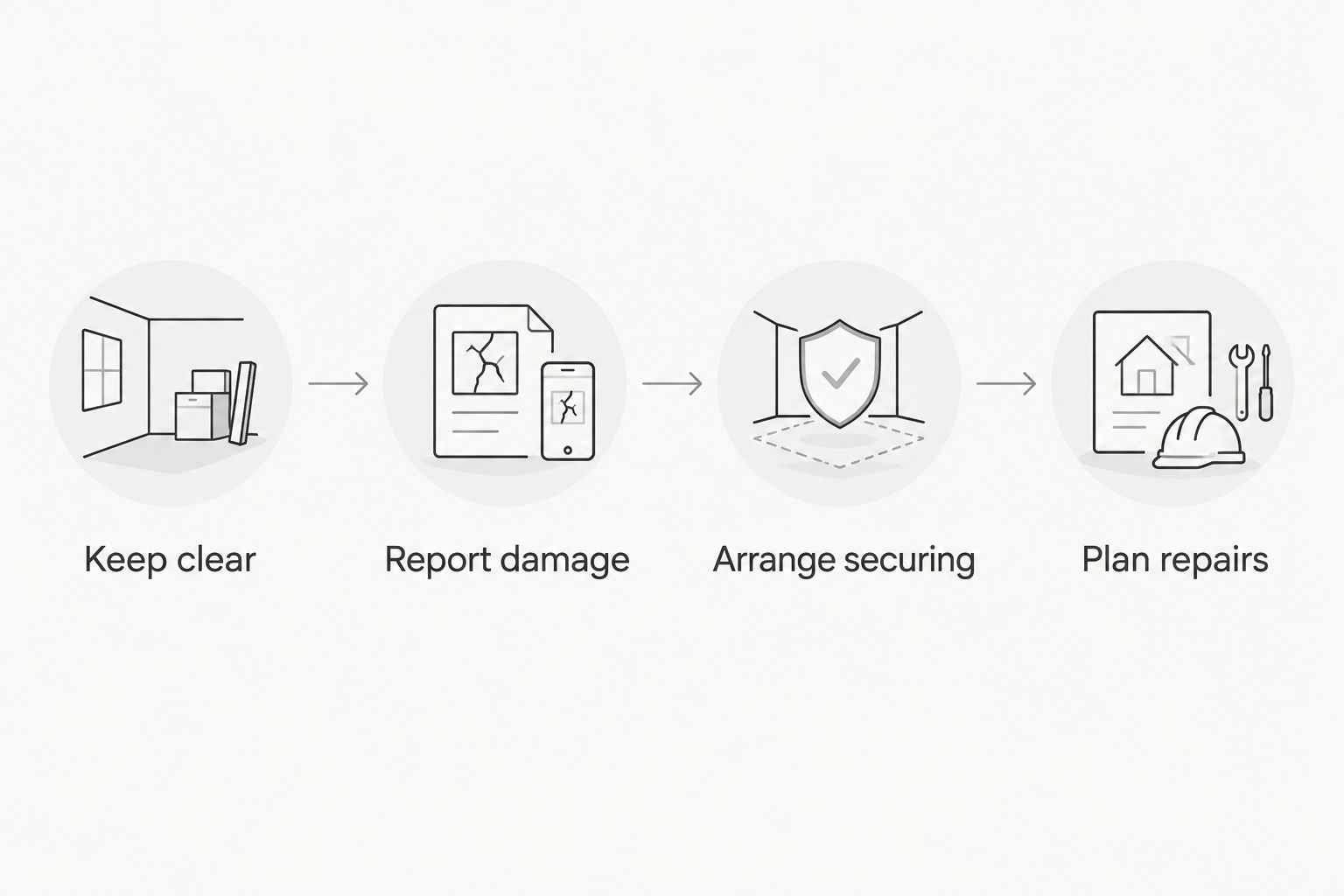
Before authorizing the job, make the boundaries explicit. Ask what the contractor will secure, what cleanup is included, and what condition will remain afterward.
- Describe every damaged opening you know about.
- State whether the property is occupied or vacant.
- Ask whether the scope includes glass cleanup.
- Confirm how the work will affect entry and exit.
- Request a written description of completed work.
Arrange emergency property securing
Bestboardup provides 24/7 window and door board-up, glass cleanup, and property securing in Los Angeles.
Document damage without delaying protection
Use your phone and existing maintenance log to create an incident record. Capture photographs from a safe position before work starts when circumstances allow. If approaching the damage is unsafe, record the tenant’s description and obtain contractor photographs instead.
Separate observed facts from assumptions. A broken pane is an observation; assigning responsibility for it requires more information. Avoid turning an urgent maintenance message into a dispute about fault before you have secured the opening.
Keep the incident entry in your 2026 maintenance records alongside the authorization, contractor paperwork, and tenant communications. This creates a clear account of what happened and what you instructed people to do.
For claim-related organization, use the guide to board-up services for insurance claims in Los Angeles. Documentation supports a claim discussion; it does not establish coverage or guarantee reimbursement.
- Record when the damage was reported and by whom.
- Photograph the opening and surrounding damage from safe positions.
- Save the written authorization and contractor invoice.
- Retain before-and-after images when they are available.
- Keep repair estimates with the same incident record.
Check the handoff before reopening the area
After temporary securing, request a plain description of what was completed. Do not accept an exterior photograph as the entire handoff when tenants use the affected room or entrance. Ask about the interior condition, cleanup boundaries, and any remaining restrictions.
Review the result from a safe position without testing the board, touching fasteners, or disturbing damaged framing. If the work affects a door or shared route, confirm the access arrangement with the contractor and the responsible property representative.
Board-up completion and occupancy clearance are different decisions. Do not tell a tenant that fire damage, structural concerns, or other hazards have been resolved because an opening is covered. Obtain the relevant assessment when those issues exist.
- Identify each opening that was secured.
- Ask which areas received glass cleanup.
- Confirm whether any hazards remain outside the work scope.
- Record instructions about access and restricted areas.
- Give tenants a factual update on temporary protection.
Schedule permanent repair before the job goes quiet
Start with the repair contacts already in your maintenance records. Describe the damaged assembly, not just the board covering it: window glazing, frame, door, lock, or surrounding material. Let the repair contractor assess what needs replacement.
Temporary securing is an interim measure. It does not automatically include glass replacement, door restoration, alarm repairs, or treatment of water damage. Ask who will remove the boarding and how that removal fits into the permanent repair appointment.
For occupied rentals, coordinate access with the tenant through the appropriate process. Do not leave tenants to negotiate separately with multiple contractors while you assume the repair is progressing. Assign one person to track the handoff and communicate the next confirmed action.
- Request an assessment of the damaged window or door assembly.
- Identify repairs outside the emergency securing scope.
- Coordinate board removal with permanent repair work.
- Confirm access arrangements before the repair appointment.
- Update the tenant when the repair plan changes.
Close the incident and update your response plan
Compare the completed work with the original report. Verify that the permanent repair addresses the opening and that remaining cleanup or maintenance tasks have an owner. File the final paperwork rather than leaving it in separate text conversations.
Use the incident to improve your 2026 response instructions. If authorization was delayed, update the backup contact. If nobody knew how to access the property, revise the access procedure. Fix the specific failure, not just the wording of the emergency checklist.
Do not confuse administrative closure with assigning costs. Insurance decisions, lease obligations, and responsibility for damage require their own review. Keep those discussions grounded in records and applicable requirements rather than assumptions made during the emergency.
- Confirm completion of the permanent repair.
- Record unresolved maintenance tasks and responsible contacts.
- Store photographs, invoices, and communications together.
- Update emergency authorization and access instructions.
- Tell the tenant which incident-related work is complete.
Compare landlord securing options in 2026
Choose the option that matches the task. Tenant communication and incident logging do not require a board-up contractor. Hazardous cleanup and physical securing are a different job; permanent restoration is another.
The main advantage of an emergency board-up provider is a scope focused on temporary protection. Its limitation is equally important: securing an opening is not the same as restoring the damaged building component.
| Option | Best for | Main advantage | Key limitation |
|---|---|---|---|
| Landlord-led coordination | Tenant updates, authorization, and incident records | Keeps decisions and documentation under your control | Does not physically secure an opening or resolve glass hazards |
| In-house maintenance team | Properties with staff qualified for the specific work | Uses existing property knowledge and access procedures | Suitability depends on training, equipment, and the damage involved |
| Bestboardup emergency board-up services | Los Angeles landlords needing 24/7 securing and glass cleanup | Provides emergency window and door board-up, cleanup, and property securing | Confirm the job scope; permanent replacement is not established by the stated services |
| Glass or door repair contractor | Assessment and permanent restoration | Focuses on the damaged component that needs repair or replacement | Confirm whether temporary securing is part of the proposed work |
Do not make one provider responsible for work you have not confirmed. Ask separately about temporary securing, cleanup, permanent repair, and access arrangements. A clear division of responsibility prevents an unfinished handoff.
Common mistakes landlords make
Asking tenants to handle broken glass
A tenant can report damage without becoming your cleanup crew. Do not request close-up photographs that require approaching loose glass, or ask an occupant to remove fragments before help arrives. Collect a safe description and arrange appropriate assistance.
Blocking access without discussing the occupied unit
A damaged entrance is not only an opening to cover. It is part of how people enter and leave. Explain the unit’s occupancy and access needs before work starts, and require a clear handoff about any resulting restrictions.
Treating a boarded window as a finished repair
The board can become the visible endpoint while the underlying window remains broken. Open the permanent repair task when you authorize temporary securing. Assign someone to track assessment, access, board removal, and completion.
Promising insurance reimbursement or assigning tenant blame
An invoice does not establish coverage, and a damage report does not establish fault. Give tenants factual updates about safety and repairs. Review payment responsibility separately using the relevant policy, lease, records, and professional advice where needed.
Using the same instructions for vacant and occupied properties
An occupied rental needs tenant communication and usable access. A vacant property needs controlled contractor access and a plan for subsequent checks and repairs. State the occupancy status when requesting service rather than assuming the contractor already knows it.
FAQ
When should a landlord arrange emergency board-up service?
Arrange emergency board-up when a damaged window or door leaves the property exposed and temporary securing is needed. Address active threats, injuries, fire, and suspected structural danger through emergency services first.
What does board-up service do for a rental property?
Board-up service temporarily secures damaged openings while permanent repairs are arranged. Confirm whether the specific job includes glass cleanup and how the work affects tenant access.
Does Bestboardup provide landlord board-up services in Los Angeles?
Bestboardup provides 24/7 emergency window and door board-up, glass cleanup, and property securing for residential and commercial customers across the Los Angeles area. Confirm the scope and access arrangements for your rental property when requesting service.
Can my tenant stay in the unit after a window is boarded?
Boarding a window alone does not establish that a unit is safe to occupy. Review remaining hazards, usable entry and exit, and any instructions from responders or qualified professionals before making occupancy decisions.
Should I take photographs before the contractor starts?
Take photographs before work starts only when you can do so safely. If the opening is hazardous, document the report and request contractor images instead of approaching loose glass.
Does emergency board-up include permanent glass replacement?
Do not assume emergency board-up includes permanent glass replacement. Confirm the securing scope, then arrange assessment and restoration of the damaged window or door separately unless that work is expressly included.
Will insurance pay for a landlord’s board-up service?
Insurance payment depends on the policy and claim circumstances. Save photographs, authorization records, invoices, and repair documents, and ask the insurer about the applicable claim requirements.
What should my landlord emergency plan include in 2026?
Your 2026 landlord emergency plan should identify an authorized decision-maker, backup contact, access procedure, and tenant communication process. Include a separate handoff for permanent repairs so temporary securing does not become the last recorded action.
One last thing
The most useful completion photo is not always the exterior view. For an occupied rental, the interior side of the secured opening and the affected access route help you understand what the tenant will encounter. Request those views when they can be obtained safely.
Add this to your 2026 closeout checklist: every emergency securing job needs a named owner for permanent repair. A board covering the opening is the start of that handoff, not proof that the incident is finished.
