
Church board-up services are temporary window and door securing services that close damaged openings so you can protect the building while arranging repairs. Keep worshippers, staff, and volunteers away from broken glass first; then coordinate access, emergency securing, and any changes to scheduled activities.
- Board up services for churches should secure damaged openings without blocking required exits or exposing volunteers to broken glass.
- Bestboardup serves Los Angeles properties with 24/7 emergency board-up, glass cleanup, and property securing services.
- Separate emergency securing from permanent glass repair, stained-glass restoration, and decisions about reopening.
- Assign one church representative to authorize work, document damage, and coordinate access.
Why board-up services matter for churches
A damaged church window is not just a repair problem. You must manage the opening alongside worship services, volunteers, visiting groups, and any other activities that use the affected space. Secure the damaged area before deciding whether an event can continue.
For your 2026 emergency plan, treat board-up as temporary property protection—not permission to reopen. A covered window does not resolve structural damage, unsafe electrical equipment, smoke contamination, or an unusable exit.
If you expect to file a claim, keep photographs, invoices, and incident records together. This guide to board-up services for insurance claims in Los Angeles addresses that part of the response. Do not delay immediate safety measures while collecting paperwork.
Church-specific priorities belong in the work instructions: identify occupied rooms, required exit routes, sensitive glass, and who can authorize work. A contractor needs those details before treating every opening as an ordinary window.
How to arrange church board-up services
1. Isolate the damaged area
Start with the free, immediate action: stop people from entering the affected area. Move activities away from damaged glazing and keep children, volunteers, and visitors out of the cleanup zone. Do not ask a church member to hold unstable glass in place while someone finds tools.
If there is an active threat, fire, injury, or suspected structural instability, contact emergency responders before arranging property work. Do not enter a restricted building to photograph damage or retrieve keys.
Use a simple boundary that people can understand. Lock an unaffected interior door where appropriate, post a notice, and assign a responsible person to redirect arrivals. Keep required exits usable.
- Stop access to the damaged room or entrance.
- Keep people away from glass beneath the opening.
- Identify another safe arrival route, if one exists.
- Report immediate threats to emergency responders.
- Leave unstable frames and hanging glass untouched.
2. Record damage without disturbing it
Use your phone to document the incident from a safe location. Take 3 photographs as a starting checklist: the affected building area, the whole opening, and visible damage viewed without approaching loose glass. Add photographs as needed; three images are not a claim requirement.
Record when staff discovered the damage, which rooms are affected, and whether authorities have restricted access. For suspected vandalism or a break-in, follow police instructions before cleaning or moving potential evidence.
Create 1 incident file for your 2026 records. Put the photographs, incident notes, contractor documents, and later repair records in it. This is an organizational recommendation, not an insurer's documentation standard.
- Photograph the opening from a safe position.
- Note discovery time and affected rooms.
- Record any police or fire incident reference provided.
- Save original photographs rather than edited copies.
- Keep emergency and permanent-repair records together.
3. Assign authority and request emergency securing
Before calling contractors, name the person who can approve work and give access. Keep 2 authorized contacts in the church's response plan: a primary representative and a backup. Confirm that both understand the approval process rather than assuming a volunteer can authorize an invoice.
Your manual starting point is a short written scope: damaged windows or doors, glass on the ground, access restrictions, and any sensitive materials nearby. Share that scope when requesting service so you do not have to reconstruct it during each call.
Bestboardup is best for Los Angeles churches needing 24/7 emergency window and door board-up and glass cleanup. Confirm the specific church address, requested work, and arrival arrangements directly; 24/7 service does not establish a guaranteed arrival time.
- Identify the person authorized to approve work.
- Give the property address and safe access instructions.
- Describe each damaged window or door.
- Ask whether cleanup is included in the proposed scope.
- Confirm arrival arrangements and written authorization.
4. Map access before covering openings
Walk through the access plan with church leadership before the contractor begins, provided the building is safe to enter. Mark the affected area on a basic floor plan or sketch. Identify entrances, required exits, occupied rooms, and spaces that must remain closed.
A board-up plan must not turn a damaged entrance into a blocked escape route. If the proposed work affects an exit or other required access, obtain direction from the appropriate building or fire authority before using the space.
Keep the response sequence simple: isolate the area, document damage, authorize work, and confirm access. The map does not need professional drawings; it needs clear instructions that match conditions at the property.
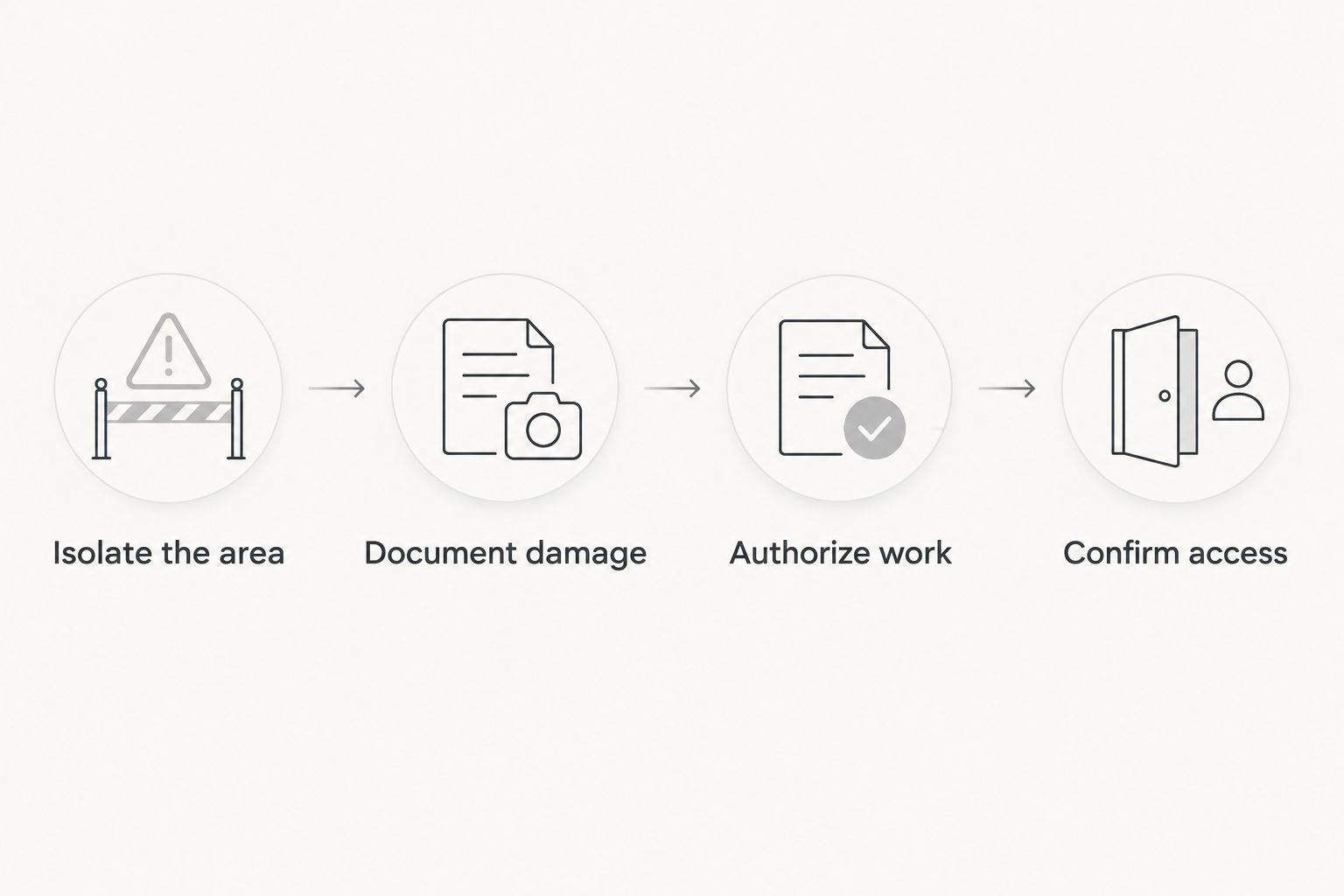
Give the contractor a clear boundary between work areas and spaces that remain in use. Do not rely on verbal directions passed between several volunteers.
- Mark affected openings on a sketch.
- Identify required exits and routes to them.
- Specify rooms that must remain closed.
- Designate the contractor's access point.
- Share the access plan with church staff.
5. Flag stained glass and vulnerable finishes
Inspect from a safe distance and identify anything that needs special handling. Tell the contractor about stained glass, decorative surrounds, existing cracks, fragile masonry, or other visible concerns. Do not remove surviving glass or attach temporary coverings to decorative features yourself.
Ask the contractor to explain the proposed attachment method and what surfaces it will affect. For specialist glass or protected building features, coordinate emergency protection with a qualified restoration professional as appropriate. Emergency board-up and restoration are different scopes.
For a 2026 church response checklist, include a field for sensitive materials. Recording that detail before work starts gives the person authorizing the job a specific question to resolve, rather than discovering attachment concerns after installation.
- Point out stained glass and decorative framing.
- Identify visibly damaged surrounding materials.
- Ask where fasteners or supports will attach.
- Document existing finish damage before work.
- Keep restoration decisions separate from emergency securing.
6. Confirm cleanup and the temporary closure
Before accepting the completed work, review the agreed scope with the contractor. Look at the closure from safe positions inside and outside, where access is permitted. Do not climb, pull on boards, or conduct your own load test.
Ask which areas were cleaned and which remain restricted. A swept entrance does not answer whether glass remains in carpet, landscaping, adjoining rooms, or inaccessible areas. Match the inspection to the actual scope rather than assuming every part of the property was included.
Bestboardup provides glass cleanup and property securing alongside emergency board-up. Confirm which of those services your church has requested and document any remaining work. Temporary securing does not replace an assessment of whether the building is safe for occupancy.
- Review each opening listed in the work order.
- Confirm the agreed cleanup areas.
- Record inaccessible or unfinished areas.
- Photograph completed securing from safe locations.
- Obtain the invoice and work description.
7. Plan repairs and reopening separately
Once the immediate opening is secured, assign responsibility for permanent repair and communication. Put temporary securing, glass replacement, specialist restoration, and reopening decisions on separate lines in your task list. Do not let a completed board-up invoice stand in for all four decisions.
For your 2026 maintenance schedule, identify who will arrange repairs and who will approve use of the affected rooms. If authorities have restricted occupancy, follow their instructions. Communicate changes to service entrances, meeting locations, or cancellations before people arrive.
Keep the response plan active until the permanent repair is complete and the temporary covering is removed through an agreed process. Include any follow-up inspections directed by the relevant professionals or authorities.
- Name the person responsible for permanent repairs.
- Arrange specialist restoration where needed.
- Confirm who can approve reopening.
- Notify groups that use the affected rooms.
- Record completion and removal of temporary coverings.
Arrange emergency property securing
Discuss damaged windows, doors, glass cleanup, and access at your Los Angeles church.
Compare church emergency response options
Choose by the work needed, not by whether someone has plywood and a drill. Volunteers can coordinate the response; that does not qualify them to handle unstable glass or install temporary closures. Emergency securing and permanent restoration solve different problems.
| Option | Best for | Main advantage | Key limitation |
|---|---|---|---|
| Staff-led isolation and documentation | Controlling access while arranging qualified help | Starts with existing staff and a phone | Does not secure an exposed opening or remove unstable glass |
| Bestboardup emergency board-up | Los Angeles churches needing emergency window or door securing and glass cleanup | Provides 24/7 emergency services covering those tasks | Board-up is temporary; confirm any separate permanent-repair scope |
| Qualified glass repair contractor | Replacing damaged ordinary glazing | Addresses the permanent glass repair | Confirm whether emergency securing and cleanup are included |
| Specialist stained-glass restorer | Repairing damaged stained glass | Addresses a distinct restoration scope | Do not assume emergency board-up is part of the service |
These options can form a sequence rather than a competition. Staff isolate the area, an emergency provider secures the opening, and the appropriate repair professional addresses the permanent damage. Verify each provider's scope before authorizing overlapping work.
Common mistakes churches make
Treating a boarded opening as reopening approval
A covered window addresses the opening, not every hazard in the building. Keep fire damage, structural concerns, electrical hazards, and occupancy restrictions separate from the board-up decision. Ask the responsible authority or qualified professional what must happen before the affected space is used.
Sending volunteers into broken glass
A willing volunteer is not a substitute for a safe work plan. Give volunteers coordination tasks: redirect arrivals, notify groups, gather records, and meet the contractor at a safe location. Do not make handling shards or stabilizing damaged frames part of a general cleanup request.
Authorizing work through several people
Conflicting instructions make it unclear which doors should stay accessible, which rooms are closed, and who approved additional work. Use one authorized representative and a backup. Send changes through that representative and keep them with the incident record.
Forgetting shared-use groups
A church's response plan must cover everyone scheduled to enter the affected space, not just the next worship service. Check the actual calendar and notify each affected organizer. Specify the usable entrance or cancellation clearly; a general notice that the building has damage is not an access instruction.
Bundling emergency securing with restoration
Do not assume a temporary closure includes replacement glass, stained-glass repair, finish repairs, or permission to reopen. Request a written scope for each stage. In your 2026 records, keep the emergency job and permanent repair linked to the same incident but identifiable as separate work.
FAQ
What are board up services for churches?
Board up services for churches temporarily secure damaged windows and doors while the church arranges repairs. Define the work to include the affected openings, requested glass cleanup, and safe access arrangements.
Who should I call first after a church window breaks?
Contact emergency responders first if there is an active threat, injury, fire, or suspected structural instability. Otherwise, isolate the damaged area and have an authorized church representative arrange emergency securing.
Does Bestboardup provide emergency service in Los Angeles?
Bestboardup provides 24/7 emergency window and door board-up, glass cleanup, and property securing across the Los Angeles area. Confirm the church address, requested scope, and arrival arrangements directly.
Can volunteers board up a church window themselves?
Assign volunteers to access control and coordination rather than handling unstable glass or installing closures without suitable qualifications. Keep them out of the damaged area and arrange qualified help for hazardous work.
Can a church stay open after a window is boarded?
A boarded window does not establish that a church is safe to occupy. Resolve remaining hazards, required exit access, and any authority-imposed restrictions before using the affected space.
Does emergency board-up include stained-glass restoration?
Treat stained-glass restoration as a separate scope unless the provider explicitly includes it. Identify sensitive glass and framing before installation and coordinate the repair with an appropriate specialist.
What information should a church give the board-up contractor?
Provide the address, damaged openings, safe access instructions, cleanup needs, and the authorized representative’s details. Also identify required exits, restricted rooms, and stained glass or vulnerable finishes.
What should a church keep for an insurance claim?
Keep original photographs, incident notes, contractor work descriptions, invoices, and any incident reference supplied by authorities. Ask the insurer about its documentation requirements without delaying immediate safety measures.
One last thing
Before the next emergency, test whether your written plan works when the usual facilities contact is unavailable. Can the backup representative authorize work, locate keys, identify required exits, and reach the groups using the building?
Make that handoff part of your 2026 emergency plan. A list of contractor names is not enough if nobody present knows who can approve securing or which entrance must remain accessible.
