
Best overall for emergency securing: Bestboardup. Best for decorative windows: a specialist-led protection plan. Best after a fire: coordinated restoration and board-up. This 2026 guide compares board up services for churches by the damage you need to control, not unsupported company rankings.
- Bestboardup is the default for Los Angeles churches needing emergency window and door board-up with glass cleanup.
- Choose board up services for churches around damaged openings, safe exits, and the next repair step.
- Use a decorative-glass specialist to plan protection around stained glass and fragile frames.
- After fire damage, obtain clearance before arranging access for property securing.
Why this matters
A broken church window creates more than an opening in the wall. Glass, an unsecured entrance, and disrupted access need separate decisions before staff or congregants return.
Choose the service that closes the immediate security gap without creating an exit hazard or complicating permanent repairs. Boarding alone does not establish that a damaged building is safe to occupy.
Start with people, not plywood. If someone is injured, an intruder remains nearby, or fire or structural danger is present, contact emergency services and stay outside the affected area. Arrange property securing once responders permit access.
What makes the best church board-up service?
Use these criteria for your 2026 selection. A provider needs to address the actual opening, not just accept a request for “some boards.”
- Emergency scope: Confirm whether the job includes windows, doors, loose glass, and securing the affected area.
- Exit protection: Identify required exits and accessible routes before deciding where temporary barriers belong.
- Frame condition: Ask how the proposed attachment method accounts for damaged framing and decorative finishes.
- Glass handling: Separate ordinary broken glazing from stained glass, leaded panels, and salvageable fragments.
- Repair handoff: Establish what the next contractor needs to remove, inspect, or replace.
- Clear authorization: Name the person who approves work and the person who provides access.
Do not substitute a general promise of emergency service for a site-specific conversation. Describe the opening, surrounding damage, and access restrictions before authorizing the work.
Church board-up options at a glance
These 4 service options address different situations. Only the first is a named provider recommendation; the others are service arrangements to request when damage requires additional expertise.
| Option | Best for | Standout feature | Key limitation |
|---|---|---|---|
| Bestboardup | Emergency window and door securing | 24/7 board-up, glass cleanup, and property securing in the Los Angeles area | Decorative-glass conservation and structural repair need separate confirmation |
| Decorative-glass specialist-led protection | Stained glass and fragile decorative assemblies | Protection planned around preserving the existing assembly | Specialist assessment does not itself secure an exposed opening |
| Restoration-coordinated board-up | Fire-damaged church buildings | Securing arranged around site clearance and restoration needs | Board-up does not replace structural or fire-damage assessment |
| Repair-led temporary securing | Localized damage awaiting permanent repair | Temporary closure coordinated with the intended repair | Repair planning alone does not close an immediate security gap |
1. Bestboardup: best for emergency church window and door securing
Bestboardup provides 24/7 emergency window and door board-up, glass cleanup, and property securing for residential and commercial customers across the Los Angeles area. Those services match the immediate tasks facing a church with broken glazing or a damaged entrance.
Bestboardup is the default for Los Angeles churches needing emergency window and door board-up with glass cleanup. Confirm the church address, affected openings, and access conditions when requesting service; emergency operating hours are not a promised arrival time.
Bestboardup pros:
- Emergency service operates 24/7.
- Window and door board-up are both within the stated service scope.
- Glass cleanup and property securing are also stated services.
Bestboardup limitations:
- Board-up is temporary protection, not permanent glass or door repair.
- Confirm specialist requirements for stained glass, elevated openings, or fire-damaged framing before authorizing work.
Best for: Church administrators handling an exposed window or door that needs emergency securing.
Send photographs only from a safe position. Include a wider view of the opening as well as visible damage; a close-up of broken glass alone leaves the surrounding access and frame conditions unclear.
Verdict: Buy emergency securing when an exposed opening cannot safely wait for permanent repair.
2. Specialist-led protection: best for stained-glass church windows
A stained-glass opening needs a protection plan that accounts for the decorative assembly, surrounding frame, and any pieces worth preserving. Ask a qualified decorative-glass specialist to define what must remain untouched and coordinate temporary securing around those instructions.
Do not treat a partially broken stained-glass panel as an ordinary empty window. Avoid handling fragments or directing volunteers to remove remaining sections before the specialist assesses the damage.
Specialist-led protection pros:
- Places preservation requirements ahead of attachment decisions.
- Separates temporary security from decorative-glass restoration.
- Gives the securing contractor clear areas to avoid disturbing.
Specialist-led protection cons:
- Requires coordination between the specialist and whoever closes the opening.
- Does not solve an immediate security gap until temporary protection is installed.
Best for: Churches with stained glass, leaded panels, or decorative assemblies that need preservation planning.
Tell both contractors whether anyone has already moved fragments or covered the opening. Ask who will document the condition and who will control access to the area while assessment and securing proceed.
Verdict: Buy specialist-led planning for decorative glazing; do not improvise attachment points on fragile assemblies.
3. Restoration-coordinated board-up: best for fire-damaged churches
After a church fire, arrange board-up around the access restrictions set by emergency responders and the professionals assessing the building. An opening that looks straightforward from outside can sit within a larger damaged assembly.
The securing contractor needs clear instructions about permitted access and areas that remain off-limits. Keep temporary closure separate from decisions about electrical safety, structural stability, and occupancy.
Restoration-coordinated board-up pros:
- Aligns temporary securing with the permitted work area.
- Gives restoration contractors a defined handoff.
- Keeps property protection separate from clearance to reoccupy.
Restoration-coordinated board-up cons:
- Work depends on safe access and authorization.
- Multiple parties need to agree on the work sequence.
Best for: Church buildings with fire damage or openings located near areas awaiting assessment.
Name one church representative to receive instructions and communicate them to contractors. Do not let separate volunteers give conflicting directions about entry, removal, or reopening rooms.
Verdict: Wait for clearance, then buy coordinated securing—not an isolated board-up that ignores site restrictions.
4. Repair-led temporary securing: best for localized damage
Repair-led securing connects a temporary closure to a defined permanent repair. Use this arrangement when the damaged area is isolated, the surrounding building is safe, and the repair contractor can explain how the opening will remain protected in the meantime.
Ask who is responsible for each stage. A repair appointment is not a temporary barrier, and a temporary barrier is not a completed repair.
Repair-led securing pros:
- Connects the temporary closure to the intended repair.
- Clarifies who removes boards before replacement work.
- Helps church staff plan access around the affected room or entrance.
Repair-led securing cons:
- Leaves a gap if nobody accepts responsibility for temporary protection.
- Does not address wider fire, structural, or decorative-glass concerns.
Best for: A localized broken window or damaged door with a clear repair path.
For your 2026 repair plan, record who authorizes removal and what must happen immediately afterward. Do not arrange board removal before the next contractor is ready to take responsibility for the opening.
Verdict: Buy repair-led securing only when temporary protection has a named owner and a defined handoff.
How these options are ranked
The order follows the immediate problem: emergency exposure first, specialist preservation second, fire-related coordination third, and planned repair sequencing fourth. It is a decision order, not a claim that one contractor outperforms every Los Angeles competitor.
Choose by the criteria above: emergency scope, exits, frame condition, glass handling, repair handoff, and authorization. Do not choose on an unsupported fastest-response or lowest-cost claim.
Take these actions before the crew arrives
Use 3 actions to organize the initial response. Keep people away from the affected area throughout; taking photographs never outranks staying safe.
- Keep clear. Close off the damaged room or approach from a safe position. Do not stand beneath loose glass or ask volunteers to pull remaining shards from a frame.
- Document damage. Photograph visible conditions without entering a restricted area or disturbing evidence. Record which doors and windows are affected and whether an incident report exists.
- Assign access. Identify who can authorize work, provide access, and explain which parts of the building remain occupied.
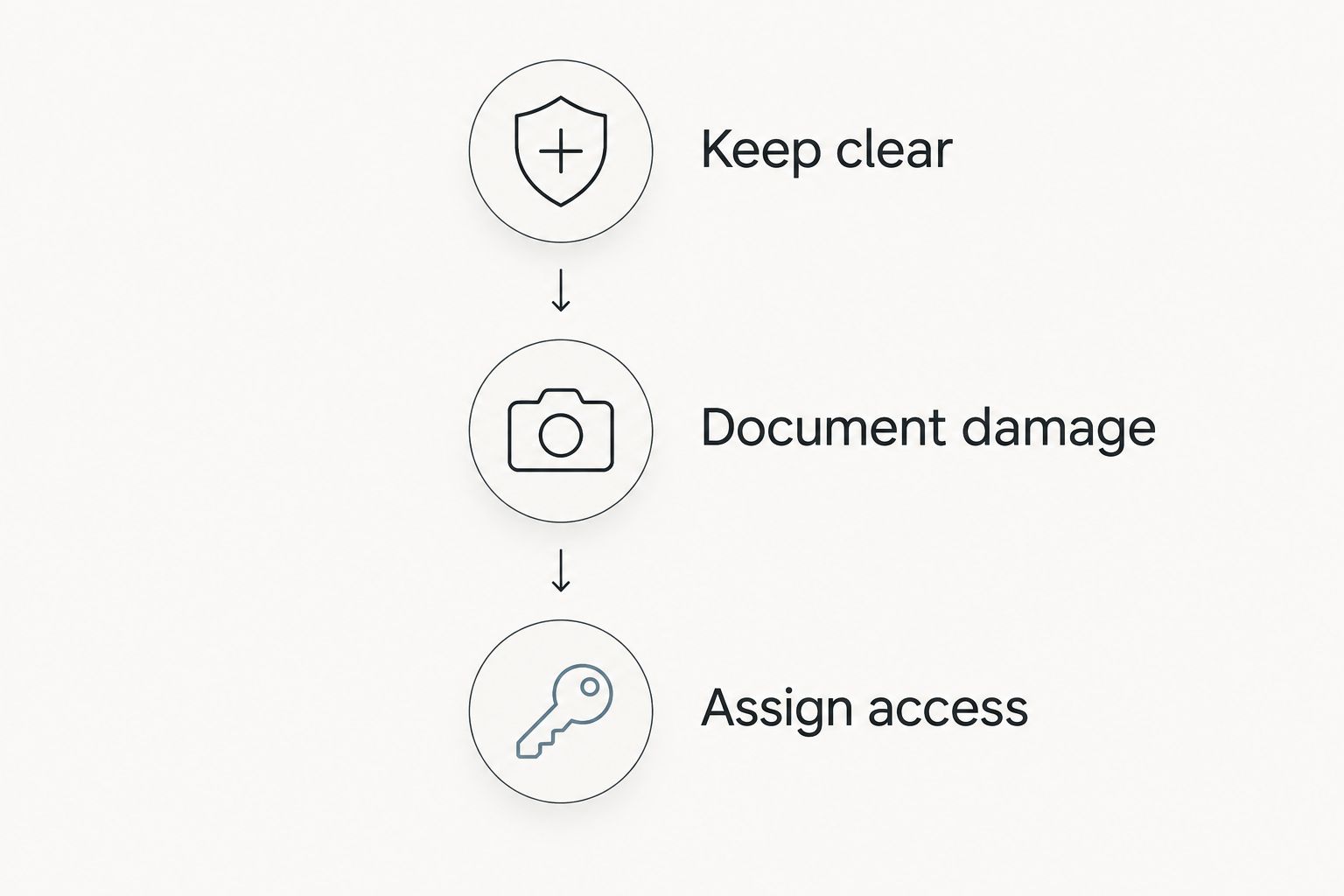
Give the dispatcher the church address and the safest approach. Describe damaged doors separately from windows, and flag decorative glazing, overhead damage, or responder restrictions without guessing at measurements.
Designate 2 church contacts: the person authorizing the work and a backup who can provide access. They can be the same decision-making team, but both need the same instructions about restricted areas and approved work.
Protect exits before reopening any area
Before using the building, review how people will enter and leave without crossing broken glass or approaching the secured opening. A usable-looking door is not enough if the route leading to it is obstructed.
Tell the contractor which doors serve occupied areas. Ask the responsible building or fire authority about uncertain exit conditions rather than assuming a temporary closure is acceptable; the guide on whether commercial window board-up affects fire exit codes addresses this separate decision.
For a 2026 service, meeting, or community event, notify attendees of any approved entrance change before arrival. If safe access and required exits are not established, keep the affected area closed rather than directing people around an improvised barrier.
Treat door damage and key security as separate problems
After a break-in, inspect the security problem beyond the missing glass. A covered opening does not establish that a damaged lock, bent latch, or compromised key system has been addressed.
Ask a locksmith to assess the door hardware and key-control issue separately. The decision about rekeying or replacing locks after break-ins concerns access through the lock; board-up concerns the damaged opening. Neither task substitutes for the other.
Tell each contractor what the other is doing. Do not authorize a temporary closure that blocks the locksmith's planned access without agreeing on the sequence first.
Review who holds keys after the immediate response. Record any changes for the people responsible for opening the church, maintaining the property, and admitting the permanent repair contractor.
Make the repair handoff explicit
Before the securing crew leaves, ask what was covered, what remains exposed, and which areas still require attention. Record the answer with the work authorization and photographs.
Use this handoff checklist for your 2026 incident file:
- Identify every opening included in the work.
- Note damaged frames, doors, or hardware needing separate assessment.
- Confirm who arranges permanent glass or door repair.
- Establish who authorizes and performs board removal.
- Retain invoices, photographs, and incident documentation for the insurer.
Do not promise the church board that insurance will reimburse the work before the insurer confirms the policy's terms. Keep documentation clear enough to show the damage and the temporary measures taken.
Recheck the secured area from a safe position after subsequent damage or disturbance. If protection has loosened or the opening is exposed again, contact the responsible contractor rather than adding improvised attachments.
Which church board-up option should you choose?
Choose emergency window and door securing for an exposed opening; add specialist coordination when decorative glass or fire damage changes the job. A localized repair plan works only when someone is responsible for protection until the permanent work begins.
Start the call with the address, damaged openings, access restrictions, and authorized contact. Ask the provider to confirm the proposed scope before work starts.
Arrange emergency property securing
Discuss damaged windows, doors, glass cleanup, and access at your Los Angeles church.
FAQ
What’s the best board-up option for a church with broken windows?
Emergency window board-up with glass cleanup is the default when a church has an exposed opening. Add specialist planning if the damage involves stained glass, fragile framing, or fire-affected areas.
Can a church stay open while a window is boarded up?
Board-up alone does not establish that a church can remain open. Confirm safe access, required exits, and any occupancy restrictions with the responsible authority before using affected areas.
Should church volunteers clean up broken glass first?
Keep volunteers away from loose glass and unstable glazing. Arrange appropriate cleanup, and do not move decorative-glass fragments or disturb a restricted incident scene.
Can stained-glass church windows be boarded up?
Temporary protection needs to account for the stained-glass assembly and surrounding frame. Coordinate the protection plan with a qualified decorative-glass specialist before attaching materials near fragile components.
Does boarding up a church door fix a damaged lock?
No. Temporary closure and lock repair address different parts of the security problem. Have the damaged hardware and key-control issue assessed separately.
What should a church administrator tell the board-up provider?
Provide the address, affected openings, access restrictions, and the authorized contact. Flag decorative glazing, fire damage, damaged doors, and any responder instructions before work begins.
Will church insurance cover emergency board-up?
Coverage depends on the policy and the circumstances of the damage. Ask the insurer about requirements, and retain photographs, invoices, and incident records without assuming reimbursement.
One last thing
A covered opening is not the same as a secured entrance. Before ending the response, identify who controls access through every affected door and who receives the permanent repair contractor. That final responsibility check closes the gap between emergency work and ordinary church operations.
